


Nineteenth Century Cherub Light
Nineteenth century cherub light designs combine classical figures with functional illumination, offering buyers decorative pieces rich in period character and sculptural charm.
Nineteenth Century Cherub Light
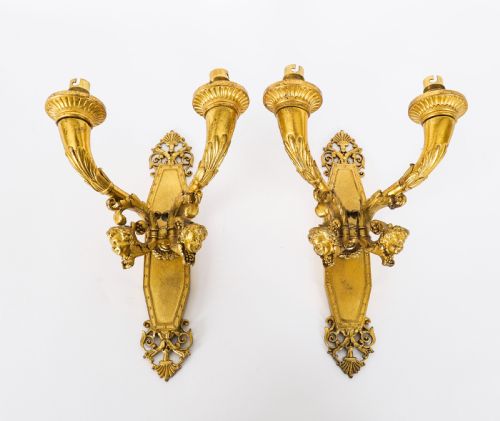
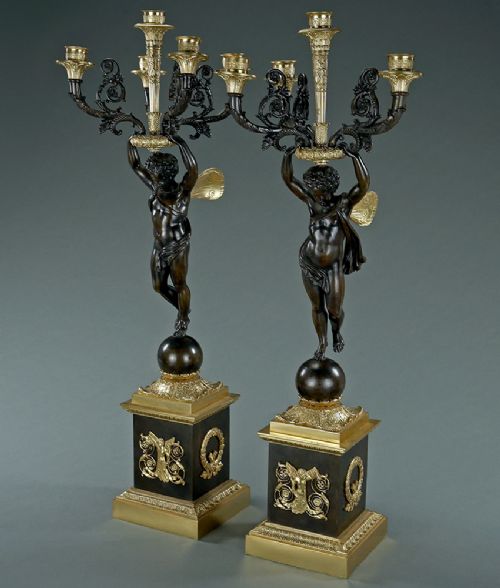
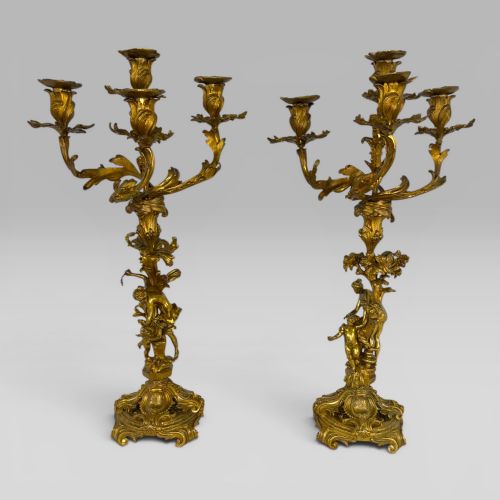
A nineteenth century cherub light brings figurative sculpture into domestic illumination, taking the form of candelabra, wall lights, and table lamps. These pieces place winged putti or cherubs among candle branches or lamp fittings, often cast in balanced pairs for mantelpieces or side tables.
The selection on this page draws heavily from continental workshops, predominantly featuring French Empire and Rococo revival styles alongside Victorian interpretations. Buyers will frequently encounter two or three-branch candelabra where cast bronze cherubs support the candle nozzles.
Origins span the Victorian era and continental European foundries, capturing popular historical revivals from Louis XIV to Louis XVI designs. The forms range from smaller single candleholders to substantial multi-branch table pieces.
Materials and Construction
Foundries utilised traditional metalworking methods, combining gilt bronze and ormolu with patinated bronze to create striking tonal contrast between the dark figures and bright mounts. Gold leaf and silver plating also appear on select formal pieces, adding reflective brilliance to the metal surface.
Object forms on this page include multi-branch candelabra, wall lights, and table lamps supported by figural cherub stems.
Quality Variations
Superior examples display crisp chiselling on the bronze and ormolu surfaces, where every feather on the cherub wings and fold of drapery remains sharp and well-defined. Lesser pieces suffer from softer casting details that blur the ornamentation through repeated mould use.
The weight and stability of the construction dictate quality, with finer pairs utilising heavy bronze or marble bases that securely support the multi-branch weight without tilting. The application of fire gilding or gold leaf also marks the distinction between standard production and top-tier workshop output.
Elkington
The Nineteenth Century Cherub Light Glossary
- Ormolu
- Gilded bronze produced by applying a mercury-gilding amalgam to a bronze base, creating a durable golden surface. This technique was widely practiced by French metalworkers during the nineteenth century.
- Patinated bronze
- Bronze treated with chemical solutions to produce a darkened surface finish, highlighting the lighter gilt mounts. It provides visual depth to figural castings.
- Candelabra
- A branched candlestick designed to hold multiple candles simultaneously. They often feature central figural stems depicting cherubs or mythological subjects.
- Spelter
- A zinc alloy used as a less expensive alternative to bronze for figural castings. It is often bronzed or painted to imitate heavier metals.
Nineteenth Century Cherub Light: Frequently Asked Questions
What is a nineteenth century cherub light?
These decorative lighting pieces incorporate sculptural putti figures into functional candelabra, wall lights, and table lamps. They were produced across Europe during the 1800s using cast metals.
Craftsmen combined patinated bronze figures with gilt bronze mounts to create ornate candleholders for wealthy Victorian and continental interiors.
How do I live with one safely?
Keep heavy bronze and marble pieces on stable, level surfaces that can support their considerable weight safely. Avoid using harsh chemical cleaners on gilt or patinated metal surfaces to preserve the original finish.
If wired for electricity, have the internal components inspected by a qualified electrician before regular domestic use.
How can I tell periods apart?
Earlier French Empire and Rococo revival pieces from the mid-nineteenth century feature sharper hand-chased details and heavier fire gilding. Later Victorian productions often employ alternative alloys like spelter and simpler casting methods.
Stylistic cues, such as Louis XIV scrollwork versus Louis XVI neoclassical symmetry, help pinpoint the design origin within the eighteen-hundreds.