

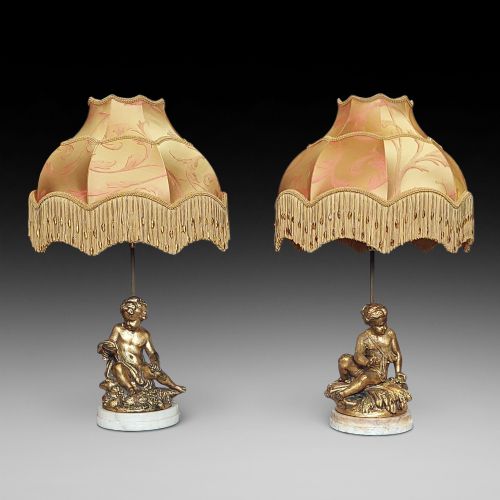


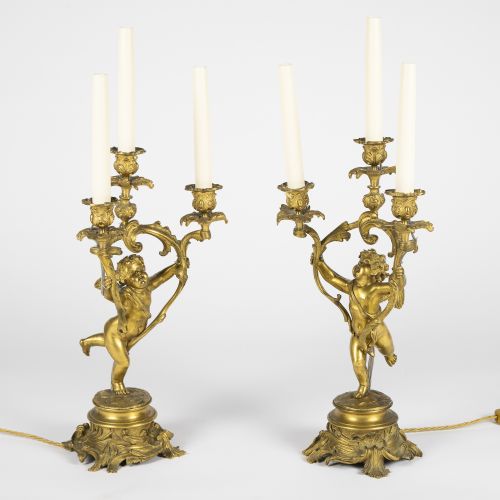


Rococo Style Cherub Lamp
These rococo style cherub lamp examples bring sculptural figures and ornate scrolling metalwork into domestic spaces from the nineteenth and early twentieth centuries.
Rococo Style Cherub Lamp
When you search for a rococo style cherub lamp, you encounter sculptural lighting fixtures featuring winged putti figures paired with asymmetrical, scrolling ornamentation. The pieces on this page span table lamps, oil lamps, wall sconces, chandeliers, and ceiling lights.
Most examples originate from the Victorian era and the early twentieth century, drawing heavily on French rococo revival and French chateau aesthetics. You will frequently find pairs of sconces and table lamps alongside converted bronze statuettes and elaborate porcelain oil lamps.
Materials and construction
The construction of these lamps relies heavily on cast metals such as bronze, gilt bronze, brass, and gilt metal, which allow for intricate, flowing forms. Many examples incorporate solid marble or alabaster bases to provide stability for the heavy metalwork.
Porcelain elements appear in specific Sitzendorf creations, while glass and fabric shades complete the lighting assemblies. Artisans utilised metal casting and gilding techniques typical of nineteenth century and early twentieth century workshops.
Listings feature items from the nineteenth century up to the 1930s, utilising bronze, brass, porcelain, and marble.
Assessing quality and craftsmanship
The distinction between ordinary and superior pieces rests on the crispness of the casting in the cherub figures and the depth of the surrounding rococo scrollwork. Finer examples display meticulous hand-finishing on the metal surfaces and use high-grade materials like solid bronze rather than lighter alloys.
Weight and stability also indicate quality, as better lamps integrate substantial marble or alabaster bases. The integration of original porcelain components, such as those by Sitzendorf, elevates the refinement of the piece.
Sitzendorf
The Rococo Style Cherub Lamp Glossary
- Rococo Revival
- A nineteenth-century design movement that revived the ornate, asymmetrical scrolls and natural motifs of the eighteenth-century French style. This aesthetic defines the curving frames and decorative flourishes of these lamps.
- Putti
- Depictions of chubby, winged male infants, often mythological, used interchangeably with cherubs in classical and revival art. They form the central sculptural motif of these lighting fixtures.
- Ormolu
- A historical term for gilding metallic objects with a gold-coloured alloy using mercury amalgamation. It provides the bright, reflective finish seen on many antique bronze mounts.
- Sitzendorf
- A German porcelain factory known for intricate decorative figures and lamps produced around the turn of the twentieth century. Pieces bearing this mark often feature delicate hand-painted details.
- Alabaster
- A fine-grained, translucent stone used for carving lamp bases and decorative mounts. It offers a smooth, pale surface that contrasts with darker metals.
Rococo Style Cherub Lamp: Frequently Asked Questions
Are these lamps converted from older items?
Some pieces begin life as bronze statuettes or oil lamps before undergoing conversion to electricity in later decades. This practice preserves the sculptural quality of antique figures while adapting them for modern interior lighting.
Evidence of rewiring or added fittings indicates where older bodies receive new electrical components. Buyers should examine the base and cord entry points to understand the history of the conversion.
How do I identify a Victorian piece?
Victorian examples typically date from the nineteenth century and display heavier casting methods in bronze, brass, or ormolu. They often manifest as ornate table lamps or oil lamps featuring naturalistic cherub motifs.
Stylistic cues include deep relief work and substantial marble or metal plinths. Comparing the patination and construction details helps distinguish these nineteenth-century items from later twentieth-century reproductions.
What materials are most common?
Bronze, gilt metal, and brass dominate the construction of these fixtures, providing the structural strength needed for ornate arms and figures. Marble and alabaster frequently serve as heavy, decorative bases.
Porcelain also appears in specific porcelain lamps and oil lamps, particularly those originating from German factories. Fabric and glass elements complete the shades and chimneys.
Where should I place a wall sconce?
Pair of wall sconces suit flanking locations such as mirrors, fireplaces, or entryways where symmetrical lighting enhances the room. Their projecting cherub arms and scrolling backplates create strong visual focal points on a wall.
Ensure the mounting surface can support the weight of cast metal fixtures. Wiring must align with standard electrical placement for wall-mounted lighting.