



Ornate Bronze Table Lamp
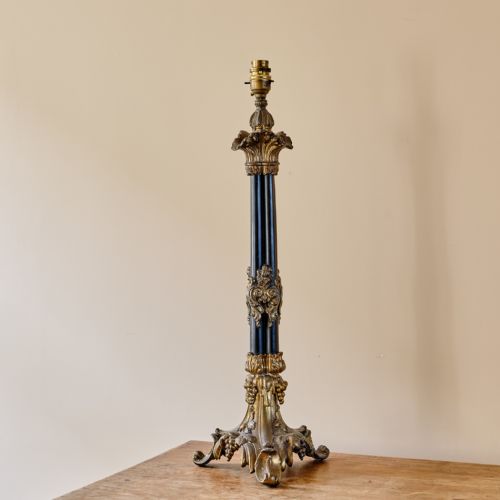
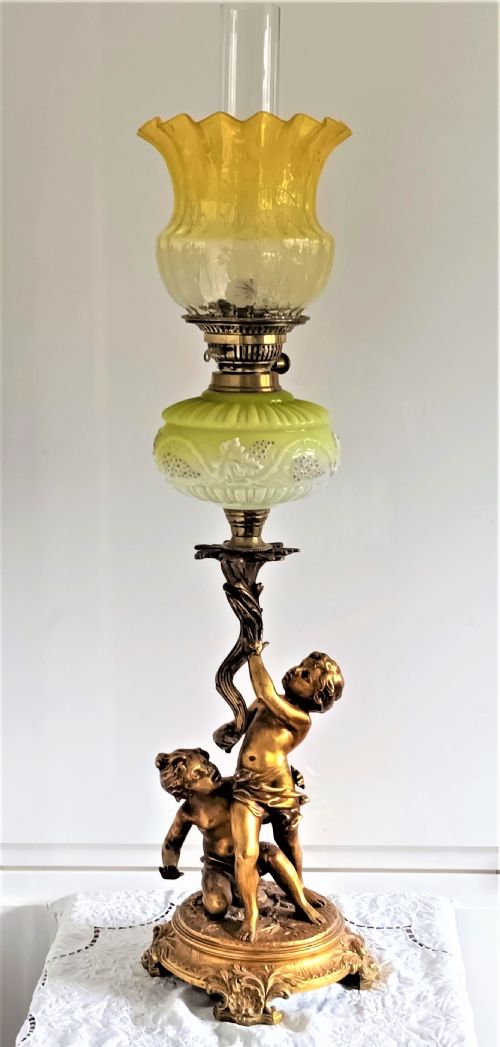
An ornate bronze table lamp brings weight and detailed metalwork to a room, drawing the eye with rich patination and sculptural forms.
Ornate Bronze Table Lamp
An ornate bronze table lamp represents a fusion of decorative metalwork and functional lighting, drawing heavily on nineteenth-century design aesthetics. When searching for an ornate bronze table lamp, buyers encounter pieces that often originate from French workshops or English makers, spanning periods from the Victorian era to the early twentieth century.
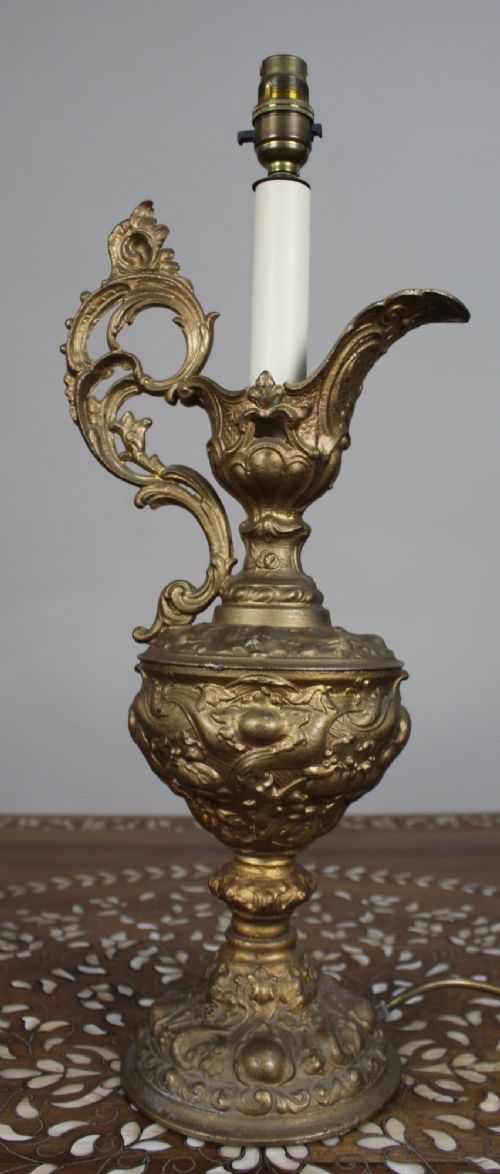
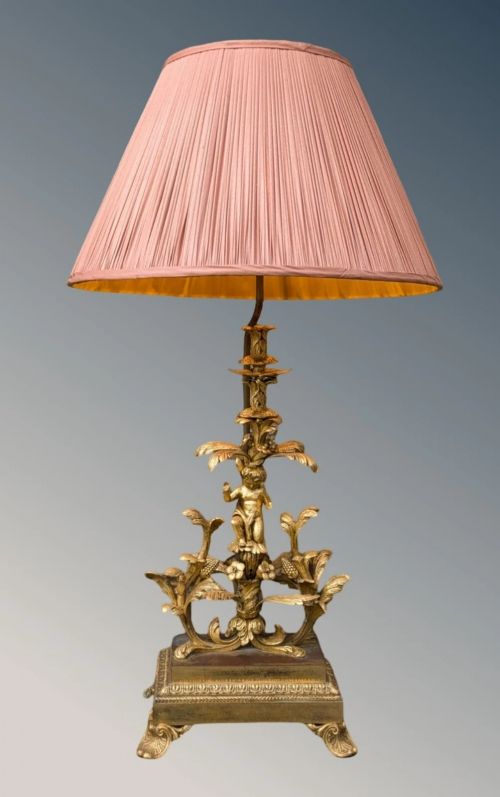
The forms available on this page frequently include converted candelabra, classical urns, figural statuettes featuring cherubs, and ewer shapes mounted on marble bases. These objects reflect styles such as French Neoclassical, Rococo Revival, and Victorian French style, utilising cast metalwork to create elaborate silhouettes.
Many examples begin life as oil lamps, altar sticks, or candelabra before undergoing later conversion into electric table lights. This adaptation preserves intricate metal castings while updating the wiring for modern domestic use, often paired with fabric shades.
Materials and construction methods
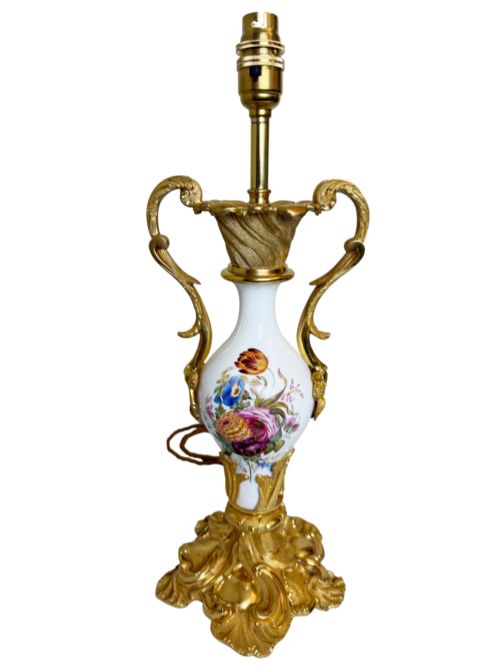
The primary construction relies on cast bronze, gilt bronze, or ormolu, frequently complemented by secondary metals such as brass, gilt metal, and spelter. Artisans employed traditional sand-casting or lost-wax techniques to achieve the complex, high-relief decoration visible on floral designs, cherubs, and classical motifs.
Finishes include fire gilding, chemical patination, and hand-applied ormolu accents that highlight the sculptural contours of the metal. Bases often incorporate contrasting natural materials like white or coloured marble, providing structural stability and visual weight to the composition.
Listings feature pieces spanning the Victorian and Edwardian eras, incorporating materials such as marble, fabric, crystal, and gilt bronze.
Distinctions in craftsmanship
The choice of secondary materials also separates standard production from superior output. Heavy solid bronze figures, substantial marble plinths, and high-grade fire gilding or genuine ormolu distinguish the most accomplished examples from lighter cast-metal or plated alternatives.
The Ornate Bronze Table Lamp Glossary
- Ormolu
- Gilt bronze produced by applying a finely ground high-carat gold-mercury amalgam to a bronze object and heating it. This historic technique creates a durable, warm golden finish characteristic of French decorative arts.
- Spelter
- An alloy of zinc and lead often used as a less expensive substitute for bronze in nineteenth-century metalware. It is softer than bronze and frequently receives a bronze-coloured paint or plating.
- Candelabra
- A branched candlestick designed to hold multiple lights. Many pieces found today started as candelabra before conversion into table lamps.
- Pate Sur Pate
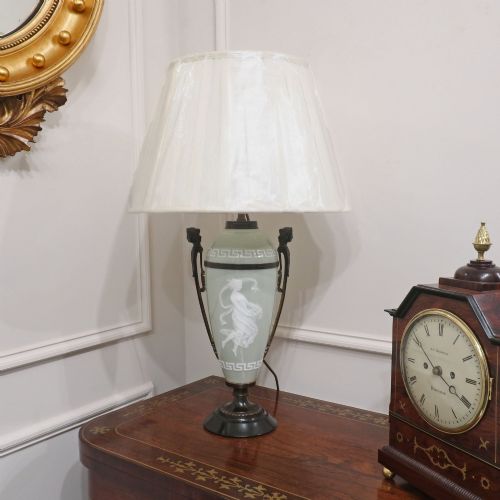
- A ceramic decoration technique where wet white clay is painted in successive layers onto a coloured porcelain body to create a cameo-like relief effect. It appears on porcelain body inserts within metal lamp mounts.
- Repousse
- Metalworking technique where the metal is hammered from the reverse side to form a raised design in relief. This method contributes to the dimensional richness of lamp mounts and bases.
Ornate Bronze Table Lamp: Frequently Asked Questions
What is an ormolu lamp?
An ormolu lamp utilises cast bronze finished with a gold-mercury amalgam coating, creating a durable and lustrous metallic appearance. These pieces originate predominantly from nineteenth-century French workshops.
Over time, the mercury gilding method was largely replaced by modern electroplating, making authentic period ormolu distinct in its warmth and tactile depth.
How do I date a bronze lamp?
Dating relies on examining the casting quality, the style of the mountings, and the nature of any converted components like altar sticks or oil fonts. Victorian and Edwardian examples often display registration marks or stylistic cues tied to French Neoclassical or Rococo revivals.
Wiring and lamp fittings are usually modern replacements, so the assessment must focus entirely on the base metal, marble components, and overall manufacturing technique.
Are these lamps safely wired for modern use?
Most antique lamps are re-wired during their lifetime to meet contemporary electrical standards. Buyers should inspect the internal cord and plug to confirm current safety compliance.
Qualified electricians can easily update older brass sockets and wiring while preserving the historic bronze body and original switches.
Why do some lamps feature marble bases?
Marble bases provide necessary weight and stability to balance the heavy bronze figures and tall shafts of these lamps. They also introduce a contrasting natural texture that complements the metallic finish.
French and Italian makers frequently utilised white or veined marble plinths to elevate the overall design and anchor the classical proportions.
What is a converted altar candlestick?
A converted altar candlestick is an ecclesiastical metal candleholder adapted to hold an electrical bulb and shade. This transformation preserves the height and decorative stem of church furnishings for domestic interior lighting.
Such pieces retain the socket cups or pricks from their original liturgical use, visible beneath the modern lamp hardware.