


Gilt Brass Oil Lamp
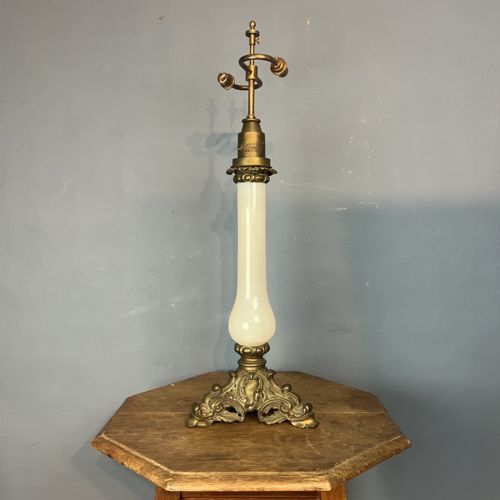
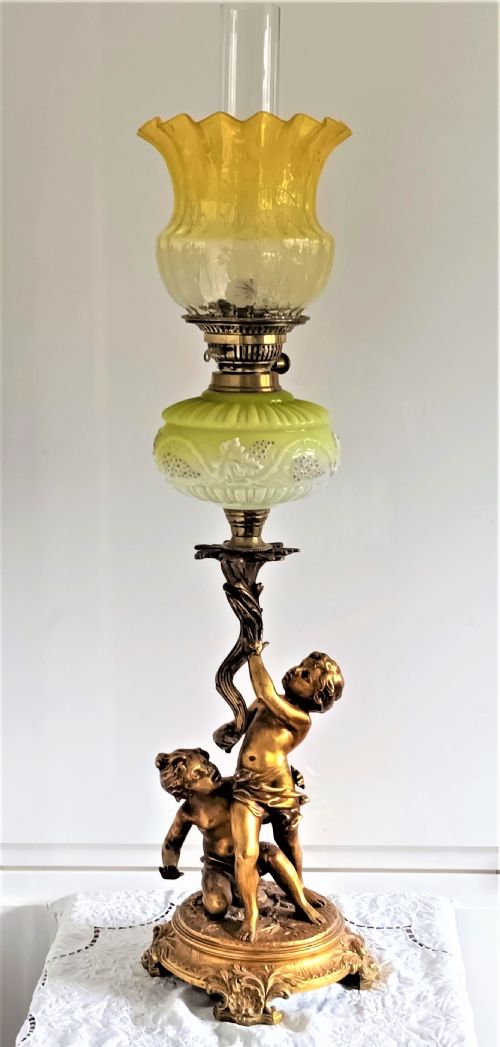
A gilt brass oil lamp brings heavy metalwork and warm light together, offering the heavy presence that collectors seek.
Gilt Brass Oil Lamp
A gilt brass oil lamp combines bright metallic surfaces with oil-burning architecture, typically appearing as sturdy table lighting from the nineteenth century. These objects bridge the gap between functional domestic utility and decorative Victorian interior display.
You are most likely to meet Victorian examples on this page, often paired with contrasting porcelain reservoirs or tinted glass. Forms range from modest table lights to large adjustable standard lamps intended for floor placement.
The aesthetic vocabulary stretches across several revivals, including French Rococo, Gothic, and Classical designs. English and French workshops both contribute significantly to the variety found here.
Materials and construction
Makers utilised cast and chased brass, frequently applying a layer of gilt or ormolu to achieve a bright, reflective finish. This metal framework often houses reservoirs formed from coloured opaline glass, blue glass, or fine porcelain.
Construction techniques involve heavy casting for stability, particularly on tall standard lamps and large table bases. Patents and mechanical adjustments for raising the wick or standard appear on specific engineered examples.
Patents for raising wicks reveal that nineteenth-century inventors took the business of sitting in the dark very seriously indeed.
Judging quality and execution
The refinement of the casting and chasing work separates standard production from superior pieces. Crisp foliage, sharply defined rococo scrolls, and heavy gauge metal indicate careful workshop execution.
The integration of secondary materials, such as hand-painted porcelain or deeply coloured glass reservoirs, dictates the overall visual success of the piece. Matching pairs and stamped patents also elevate the standing of an individual lamp.
Mc Gary·Palmer and Co
The Gilt Brass Oil Lamp Glossary
- Gilt brass
- Brass treated with a gold-coloured wash or leaf to give a bright metallic surface. It provides the signature gleam seen across these nineteenth-century light fittings.
- Ormolu
- Finely ground high-zinc brass applied to metal objects, creating a rich golden finish. This technique was favoured by French makers for decorative mounts.
- Opaline glass
- An opaque, milky glass often tinted in soft shades. It was frequently utilised for the bodies of Victorian oil lamps.
- Standard lamp
- A tall floor-standing lighting fixture. Adjustable versions allowed the burner height to be altered.
Gilt Brass Oil Lamp: Frequently Asked Questions
How do I date a gilt brass oil lamp?
Dating relies on stylistic clues like Rococo revival scrolls, material combinations such as opaline glass, and occasional patent stamps. Nineteenth-century pieces dominate these categories.
Examining construction methods and any recorded maker marks helps narrow the decade of production.
Were these lamps converted to electricity?
Many surviving nineteenth-century examples have been adapted for modern electric bulbs to suit contemporary living. This conversion is standard practice for lamps retained as functional room lighting.
Collectors weigh the preservation of original oil mechanisms against the convenience of electrical wiring.
What is the difference between table and standard lamps?
Table lamps are proportioned for placement on sideboards, desks, or pedestals. Standard lamps stand much taller on the floor, often featuring adjustable height columns.
Both types share the same heavy metal base construction and gilt brass finish.
How should I clean gilt brass?
Maintenance requires gentle dusting with a soft cloth to protect the delicate gilt layer. Avoid abrasive cleaners that strip the metallic surface.
Maintaining the original patina preserves the historic character of the metalwork.