

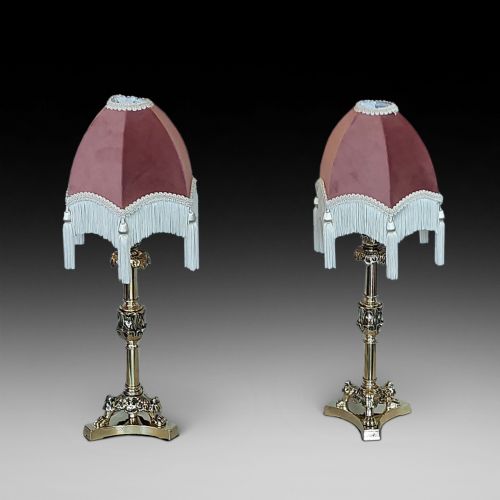


Ornate Victorian Table Lamp
An ornate victorian table lamp brings heavy metalwork and textured glass into a room through nineteenth-century domestic lighting.
Ornate Victorian Table Lamp
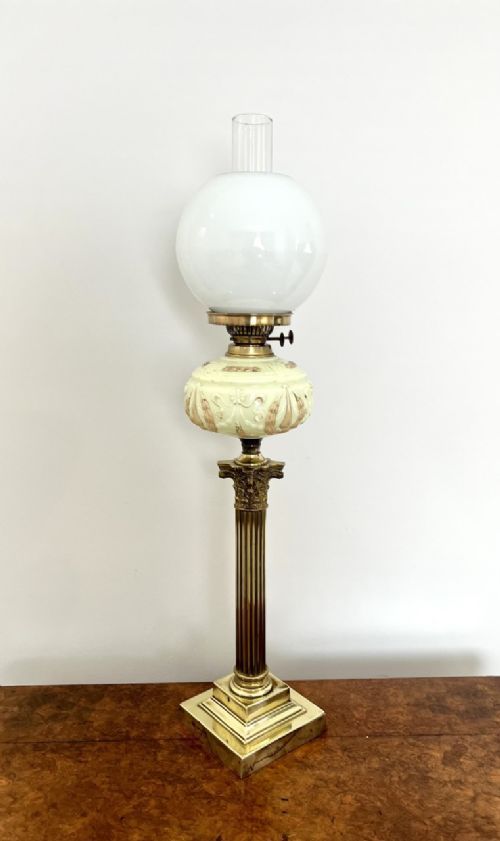
An ornate victorian table lamp combines nineteenth-century lighting forms with decorative metalwork, glass, and ceramic bodies. The selection on this page relies heavily on converted oil lamps, cast brass columns, and figural bronze bases originating from the Victorian and Edwardian periods.
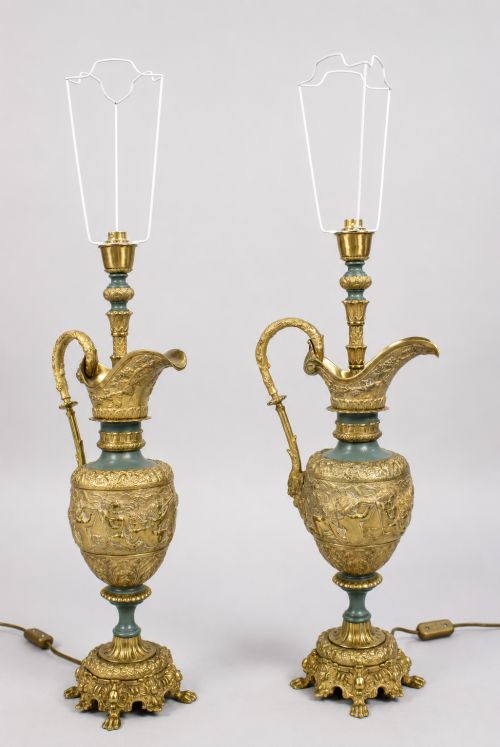
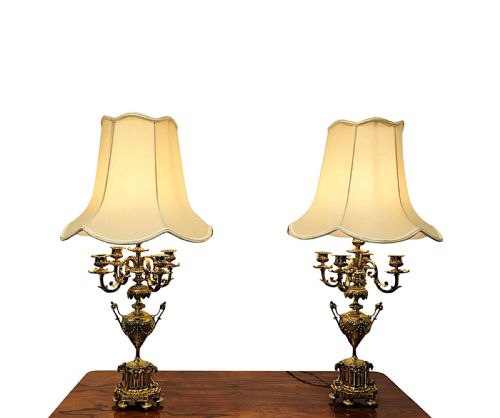
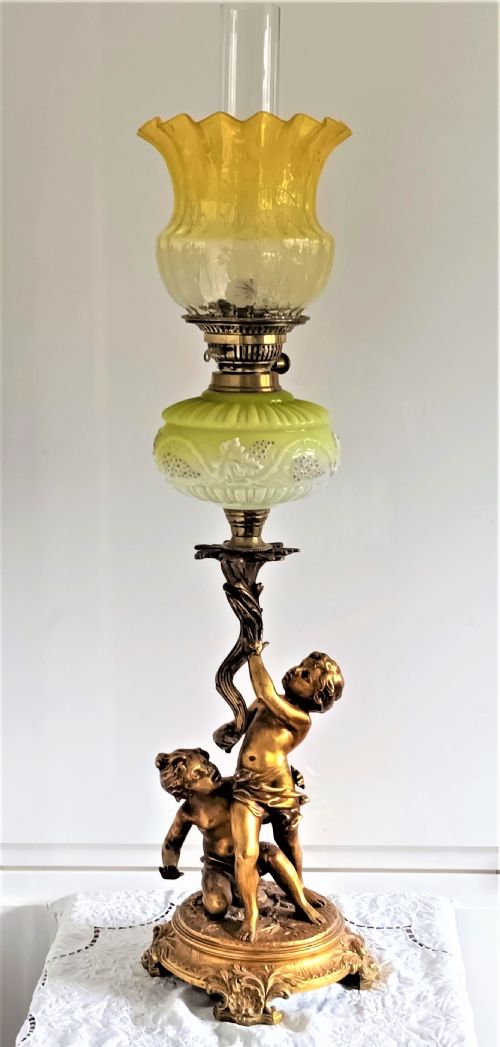
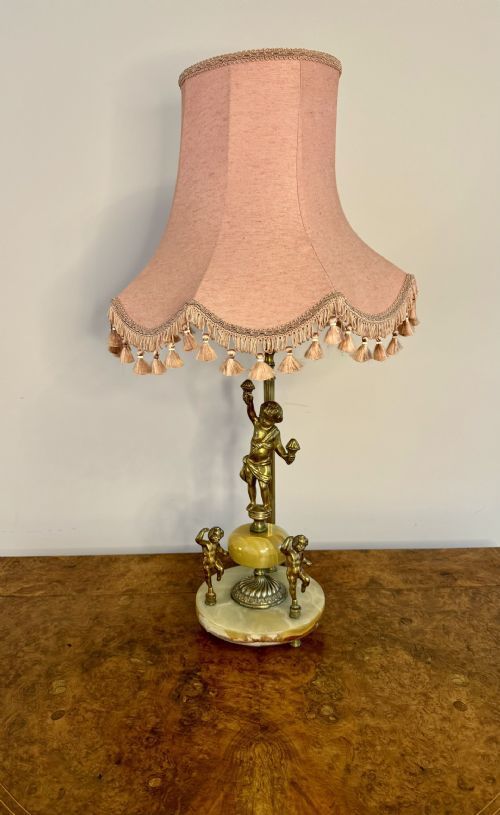
Buyers encounter architectural columns, floral ewer shapes, and sculptural figures in gilt bronze or brass. Many examples stem from nineteenth-century production methods where utilitarian items received heavy ornamentation.
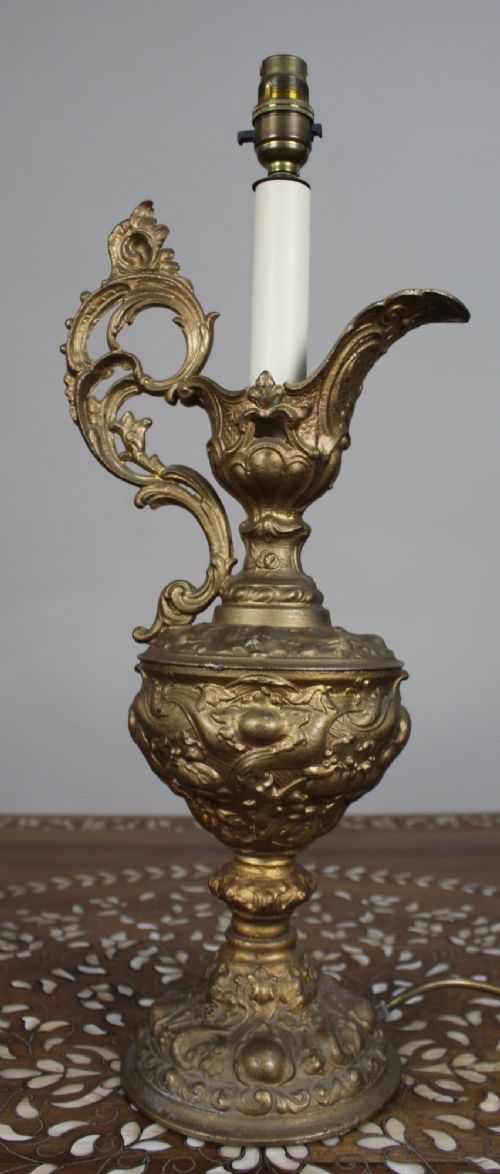
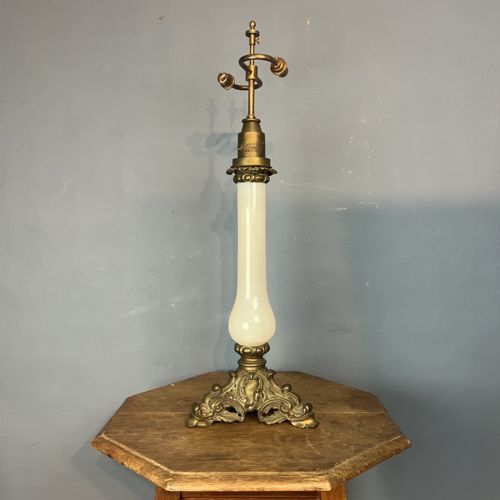
Conversions dominate the selection, changing older oil lamps and candlesticks into modern electric table lights. These pieces preserve period metal bases while adapting the fittings for contemporary use.
Materials and construction methods
Foundry work relied on cast brass, gilt bronze, and ormolu to form structured bases and decorative mounts. Artisans applied repoussé and chased details by hand to achieve textured surfaces on metal components.
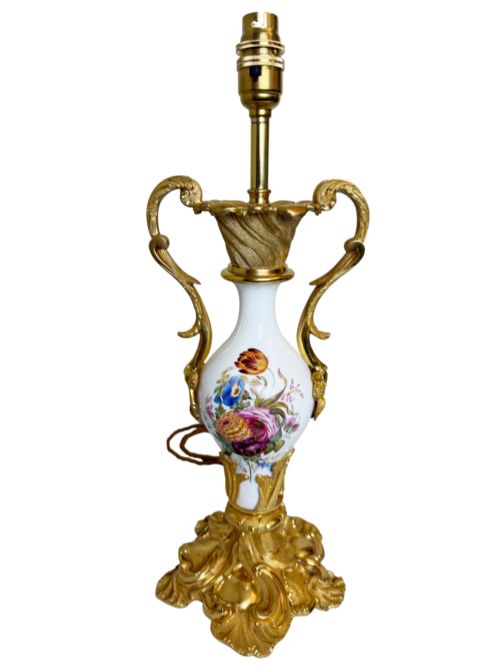
Glass production contributed opaline components, cut crystal, and painted porcelain reservoirs. Manufacturers combined these fragile elements with heavy metal mountings to create stable table lighting.
Listings span the nineteenth and early twentieth centuries, featuring brass, gilt bronze, opaline glass, and marble.
Evaluating the craftsmanship
The crispness of the casting and hand-chiselling on bronze and brass surfaces dictates the refinement of the piece. Superior examples display sharp floral motifs and figural definition without the soft edges typical of mass production.
The integration of secondary materials such as marble plinths, onyx columns, and handpainted glass indicates higher manufacturing ambition. Heavier gauge metals and robust mechanical adjustments separate utilitarian lighting from decorative works of art.
Wild and Wessel·Mc Gary
The Ornate Victorian Table Lamp Glossary
- Ormolu
- Gilded bronze produced by applying a mercury and gold amalgam to a bronze base and heating it. This technique creates a durable golden finish seen on French decorative arts.
- Opaline glass
- An opaque or translucent pale glass developed during the nineteenth century. It appears frequently in lamp reservoirs and shades.
- Repoussé
- A metalworking technique where the artisan hammers the metal from the reverse side to form a raised design in relief. It provides texture to brass and silver components.
- Corinthian column
- An architectural order featuring ornate capitals decorated with acanthus leaves. Many nineteenth-century metal lamp bases imitate this classical column style.
Ornate Victorian Table Lamp: Frequently Asked Questions
Were these lamps originally electric?
Most pieces began life as oil lamps, argand lamps, or candlesticks before later conversion to electricity.
Original burners and fonts were removed or adapted during the twentieth century to accommodate standard electrical wiring and lamp holders.
How do I identify a period piece?
Examine the weight of the metal, the method of assembly, and the wear patterns on the base.
Nineteenth-century examples typically utilise heavy cast brass or bronze components joined by threaded rods rather than modern adhesives.
Where should I place a heavy brass lamp?
These substantial pieces require sturdy side tables, desks, or pedestals capable of supporting significant metal and glass weight.
Ensure the placement allows the detailed chasing and surface gilding to catch ambient light.
What is an ewer form lamp?
An ewer form lamp shapes the central body like a traditional water jug or pitcher.
This classical silhouette derives from antique vessels and was popular for decorative metal lamp bases during the late nineteenth century.