
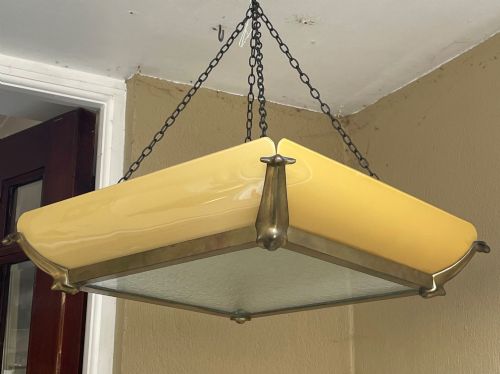
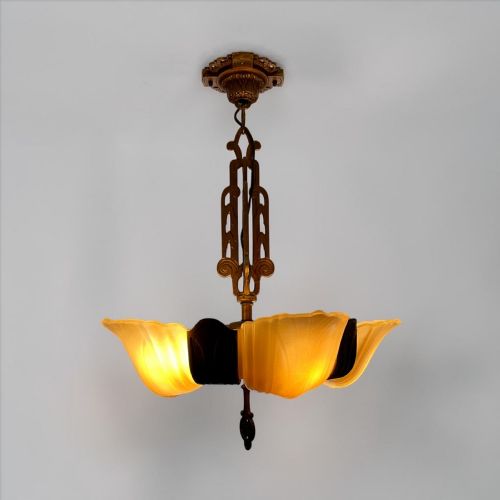
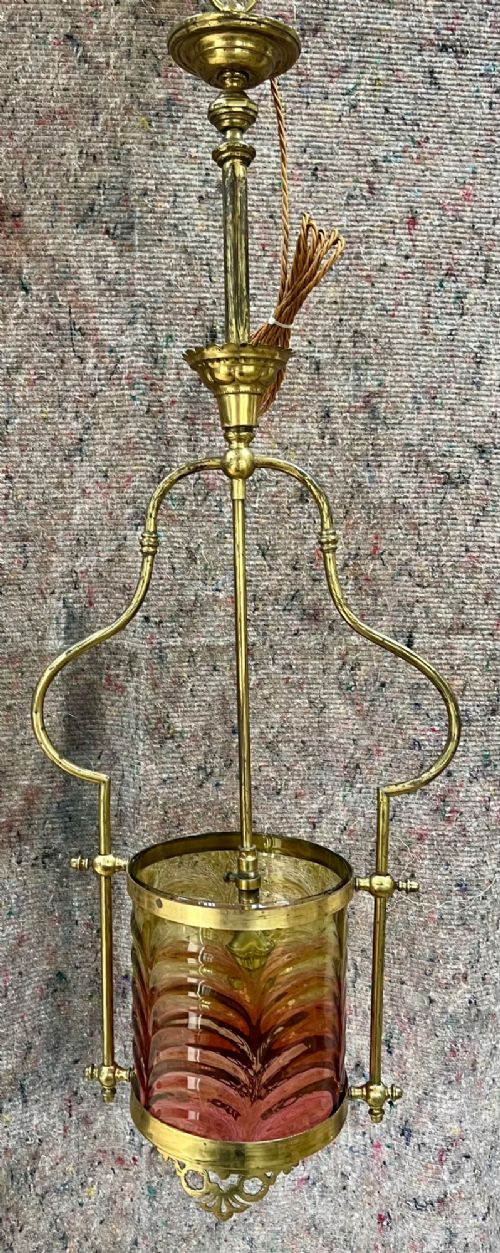
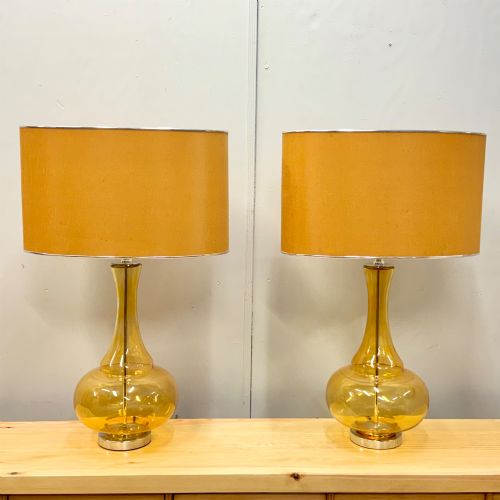
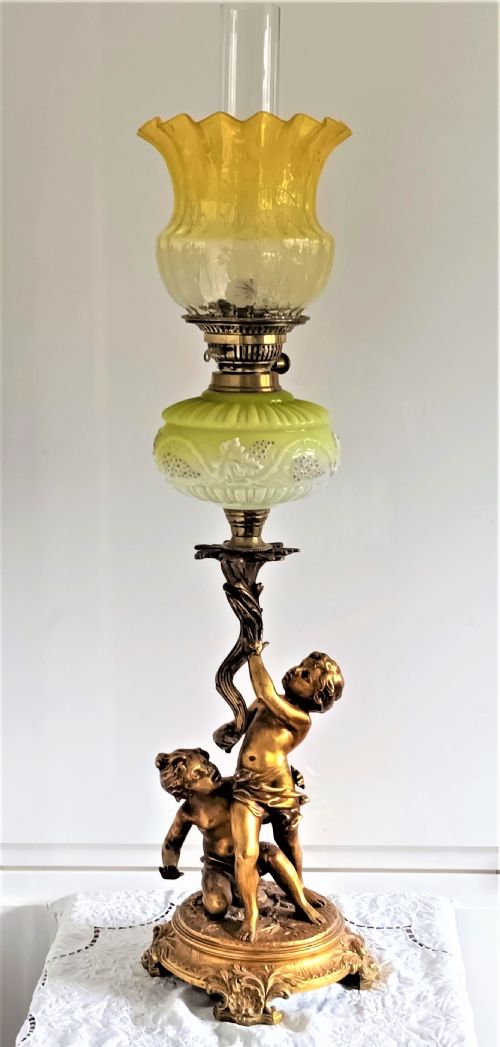
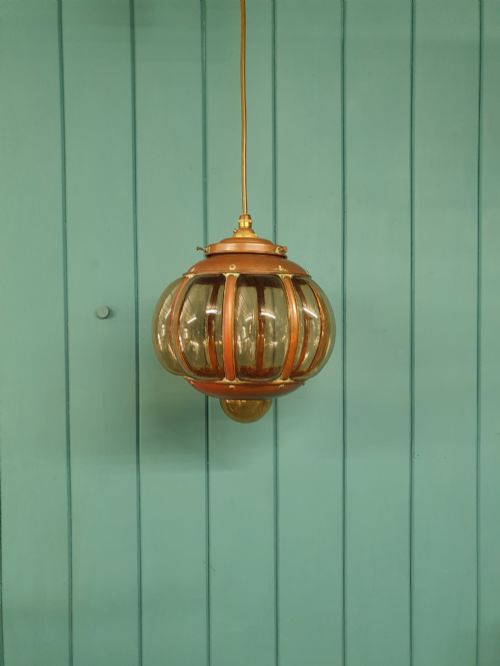
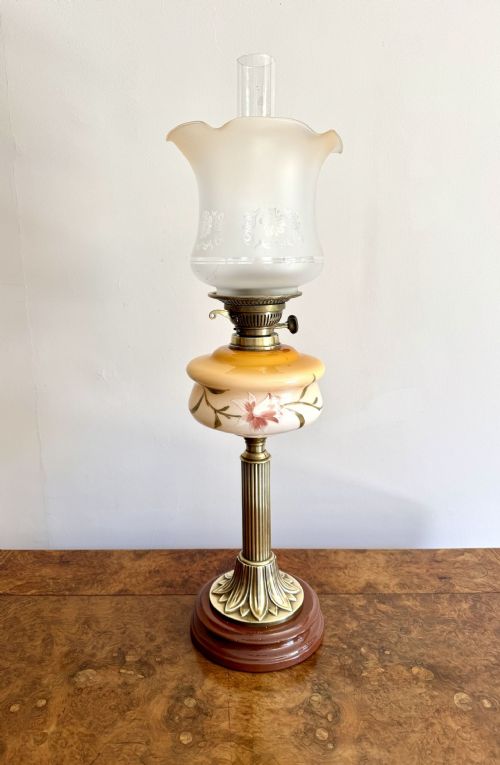


Amber Glass Shade Lamp
These amber glass shade lamps bring a rich, warm glow to a room, spanning styles from Victorian brass to Art Deco ironwork.
Amber Glass Shade Lamp
An amber glass shade lamp combines functional illumination with a distinctive warm hue, appearing across eras like the Victorian period, Edwardian era, and the 1930s. The selection on this page ranges from ceiling lights and wall sconces to oil lamps and table lamps.
You will encounter pieces styled in Art Deco, Art Nouveau, and Arts and Crafts designs, often pairing the glass with brass, cast metal, or wrought iron. Whether configured as a pendant, a hall lantern, or a desk lamp, the unifying element is the amber shade.
The form adapts to various domestic settings, functioning as overhead illumination via chandeliers and flush ceiling lights, or as task lighting through table and oil lamps. The historical span covers the nineteenth century through the mid-century modern period.
How they were made
Makers utilised brass, cast metal, and wrought iron to construct the structural bodies and mounts of these lamps, often combining them with silk components. Metalwork techniques included casting, patination, and gilding to achieve durable and decorative frames.
The glass elements were shaped into shades, slip shades, and beaded lampshades, sometimes featuring etched patterns or frosted finishes to diffuse the light. These glass components were then fitted securely into metal frames, brass galleries, or hanging chains.
One hanging light arrives equipped with glass beads, proving that Edwardian illumination knew how to dress for a party.
What varies in quality
Quality shows in the weight and finish of the metalwork, distinguishing heavy cast brass or patinated bronze from lighter pressed metal alternatives. Superior pieces display crisp detailing in the mounts and secure, well-fitted hardware.
The distinction in the glass lies in the depth of the amber colour, the uniformity of the thickness, and the refinement of any etched or moulded details. Matching pairs and original glass components carry greater weight than later replacements.
The Charles Parker Company·Verrerie Des Vosges·Daum
The Amber Glass Shade Lamp Glossary
- Slip shade
- A moulded glass shade designed to fit into a metal frame or basket, common in Art Deco light fittings. These pieces slide into place and are secured by thumbscrews or gallery clips.
- Oil lamp
- A lighting device that burns liquid fuel via a wick, frequently converted to electricity in later periods while retaining the original brass reservoir and burner assembly. They often feature large glass shades.
- Gallery
- The metal ring or collar on a lamp fixture that holds the glass shade in place using tightening screws. Its finish and construction contribute to the overall dating of the piece.
- Patinated brass
- Brass that has developed a darkened, aged surface finish over time through oxidation or intentional chemical treatment. This finish distinguishes older metalwork from bright, unpolished modern brass.
Amber Glass Shade Lamp: Frequently Asked Questions
How do I date an amber glass shade lamp?
Dating relies on identifying the stylistic markers of the metalwork and glass, such as the geometric lines of 1930s Art Deco or the flowing organic motifs of Edwardian and Art Nouveau design. Materials like wrought iron, heavy cast brass, and silk shade combinations also point to specific manufacturing decades.
Examining the construction methods, wiring ports, and gallery fittings provides further clues to the age of the piece. Comparing the shade style with known period forms helps confirm the production era.
Were these lamps originally electric?
Many early pieces began life as oil lamps or gas lights before being converted to electricity during the twentieth century. Table lamps and wall brackets from the nineteenth and early twentieth centuries often show evidence of burner or gas-cock removal.
Later pieces from the 1930s were manufactured specifically for electrical wiring, featuring flush ceiling mounts and slip shade frames designed for domestic power.
How do I clean an antique glass shade?
Cleaning requires removing the shade from the metal mount to prevent damage to fragile fixings or old wiring. Use warm water and mild soap, avoiding harsh abrasives that could harm etched surfaces or frosted finishes.
Dry the glass thoroughly with a soft cloth before refitting it into the brass gallery. Care must be taken with beaded lampshades to preserve the stringing and prevent loss of elements.
Can I replace a broken amber shade?
Finding an exact period replacement for a broken shade proves challenging due to the specific moulding techniques and glass colours used by historic makers. Collectors often seek out period-correct glass of the same decade to maintain authenticity.
When searching for a replacement, matching the fitter size - the diameter where the shade slides into the brass gallery - remains the most critical measurement.