


Mid Century Desk Light
A mid century desk light brings working-age industrial form into a modern room, offering focused illumination through clean metallic lines.
Mid Century Desk Light
A mid century desk light provides functional task illumination through streamlined designs shaped by twentieth-century manufacturing. The inventory on this page spans from the nineteenth century up to the nineteen-sixties, incorporating diverse domestic and commercial seating, cabinetry, and lighting forms alongside desk lamps.
Buyers encountering this search phrase will find table lamps, desk lamps, and sculptural lighting alongside occasional oak filing cabinets and ash armchairs. Materials range from chrome and brass to cut glass and wood, reflecting both Victorian opulence and twentieth-century modernist austerity.
How they were made
Construction relies heavily on metals such as chrome, brass, and bronze, often paired with opaline glass or cut glass shades to diffuse light effectively. Makers utilised turned wood bases, mahogany, and oak to anchor heavier fittings and cabinetry.
Assembly techniques combine machined metal components with hand-finished glass and silk elements. Stamped signatures and patent markings occasionally identify specific workshops or inventors from the Victorian period onwards.
Listings combine nineteen-thirties modernist chrome with Victorian brass and opaline glass fixtures.
What varies in quality
Quality separates through the purity of the materials and the sophistication of the mechanical joints used to direct light. Monumental sculptural designs by named designers command attention over standard utilitarian examples.
The integration of original opaline glass shades, signed metalwork, and substantial bronze or chrome plating distinguishes finer production standards from simpler domestic lighting.
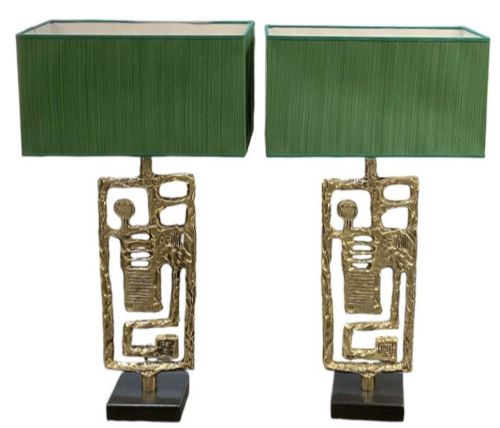
Angelo Brotto for Esperia·Mc Gary
The Mid Century Desk Light Glossary
- Opaline glass
- A milky, translucent glass often used in nineteenth-century and mid-century lamp shades to soften illumination. It diffuses light evenly across a workspace.
- Modernist
- A twentieth-century movement prioritising clean geometric forms and function over historical ornament. Cubic shapes and minimal detailing define this approach.
- Gilt brass
- Brass coated with a thin layer of gold or gold-coloured wash. This treatment provides a durable, decorative metallic sheen on Victorian lamp bases.
Mid Century Desk Light: Frequently Asked Questions
What materials make up a mid century desk light?
These lamps incorporate chrome, brass, bronze, and metal alongside opaline glass and silk shades. Wooden elements such as mahogany and oak also appear in related pieces.
Industrial manufacturing techniques of the period prioritised durable metals paired with glass diffusers for functional desktop workspaces.
How do I identify a modernist desk lamp?
Modernist desk lamps from the nineteen-thirties rely on geometric forms, cubic glass bodies, and clean chrome finishes. They strip away historical ornamentation in favour of industrial simplicity.
Authorship is occasionally confirmed by maker signatures, stamps, or distinct machine-age construction methods.
Are nineteenth-century lamps suitable for daily use?
Nineteenth-century lighting pieces, including Victorian opaline and cut glass lamps, offer robust brass and bronze construction suited to domestic placement. Wiring standards vary and require inspection by a qualified professional before operation.
These older items bring heavy ornamental presence to a modern desk or table setting.
What is the difference between art deco and modernist lamps?
Art deco lighting typically balances geometric styling with decorative metal shades and polished surfaces. Modernist pieces lean further into machine-age austerity and abstract cubic forms.
Both styles emerged strongly during the nineteen-thirties to redefine domestic task lighting.