


Modernist Desk Lamp
A modernist desk lamp brings clean industrial lines and purposeful illumination to a workspace, rooted in the design innovations of the early twentieth century.

Modernist Desk Lamp
When searching for a modernist desk lamp, a buyer encounters pieces originating predominantly from the 1920s and 1930s, alongside later mid-century examples. These lamps embody the functionalist ethos of the period, stripping away superfluous ornament to expose the purity of geometric form and mechanical structure.
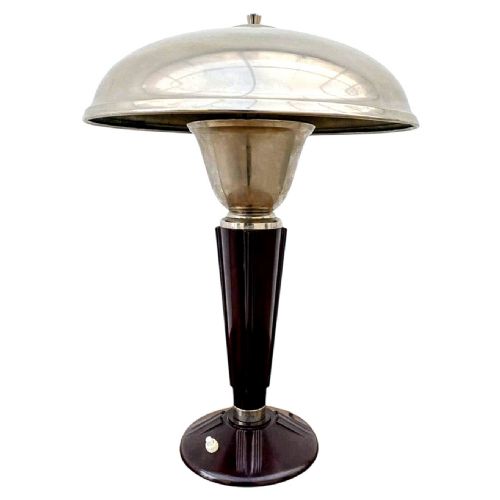
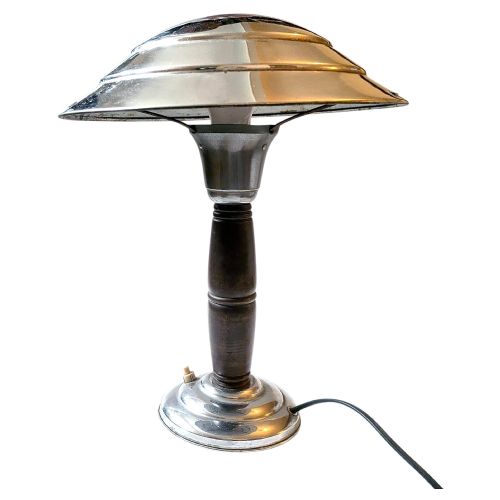
The version most commonly met on this page is the Art Deco or Machine Age chrome desk lamp dating from around 1930. These lamps often utilise contrasting elements like Bakelite bases and double shades to create a striking silhouette on a writing surface.
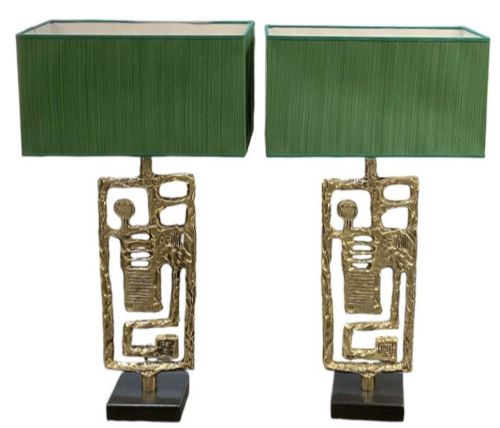
Form follows function across these designs, whether expressed through a tall brass stem, a cubic glass and mahogany construction, or an adjustable arm. Each object serves primarily as a utilitarian desk or table lamp while doubling as a sculptural statement of its era.
Materials and construction methods
Makers utilised chrome-plated metal and polished brass to build durable, reflective frames that caught the light of the room. Nickel plating also appears, providing a slightly warmer metallic sheen compared to cold chromium.
Bakelite served as an essential material for bases, handles, and switch housings, valued for its insulating properties and deep dark lustre. Glass, including opaline variants and shades by makers such as Muller Bros, was integrated to diffuse light effectively.
Substantial weights in cast brass or iron were frequently concealed within the base to anchor the extended reach of adjustable arms. Wood components like mahogany added a tactile warmth that balanced the industrial severity of the metals.
Modernist Desk Lamp Retail Price Guide 2026
Typical asking prices for modernist desk lamp among the pieces listed under this phrase on Sellingantiques today, from the lower quarter to the upper quarter. They describe what is for sale here now, not the wider market.
A good modernist desk lamp looks ready to draft the blueprints for a zeppelin.
Distinctions in manufacture and design
The degree of material integrity separates standard commercial production from the most sought-after examples. Heavy-gauge metalwork, substantial cast bases, and thick pressed or blown glass shades indicate superior original manufacturing standards.
The refinement of the mechanical joints and switch mechanisms reveals the maker's attention to detail. Smooth adjustments and secure positioning without sagging demonstrate precision engineering within the metal armature.
Attribution to known designers or documented workshops elevates a piece beyond anonymous factory output. Original components, such as specific maker-marked shades or signed bases, complete the historical authenticity of the lamp.
Eileen Grey·Angelo Brotto·Esperia·Wilhelm Wagenfeld·Muller Bros
The Modernist Desk Lamp Glossary
- Bakelite
- An early form of synthetic thermosetting plastic prized in electrical applications for its durability and heat resistance. It often appears in dark brown or black on lamp bases and switches.
- Machine Age
- A design aesthetic from the interwar period celebrating industrial progress, assembly lines, and the clean geometry of machinery. Lamps from this movement emphasise chrome, steel, and unadorned function.
- Opaline glass
- A milky, semi-translucent glass that diffuses light softly without glaring. It was frequently blown into shades for desk and table lamps during the 1930s.
- Bauhaus
- A German art school operational between the wars that championed the union of craft, art, and industrial technology. Its influence appears in simplified tubular metal frames and functional shades.
- Toleware
- Painted or enamelled metalware, typically tin or steel, used for lamp shades and bodies. It offers a smooth coloured finish distinct from exposed chrome or brass.
Modernist Desk Lamp: Frequently Asked Questions
How do I wire an old lamp safely?
Many vintage lamps require rewiring to meet modern electrical safety standards before daily use. A qualified electrician can replace aged internal wiring while preserving the original exterior fittings and switches.
Retaining the original plug or switch housing where possible maintains the historical integrity of the piece. Ensure the wattage used matches the capacity of the vintage lamp holder.
What periods do these lamps date from?
The listings span the 1920s, 1930s, and 1960s, capturing the height of modernist and machine age production. The vast majority originate from around 1930 during the peak of Art Deco industrial design.
Later mid-century examples introduce bolder sculptural gestures while maintaining a commitment to functional illumination. Each era brings distinct metallurgical treatments and switch technologies.
How do I clean chrome and brass safely?
Chrome surfaces benefit from gentle wiping with a damp microfibre cloth to remove dust without scratching the plating. Avoid abrasive metal polishes on plated chrome, as harsh scrubbing can wear through the thin metallic layer.
Solid brass parts can be cleaned with appropriate non-abrasive metal cleaners if you wish to reduce patina. Many collectors prefer to leave an established, undisturbed patina intact on older brass.