




White Opaline Shade
A white opaline shade diffuses light with a soft milky glow that transforms a room.
White Opaline Shade
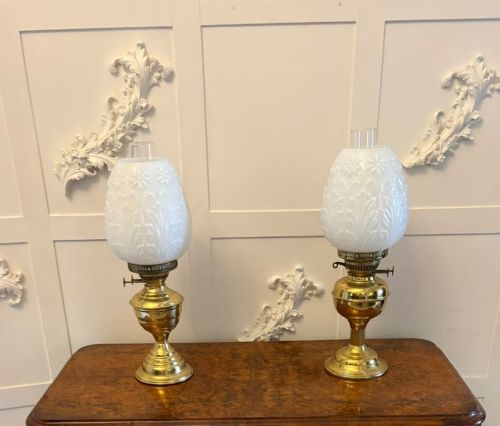
When you search for a white opaline shade, you encounter functional lighting components and complete lamp assemblies designed to soften interior illumination. The pieces span periods from the Victorian and Edwardian eras through to the Art Deco and Mid-Century Modern movements.
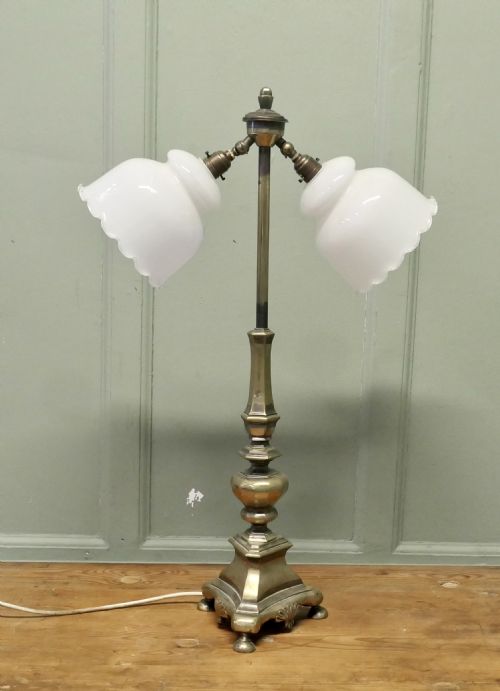
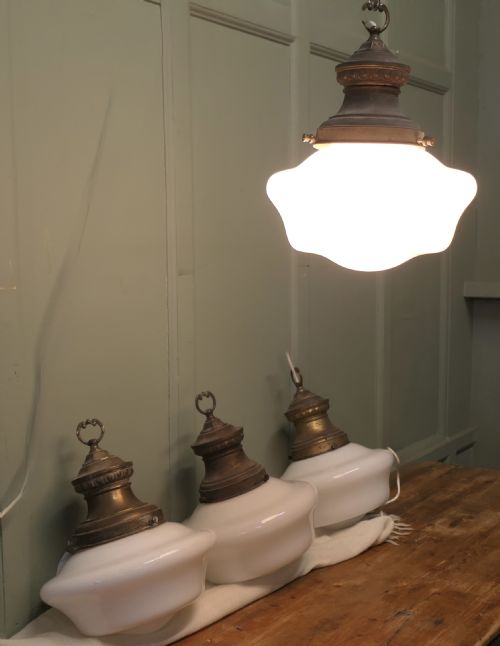
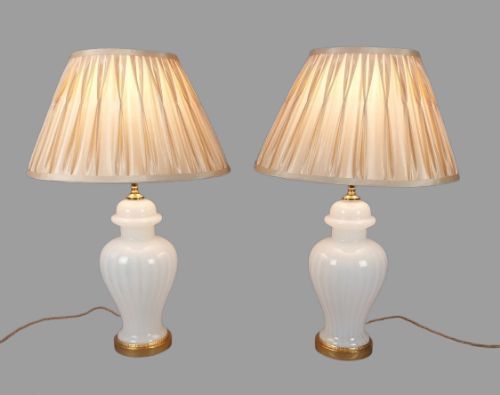
You are most likely to meet pendant lights, hanging oil lamp shades, and table lamps featuring moulded or hand-finished glass elements. French and English workshops dominate the origins, often pairing the white glass with brass, chrome, or ormolu mounts.
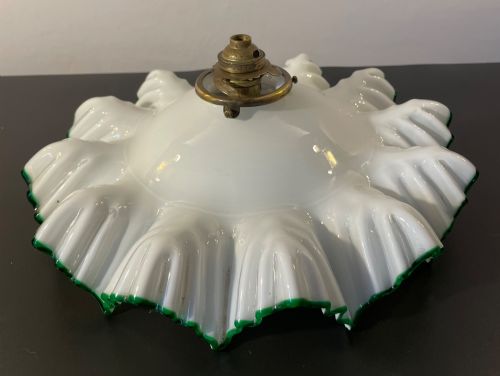
The objects take diverse shapes, ranging from simple conical and pear profiles to fluted frill edges and fish scale designs. These variations reflect domestic and institutional uses across the late nineteenth and early twentieth centuries.
Materials and Construction Methods
The primary material is opaline glass, an opaque white substance created by adding bone ash or other agents to the molten batch. This glass is frequently blown into moulds or shaped by hand to achieve specific profiles like dishes, spheres, and reeded cylinders.
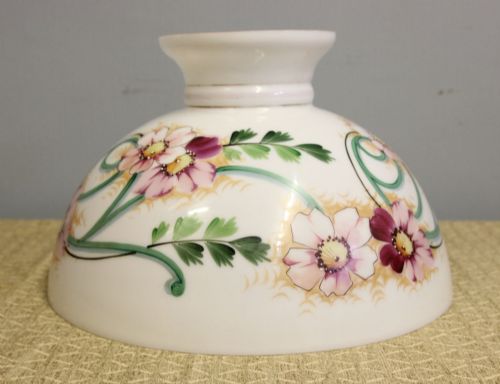
Metal components such as brass, chrome, and ormolu provide the structural framework, mounting collars, and suspension hardware. Enamel and hand-painted details occasionally decorate the glass surfaces, while fabric and wood appear in related lamp structures.
Listings span from the 1860s Victorian period through Edwardian designs to 1930s Art Deco and modernist pendant forms in brass and opaline glass.
Evaluating Quality and Execution
Quality in a white opaline shade lies in the density and evenness of the glass dispersion, which ensures a uniform glow without thin patches. Superior examples display crisp moulding lines, well-finished rims, and substantial weight in the glass body.
The associated metalwork distinguishes finer pieces through solid brass casting, precise threading, and intact original platings of chrome or ormolu. Finer items integrate the glass and metal components securely without excessive play or poorly matched fittings.
The White Opaline Shade Glossary
- Opaline glass
- A translucent or opaque white glass developed to imitate porcelain and diffuse light evenly. It forms the primary component of these shades.
- Pendant light
- A lighting fixture suspended from the ceiling by a cord, chain, or metal rod. Many examples on this page utilise opaline shades in this hanging format.
- Oil lamp
- A lighting device that burns liquid fuel via a wick, frequently converted later to electricity. Brass oil lamps often support removable opaline shades.
- Plafonnier
- A ceiling-mounted light fixture positioned flat or close against the ceiling surface. These often incorporate painted glass shades.
- Pricket lamp
- A candlestick or lamp style featuring a sharp metal spike to secure the candle or fitting. Some brass table examples utilise this configuration.
White Opaline Shade: Frequently Asked Questions
How do I clean a white opaline shade?
Wash the glass gently in warm, soapy water using a soft cloth to avoid scratching the surface. Dry it thoroughly before reassembling.
Avoid harsh chemical cleaners or abrasive pads that can damage hand-painted details or the smooth finish of the glass.
Are these shades compatible with modern light fittings?
Many vintage and antique shades fit standard modern galleries and lamp holders, provided the fitter diameter matches. You should check the physical measurements of the opening.
Some older pieces require specialist adapters or original brass collars to secure them safely to contemporary electrical flex.
What is the difference between Victorian and Art Deco opaline shades?
Victorian and Edwardian shades often feature ornate brass mounts, frilled edges, or hand-painted motifs. They lean towards traditional oil lamp conversions and softer, decorative profiles.
Art Deco and later pieces favour geometric lines, streamlined conical or fish scale shapes, and combinations with chrome or plain brass.
Can I use these shades with high wattage bulbs?
Opaline glass handles standard LED bulbs well, but you should verify the heat limits of any enclosed pendant fixture. Low to moderate wattage prevents overheating the antique glass and metal mounts.
Consult an electrician if you are unsure about the wiring capacity of converted oil lamps or vintage brass desk fittings.