


Architectural Table Lamp
These architectural table lamp pieces range from seventeenth century carved pillars to modernist chrome designs, bringing structural form and period presence into a room.
Architectural Table Lamp
When you search for an architectural table lamp, you are looking at task lighting, sculptural pillars, and structural bases that draw on building design and classical orders. The selection spans several centuries, moving from seventeenth century carved wood through neoclassical and regency forms to early twentieth century modernist creations.
You are most likely to meet mid twentieth century industrial designs and geometric creations on this page alongside older converted timber and metal bases. The forms vary from anglepoise desk lamps and cubic glass structures to monumental carved wooden pillars.
The materials reflect the diverse eras represented, combining heavy metals like brass and chrome with carved wood, glass, and fabric shades. Each object uses its structural elements to function as both a source of light and a distinct sculptural presence.
How they were made
Makers shaped these lamps from brass, cast brass, silver plated metal, and chrome, applying industrial plating and polishing techniques to achieve gleaming or patinated finishes. Metal components were engineered for articulation, as seen in weighted desk lamps, or cast into rigid geometric and classical shapes.
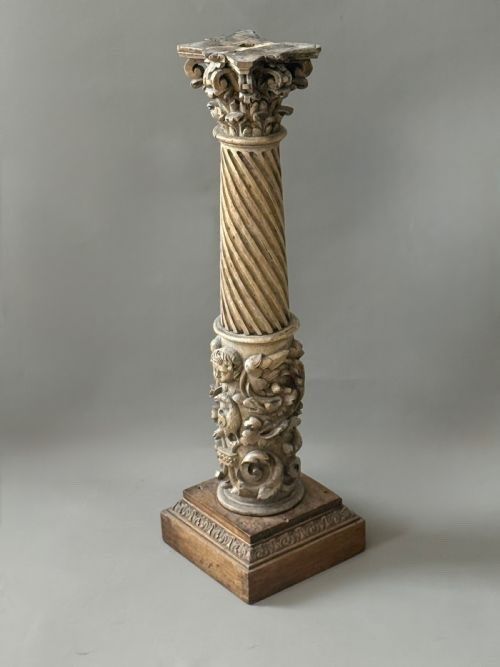
One listed wooden pillar spent centuries supporting an architectural facade before someone decided it needed a lightbulb.
What varies in quality
The distinction between standard production and exceptional work rests on the precision of the engineering and the integrity of the materials. Heavier gauges of brass, substantial cast bases, and crisp hand carving on timber elements elevate the status of a piece.
Proportion and architectural balance dictate visual success, where the weight of the base harmonises with the height of the stem. Signed pieces or works associated with known designers carry distinct markers of refined studio production.
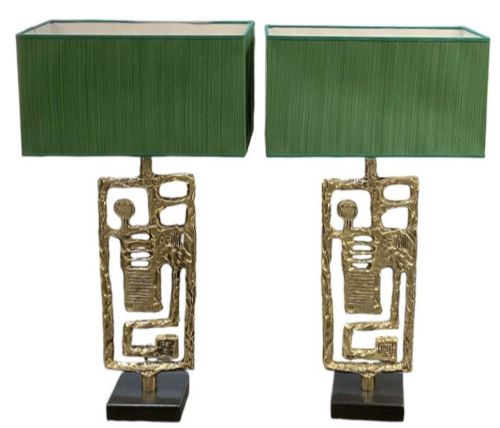
Angelo Brotto for Esperia·Herbert Terry·Wilhelm Wagenfeld·Peter Ghyczy
The Architectural Table Lamp Glossary
- Caryatid
- A carved wooden or stone figure acting as a structural support pillar. This architectural element appears in seventeenth century woodwork.
- Bauhaus
- A modernist design movement emphasising functional geometry and industrial materials. Pieces from this style utilise clean lines and tubular metal.
- Secessionist
- An early twentieth century stylistic movement breaking away from historicism towards geometric abstraction. It is visible in decorative metalwork from the nineteen hundreds.
- Anglepoise
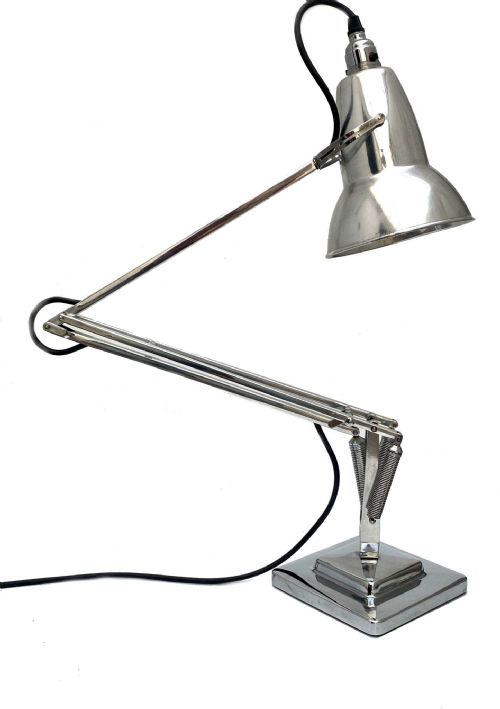
- A balanced mechanical desk lamp utilising springs to maintain position. This design relies on articulated metal arms for adjustable task lighting.
- Continental Baroque
- An ornate seventeenth century artistic style characterised by dramatic carving and theatrical presence. Wooden pillar bases from this period display rich surface depth.
Architectural Table Lamp: Frequently Asked Questions
Are these lamps rewired for modern use?
Many examples are updated with modern wiring to meet current safety standards while retaining their vintage bodies and original sockets where possible.
Buyers should check individual listings to confirm whether a piece has been recently tested and fitted with contemporary plugs.
How do I identify a Bauhaus style lamp?
Bauhaus pieces rely on geometric simplicity, exposed metal tubing, and functional construction without extraneous ornamentation.
They reflect the machine age philosophy of form following function, often pairing nickel or chrome with glass components.
What is a caryatid lamp base?
A caryatid is a sculpted human figure serving as an architectural column or support pillar in place of a standard stem.
In older wooden pieces, these hand carved figures bring classical sculptural drama directly to a table surface.
How do I clean antique brass and chrome?
Metal surfaces require gentle dusting with a soft cloth to preserve the historical patina accumulated over decades of use.
Harsh chemical polishes should be avoided on older plated or patinated metal to prevent stripping the authentic finish.