


Late Qing Furniture
Late qing furniture brings substantial dark woods and intricate carving into a room, offering functional seating, display and storage rooted in nineteenth-century Chinese traditions.
Late Qing Furniture
Late qing furniture encompasses a diverse selection of utilitarian and decorative wooden objects produced during the final decades of the Qing Dynasty, spanning the late nineteenth century and into nineteen hundred. These pieces originate from various Chinese regions, incorporating domestic styles such as provincial designs alongside export pieces destined for international markets.
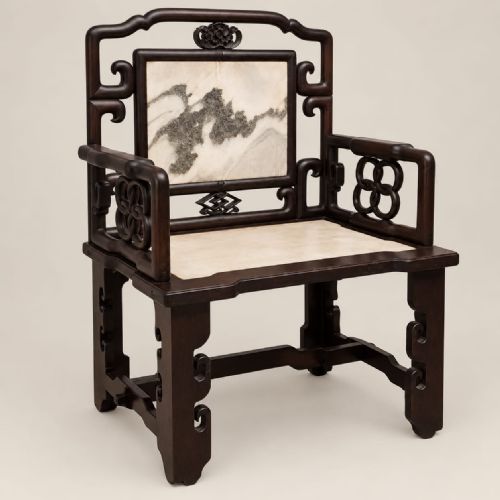
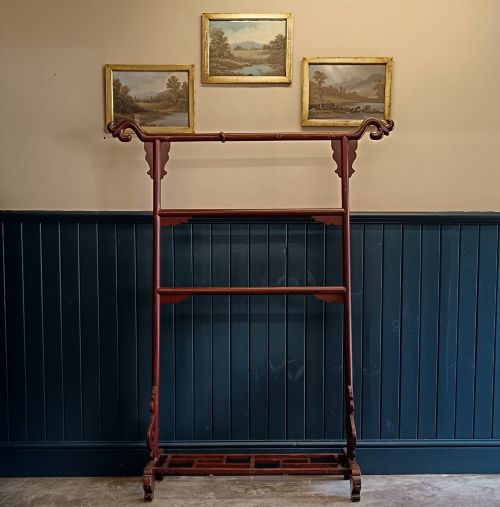
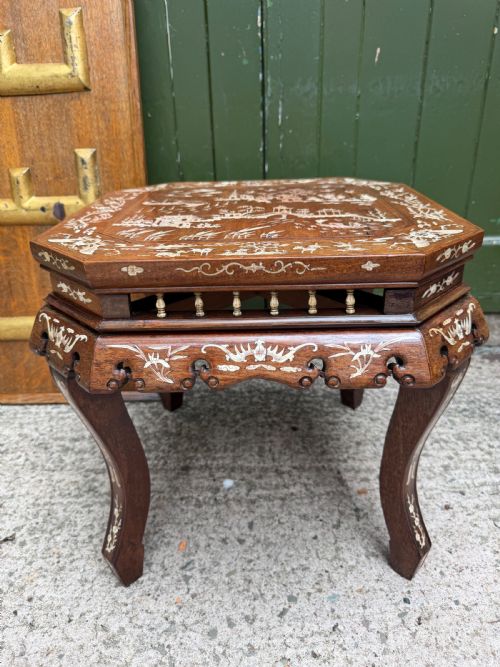
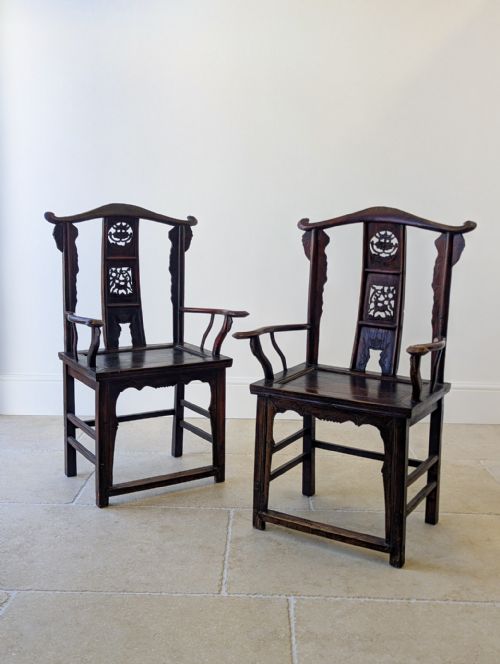
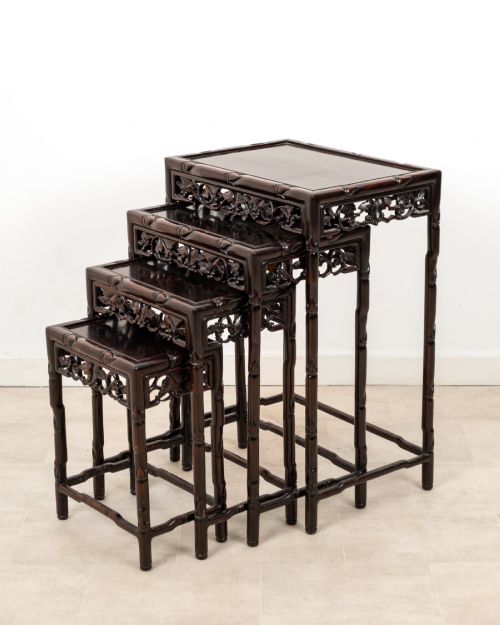
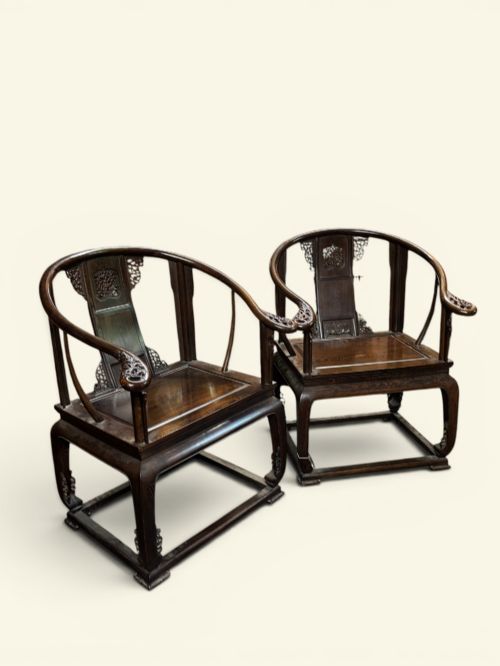
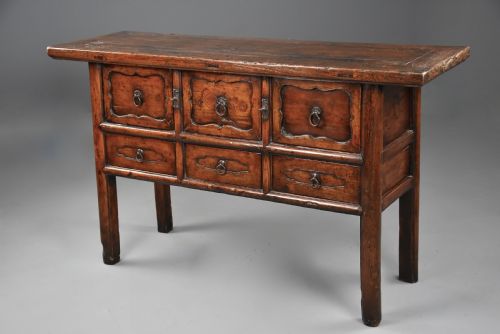
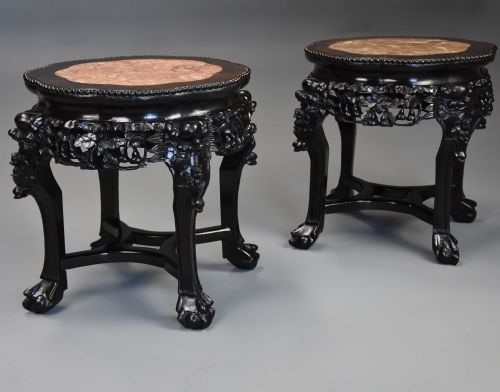
Buyers searching this phrase encounter a wide array of functional forms ranging from seating like yoke-back armchairs, horseshoe-back armchairs and stools to display surfaces including altar tables, side tables, nests of four tables and pot stands. Storage options also appear, covering red and black lacquer cabinets, side cabinets and compound cabinet cupboards.
The objects reflect specific historical periods noted in the evidence, with dates clustering around eighteen eighty, eighteen ninety, and nineteen hundred, occasionally categorized under Victorian due to contemporary cross-cultural aesthetic influences. Craftsmanship from this era adapts traditional Chinese joinery and decoration to meet both domestic utility and foreign demand.
Distinctions in craftsmanship and preservation
Quality separates objects through the depth and crispness of the carved details on the hardwood frames, where deep relief work requires skilled hand execution rather than shallow machine pressing. The density and selection of the timber itself, such as fine-grained huali wood or heavy hongmu, dictate the structural integrity and visual weight of a piece.
Preservation of original surfaces, including undisturbed patinas on rustic elm boards, intact lacquer layers and firmly seated marble inserts, determines the overall integrity of surviving examples. The precision of the traditional joinery joints remaining tight and square further distinguishes superior items from those compromised by loose construction.
Current listings feature dense tropical hardwoods including rosewood, huali wood, hongmu, padouk and zitan alongside structural elm.
The Late Qing Furniture Glossary
- Huali wood
- A fragrant and durable Asian hardwood prized for its decorative grain patterns and utilisation in fine tables, chairs and stools during the Qing Dynasty.
- Hongmu
- A traditional dense red-brown hardwood category translated literally as red wood, frequently employed for carved scholar's tables, pedestals and nest of tables.
- Kang table
- A low wooden table traditionally placed upon a heated brick platform for sleeping and sitting, utilised for serving tea or writing.
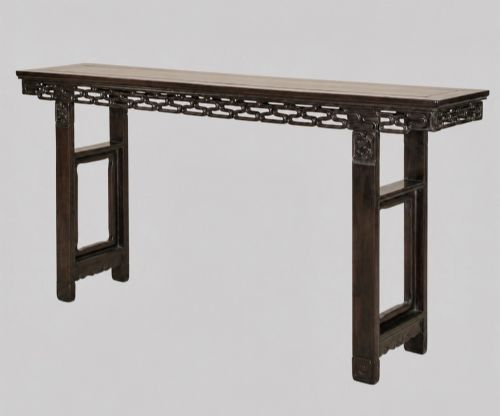
- Altar table
- A long rectangular furnishing traditionally positioned against a wall for ceremonial displays, featuring high clearance and frequently carved scroll ends.
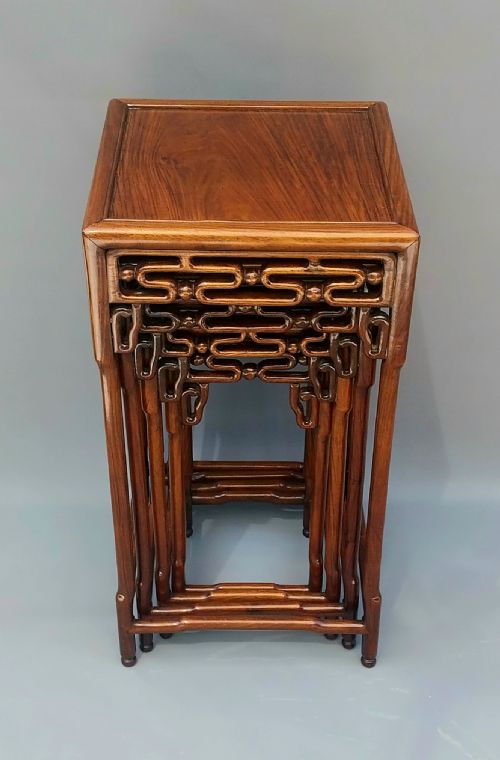
- Nest of tables
- A graduated set of rectangular side tables designed to fit neatly beneath one another when not deployed across a room.
Late Qing Furniture: Frequently Asked Questions
What is late qing furniture?
Late qing furniture comprises tables, cabinets, chairs and stands produced in China during the final decades of the nineteenth century and the turn of the twentieth century. These items showcase traditional joinery and rich decorative carving executed in dense tropical hardwoods or finished with coloured lacquers.
Examples range from utilitarian rustic elm sideboards to highly ornate hongmu altar tables and huali wood pot stands. They represent a period of active craftsmanship that catered to both domestic Chinese interiors and Western export markets.
How were these tables used?
These tables served diverse domestic functions, acting as surfaces for displaying porcelain vases, serving tea, holding scholars' implements or supporting lamps and decorative objects. Low kang tables provided a stable surface for dining or writing while seated on mats or low platforms.
Nests of tables offered flexible auxiliary surfaces that could be pulled out independently for guests and stored compactly afterward. Altar tables and console tables anchored larger rooms, often placed centrally or against walls to display treasured items.
Where should I place a cabinet?
Cabinets and armoires function effectively in living spaces, hallways or dining rooms where their dark hardwood or red and black lacquer finishes can contrast with neutral walls. Their internal shelving and enclosed storage make them practical for stowing tableware, linens or books.
Smaller side cabinets and dwarf sideboards fit well beneath windows or in entryways, providing a flat top surface for lamps or decorative arrangements. Proper placement protects the lacquer or polished timber surfaces from direct, harsh sunlight.