

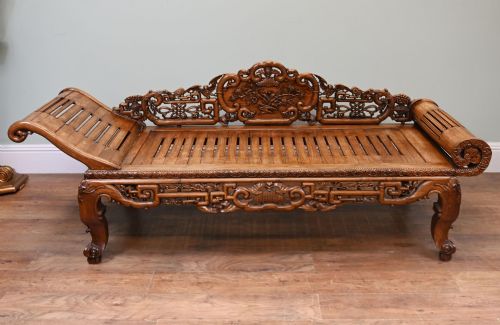


Antique Chinese Daybed
An antique chinese daybed brings structural timber, carved detail and versatile lounging to a room.
Antique Chinese Daybed
When you search for an antique chinese daybed, you enter a category of seating and sleeping furniture spanning the nineteenth and early twentieth centuries. These pieces encompass forms described as day beds, opium beds, marriage beds, and scroll-end kang tables, alongside related benches and sofas.
The versions you are most likely to meet on this page originate from the nineteenth century and the early decades of the twentieth century, including the Qing Dynasty and Chinese Republic periods. They bridge the gap between heavy architectural sleeping platforms and lighter reception furniture.
Makers and workshops constructed these items in woods like elm, pine, hardwood, huali, huanghuali, and mahogany, frequently incorporating brass, marble, rattan, and red lacquer. Their functions shift between formal seating, bench dining, and reclining.
How they were made
Carpenters utilised dense timbers such as hardwood, elm, mahogany, huali, and huanghuali, alongside structural pine for secondary framing. These woods were often left with a polished finish or treated with layers of red lacquer.
Craftsmen integrated decorative elements including intricate carving, applied brass fittings, inset marble panels, and woven rattan seating surfaces. Joinery techniques allowed large framework beds, benches, and scroll-end tables to maintain stability without modern adhesives.
Antique Chinese Daybed Retail Price Guide 2026
Typical asking prices for chinese daybed among the pieces listed under this phrase on Sellingantiques today, from the lower quarter to the upper quarter. They describe what is for sale here now, not the wider market.
Current listings showcase pieces spanning the nineteenth century, nineteen hundred, nineteen twenty, and nineteen thirty, covering the Qing Dynasty and Chinese Republic eras.
What varies in quality
The distinction between ordinary and superior pieces rests on the choice of timber, such as the use of prized huanghuali or huali hardwood versus standard elm or pine. Superior execution also shows in the depth and sharpness of carved dragons and scroll ends.
Intact original surfaces, whether richly applied red lacquer, polished mahogany, or functional rattan and marble inserts, separate well-preserved examples from those with extensive modern replacements. The integrity of the joinery and the balance of proportion dictate the overall presence of each bed or bench.
The Antique Chinese Daybed Glossary
- Kang
- A heated brick sleeping platform in northern China, whose low wooden tables and daybed variants were adapted for daytime seating and resting. These low-standing pieces often feature distinctive scroll ends.
- Huanghuali
- Literally translated as yellow flowering pear wood, this is one of the most sought-after hardwoods in Chinese furniture history. It displays a warm tone and intricate figuring.
- Opium bed
- A colloquial term applied by the West to low Chinese daybeds and resting platforms used for lounging and smoking. They typically feature raised railings or panelled backs.
- Qing Dynasty
- The final imperial dynasty of China, ruling from sixteen forty-four to nineteen twelve. Pieces from this era often showcase elaborate carving and traditional joinery.
Antique Chinese Daybed: Frequently Asked Questions
What is an antique chinese daybed used for?
These pieces served traditional households as resting platforms, seating for guests, and spaces for daytime relaxation or opium smoking. In modern interiors, they function naturally as daybeds, deep sofas, or statement benches.
Their substantial timber frames and carved details make them focal points in living rooms, hallways, or studies. They accommodate cushions easily to enhance comfort while maintaining their historic character.
How do I identify a qing dynasty piece?
Qing period furniture relies on dense hardwoods like elm, huali, or huanghuali, often paired with traditional joinery methods that avoid metal nails. Look for characteristic motifs such as carved dragons and scroll ends.
Red lacquer finishes and inset marble panels also point toward this era of production. Comparing the construction methods to established nineteenth-century examples helps confirm the period.
Are these beds comfortable to lie on?
Historic daybeds and opium beds were built with firm wooden platforms or rattan bases intended for use with rolled padding and textiles. They offer a rigid support structure rather than modern sprung upholstery.
Adding custom squab cushions or mattresses transforms them into practical lounging spaces. Their generous proportions provide ample length for resting during the day.
What woods were used in these beds?
Cabinetmakers selected a range of materials depending on the intended status of the furniture, utilising high-end hardwoods like huanghuali, huali, and mahogany for prestige items. Elm and pine served as sturdy alternatives for structural framing and regional pieces.
Surfaces were frequently finished with red lacquer or left natural to highlight the grain of the hardwood. Accents of brass and marble were added to elevate the visual weight of the timber.
How do I care for lacquered wood?
Lacquered surfaces require protection from direct sunlight and extreme humidity fluctuations to prevent cracking or fading. Dusting gently with a dry, soft cloth preserves the finish without abrasive cleaners.
Avoid placing hot or damp objects directly onto the antique lacquer. Maintaining a stable indoor climate ensures the longevity of both the lacquer and the underlying timber.