



Hardwood Low Bench
A hardwood low bench is a sturdy, low-slung seating or display piece that brings rich regional character and practical surface area to any room.
Hardwood Low Bench
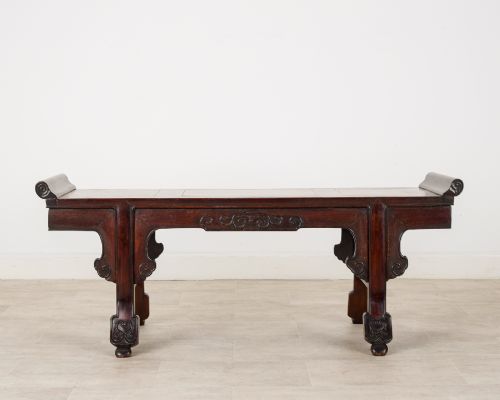
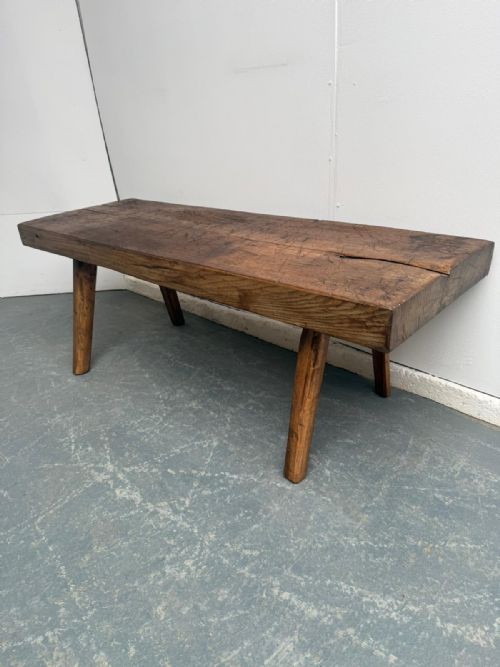
A hardwood low bench encompasses a diverse group of low-slung seating and surface pieces found across several global traditions, including Chinese Qing Dynasty forms, Victorian European utility items, and African or Indian tribal works. When searching for a hardwood low bench, buyers encounter everything from narrow Hungarian pig benches and altar seats to carved opium tables and ceremonial daybeds.
The versions most frequently met on this page originate from nineteenth-century China, Victorian Europe, and various African or Indian workshops. These pieces cross traditional boundaries, functioning equally well as coffee tables, window seats, or low stools depending on their original purpose and current proportions.
How they were made
Makers utilised dense timbers such as oak, teak, huali wood, and ebonised hardwood to construct these resilient frames. Traditional joinery and hand carving define the surface details, particularly on Chinese Qing Dynasty pieces and African ceremonial items.
Some examples incorporate supplementary textures through fabric or tapestry textile elements, while others rely entirely on the natural grain and plank-top construction of the wood.
Hungarian agricultural workers once relied on narrow pig benches that now find peaceful retirement holding cups of tea in modern sitting rooms.
What varies in quality
Quality in a hardwood low bench rests upon the integrity of the timber selection and the depth of craftsmanship evident in the carving or joinery. Dense woods like huali or well-preserved oak exhibit superior weight and structural permanence compared to simpler utility variants.
The distinction also lies in the authenticity of regional styles, where hand-carved details and original patination on nineteenth-century pieces elevate the work above standard utilitarian forms.
The Hardwood Low Bench Glossary
- Hardwood
- Timber derived from broad-leaved trees such as oak and teak, valued for density and durability. It forms the primary structural material for these benches and tables.
- Kang table
- A low Chinese table traditionally used on a heated brick bed for dining or resting. These pieces frequently translate into modern spaces as low coffee tables.
- Opium table
- A traditional low-profile Chinese table utilised for smoking or social gathering. They are characterised by compact dimensions and often feature scrolled ends or carved aprons.
- Pig bench
- A narrow European utility bench, historically used in agricultural settings. In contemporary interiors, their long, plank-top proportions make them ideal for narrow coffee table placement.
Hardwood Low Bench: Frequently Asked Questions
What is a hardwood low bench used for today?
These pieces function primarily as low coffee tables, window seats, or sturdy stools in modern interiors. Their modest height makes them particularly useful for anchoring a seating arrangement without blocking sightlines.
Depending on the specific form, such as a narrow Hungarian plank-top or a carved Chinese kang table, they also serve as display surfaces for books and decorative objects.
How do I identify a nineteenth-century piece?
Nineteenth-century pieces typically display the tool marks, hand-carved motifs, and natural wear patterns characteristic of period craftsmanship. Examining the density of the wood and the construction joints helps confirm the age.
Styles such as Qing Dynasty carvings or Victorian utility designs carry specific structural traits that distinguish them from modern reproductions.
Can I use a low bench as a coffee table?
Many items listed under this category, including opium tables and narrow pig benches, share proportions that suit modern coffee table usage. Their solid plank tops provide a stable surface for everyday items.
Buyers frequently select these regional forms specifically to introduce historic character and low-level utility into a living room.