


Traditional Chinese Sofa
A traditional chinese sofa brings centuries of craftsmanship into a room, offering striking form and lasting utility.
Traditional Chinese Sofa
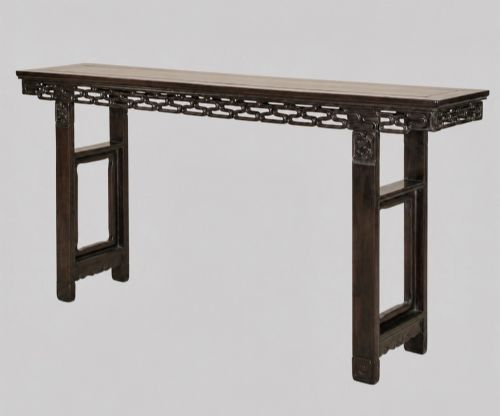
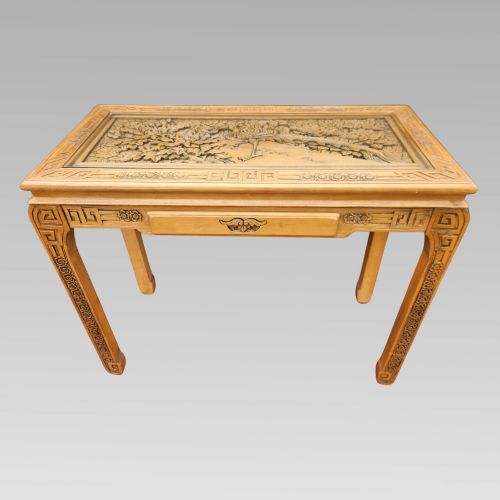
When buyers search for a traditional chinese sofa, they encounter a range of forms spanning the nineteenth century through the early twentieth century. The selections available here include elm and hardwood benches, carved sofas, and suites from periods such as the Qing Dynasty and the Edwardian era.
Most pieces on this page reflect traditional chinese woodworking methods and regional styles, including Chinese Chippendale revival and lacquered finishes. Buyers frequently find substantial wooden benches alongside larger seating configurations and companion tables.
How they were made
Constructed primarily from dense hardwoods, elm, and camphorwood, these pieces rely on traditional joinery methods that bypass metal fixings entirely. Artisans shaped the frames by hand, often incorporating detailed carving directly into the timber.
Surface treatments range from clear lacquered wood to black lacquer finishes, sometimes paired with inset marble tops or brass accents. The careful selection of timber ensures structural stability across centuries of use.
Listings feature items spanning the eighteenth century to the Edwardian period, constructed from elm, hardwood, and lacquer.
What varies in quality
The distinction between standard examples and the finest pieces rests upon the crispness of the hand carving and the selection of timber. Dense, well-figured hardwood demonstrates a higher grade of workshop production than simpler elm constructions.
Execution of the joinery and the preservation of original lacquer surfaces dictate the standing of an individual piece. Finer examples retain their structural integrity and decorative detail with minimal intervention over time.
The Traditional Chinese Sofa Glossary
- Hardwood
- A dense timber used in traditional furniture making for its durability and fine grain. It provides the structural backbone for many Qing Dynasty seating pieces.
- Elm
- A resilient native timber favoured for regional furniture construction. Its fibrous nature allows for sturdy framing and subtle surface patination.
- Lacquer
- A protective and decorative coating derived from tree sap, applied in multiple layers. It creates a smooth, glossy surface often seen on console tables and seating.
- Qing Dynasty
- The final imperial dynasty of China, spanning from the seventeenth to the early twentieth century. Pieces from this era often feature formal proportions and meticulous carving.
Traditional Chinese Sofa: Frequently Asked Questions
How do I care for a hardwood sofa?
Keep wooden seating away from direct heat sources and sudden humidity shifts to prevent timber splitting.
Dust regularly with a soft, dry cloth and avoid applying modern silicone polishes.
Are these sofas comfortable for daily use?
Traditional wooden frames were built for upright seating rather than lounging. Many owners add custom loose cushions for everyday comfort.
The sturdy construction supports regular use in modern living spaces.
How do I identify a Qing Dynasty piece?
Look for dense timber selection, traditional joinery without metal nails, and characteristic hand-carved motifs. Period examples often exhibit deep patination accumulated over generations of use.
Consulting the listed period details helps confirm the age and origin.
Can I place these pieces in a modern room?
The clean lines of elm and hardwood furniture blend effectively with contemporary interior schemes. Their architectural presence acts as a focal point in a hallway or sitting room.
Pairing them with neutral textiles highlights their organic materials.