
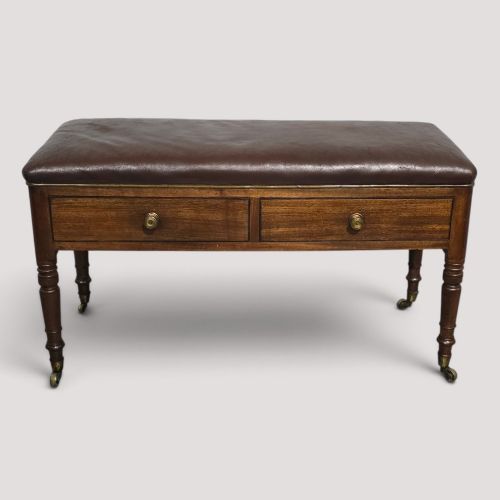
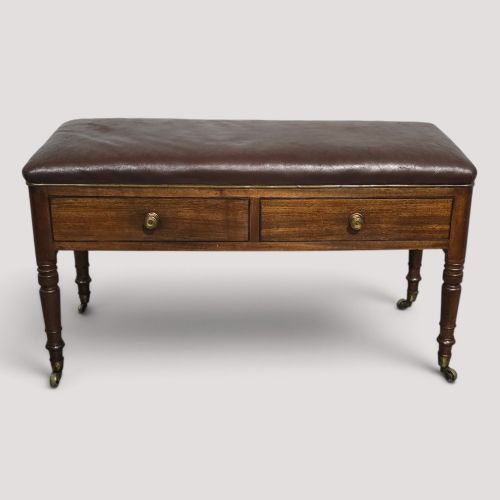
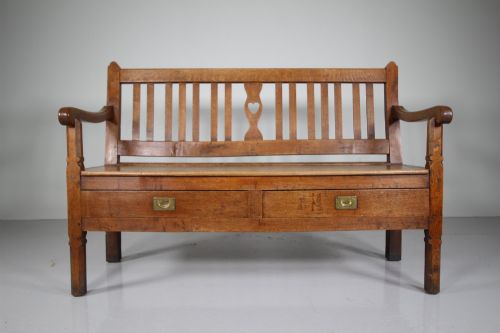
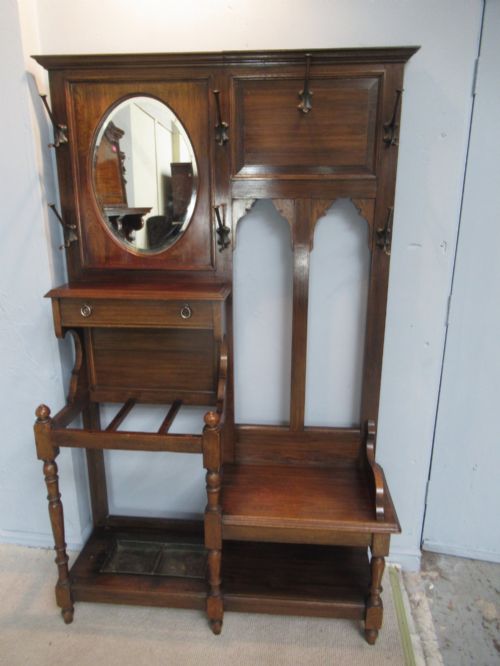
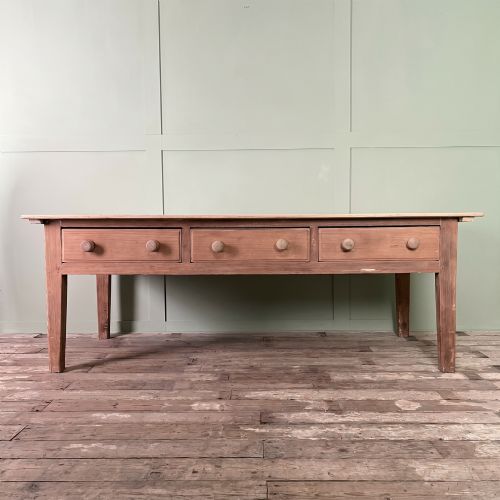


Bench with Drawers
A bench with drawers provides practical hallway storage beneath a sturdy timber seat, marrying utilitarian function with regional character.
Bench with Drawers
A bench with drawers combines practical seating with integrated storage, offering a functional solution for hallways and living spaces. When exploring this selection, buyers encounter practical furniture derived from traditional rural and domestic contexts.
The pieces listed span multiple eras, including seventeenth century, Georgian, and nineteenth century examples, alongside twentieth century pine and Edwardian pieces. These encompass oak monks benches with drawers and pine bow back settles featuring two drawers.
Regional styles shape these items, drawing on English country vernacular, Welsh country traditions, and French country aesthetics. Alongside standard benches and settles, the selection includes related forms like mule chests, hall stands, and console tables.
How they were made
Craftsmen built these pieces predominantly from solid timbers such as oak, pine, elm, and general timber, relying on traditional joinery methods suited to heavy everyday use. Surfaces often display original paint, while hardware components incorporate brass and iron for hinges, pulls, and hooks.
Construction techniques prioritized durability, utilising sturdy boards for seats, backs, and storage compartments. Additional decorative or structural elements occasionally integrate glass panels, carved details, or lacquered finishes as seen in Qing dynasty influences.
Some nineteenth century settles clearly witnessed generations of muddy boots and damp coats before ever reaching a showroom floor.
What varies in quality
Quality in a bench with drawers rests upon the integrity of the timber and the preservation of original surfaces like early paint finishes. Pieces retaining their original structural elements and unblemished hardware sit at the higher end of the scale.
The finesse of construction and the presence of period-appropriate carving or joinery distinguish finer examples from standard utility items. Proportion and the harmonious integration of the storage drawers beneath the seat dictate the visual success of each piece.
The Bench with Drawers Glossary
- Settle
- A wooden bench with a high back, solid arms, and often a storage compartment beneath the seat. This form protected occupants from drafts in older dwellings.
- Monks bench
- A convertible piece of furniture functioning as both a table and a bench with a box base. The hinged back tilts forward to form a table top.
- Mule chest
- A traditional chest featuring one or more drawers at the base beneath a lift-up lid compartment. It bridges the evolution between the simple coffer and the chest of drawers.
- Vernacular furniture
- Domestic objects made by local tradesmen using regional materials and traditional styles rather than high-fashion urban designs. These pieces reflect the practical needs of their immediate communities.
Bench with Drawers: Frequently Asked Questions
Where were these benches typically used?
These pieces traditionally stood in hallways, kitchens, and communal rooms where space and seating were at a premium. The integrated storage provided a convenient place for footwear, textiles, and household goods.
Today, they serve a similar purpose in modern homes, functioning as practical seating that conceals clutter in entryways and living areas.
How do I care for timber furniture with original paint?
Maintain painted and polished wooden surfaces by keeping them away from direct sunlight and sudden humidity changes. Dust gently with a dry, soft cloth and avoid chemical cleaning agents that might lift historic finishes.
Treat the timber occasionally with appropriate natural waxes if the wood appears dry, taking care to test any product on an inconspicuous area first.
How can I tell the period of an oak bench?
Dating relies on examining the construction methods, tool marks, timber selection, and hardware style. Earlier pieces from the seventeenth century often display hand-riven boards and pegged mortise and tenon joinery.
Later nineteenth and twentieth century examples typically incorporate machine-sawn timber and different fastening techniques, reflecting the manufacturing standards of their respective eras.