


Late Meiji Satsuma Ceramics
Late Meiji Satsuma ceramics bring intricate Japanese craftsmanship and heavy gilding into your home, prized for their elaborate court scenes and raised enamel work.

Late Meiji Satsuma Ceramics
Late Meiji Satsuma ceramics comprise earthenware vessels and figures produced during the latter decades of the Meiji period, spanning the late nineteenth and early twentieth centuries. These pieces display distinct Japanese artistry tailored for international appreciation, often combining traditional motifs with refined decorative techniques.
The objects available include vases, decorative bowls, miniature incense burners, and figures, with baluster vases and lidded vessels appearing most frequently. Originating from key centres such as Kyoto and Yokohama, these works showcase the rich artistic output of regional Japanese makers during an era of significant stylistic exchange.
How they were made
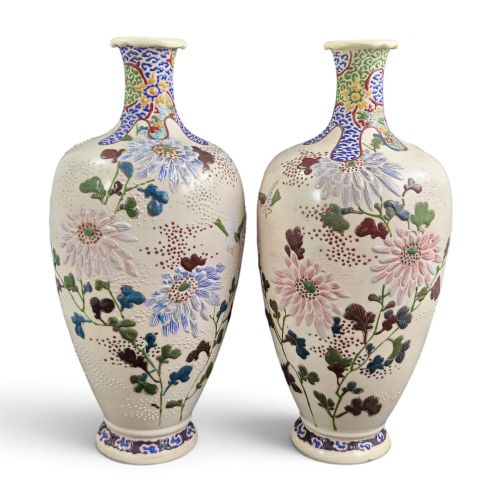
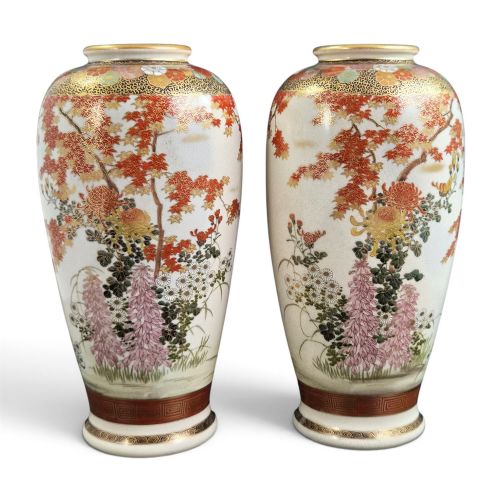
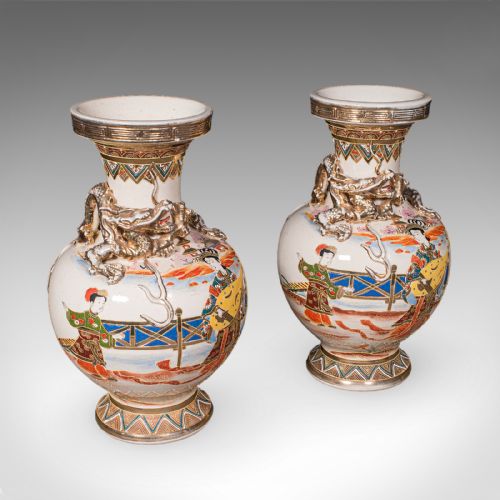
Makers fashioned these pieces from earthenware, applying a fine crackle glaze that formed the base for subsequent painted decoration. Artisans then built up intricate designs using coloured enamel and gold leaf, frequently employing moriage techniques to create raised, tactile surface patterns.
Detailing often incorporated heavy gilt work, outlining court figures, landscapes, and floral panels with precise brushwork. Workshops utilised specialised marks and crests, such as the Shimazu mon, to identify the origin and maker of the ceramic.
Recorded periods span the nineteenth century, Victorian era, Edwardian period, and specific years from 1890 to 1910.
What varies in quality
The refinement of the painted figural processions and landscape panels dictates the distinction between standard production and exhibition quality. Finer examples display meticulous brushwork in the enamel and extensive application of gold leaf, whereas simpler pieces rely on more repetitive floral motifs.
The precision of the raised moriage work and the clarity of the underlying crackle glaze also signal superior execution. Signed works attributed to recognised makers or specific workshops generally demonstrate a higher tier of artistic ambition.
Hododa Yokohama·Kinkozan·Kotobuki do·Hayakawa·Nanzan
The Late Meiji Satsuma Ceramics Glossary
- Moriage
- A ceramic technique using slip to build up raised decorative patterns before glazing and firing. This method gives vases and bowls a distinct tactile quality.
- Mori
- A term often associated with raised enamel decoration on Japanese ceramics. It enhances the depth of floral and figural scenes.
- Shimazu mon
- The heraldic badge or crest of the Shimazu clan, frequently found on Satsuma wares. It marks the traditional patronage associated with these ceramics.
- Koro
- A traditional Japanese incense burner, often featuring a pierced lid. These miniature or larger vessels appear in ceramic forms with delicate handles.
- Baluster
- A vase shape with a rounded body that tapers toward the neck and base. This classic silhouette provides a balanced canvas for detailed panels.
Late Meiji Satsuma Ceramics: Frequently Asked Questions
What are late Meiji Satsuma ceramics?
These pieces are earthenware ceramic objects decorated with enamel and gold leaf, originating from Japan during the late nineteenth and early twentieth centuries. They encompass items such as vases, bowls, incense burners, and sculptural figures.
The style bridges traditional Japanese iconography with the tastes of the international market, frequently featuring elaborate court scenes, religious panels, and landscapes.
How do I identify Satsuma ceramics?
Satsuma ceramics are typically recognised by their cream-coloured earthenware body covered in a fine crackle glaze. They almost universally feature painted designs enriched with enamel and gold gilt.
Many pieces also bear maker signatures, workshop marks, or the Shimazu family crest, which helps pinpoint their origin and period of creation.
How were these ceramics used originally?
These decorative objects served primarily as display pieces for international exhibitions and wealthy Victorian interiors. Vases and urns graced drawing rooms, while incense burners functioned as ornamental vessels.
Figural sculptures, such as depictions of Hotei and attendants, added cultural narratives to domestic collections.
How do I live with Satsuma ceramics?
Living with these ceramics involves placing them on stable surfaces away from direct sunlight to protect the delicate enamel and gold leaf. Their intricate painted panels reward close inspection in well-lit spaces.
They pair well with period interiors as well as eclectic modern settings, acting as focal points on side tables or cabinets.