





Late 19th Century Watercolour
A late 19th century watercolour brings the careful observation and atmospheric colour of the Victorian era directly to your wall.
Late 19th Century Watercolour
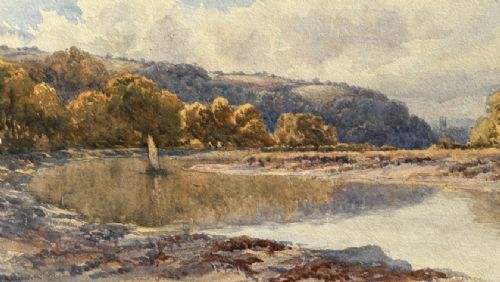
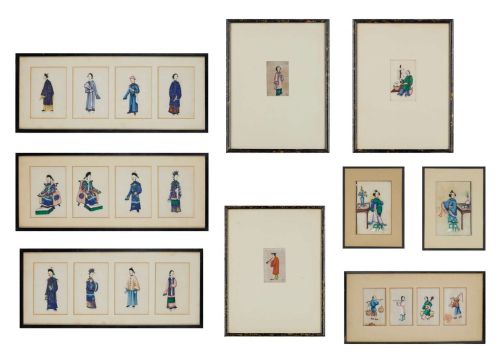
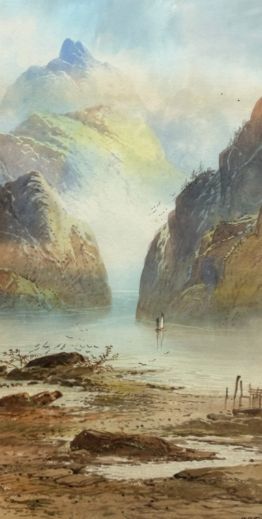
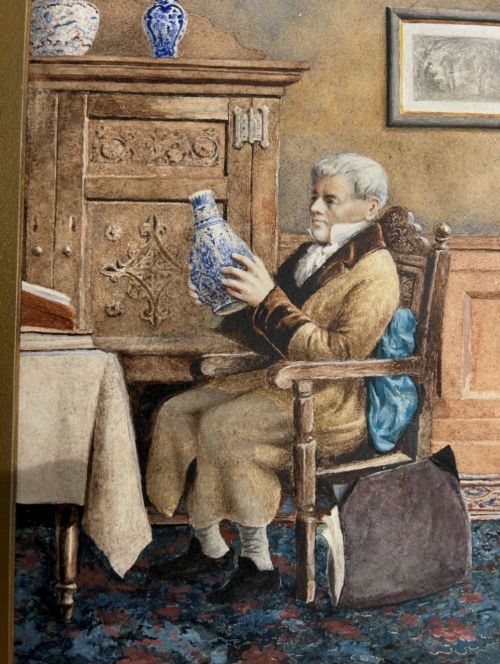
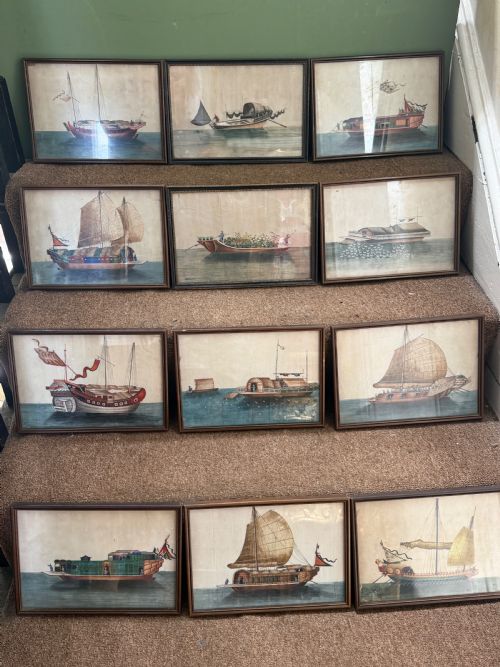
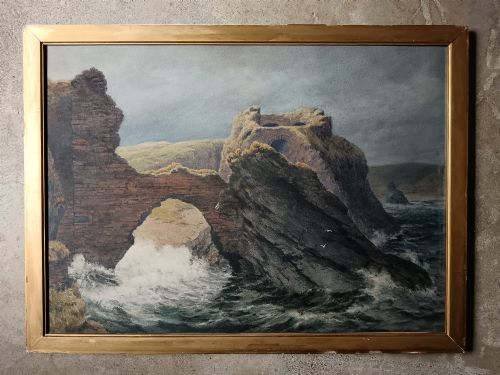
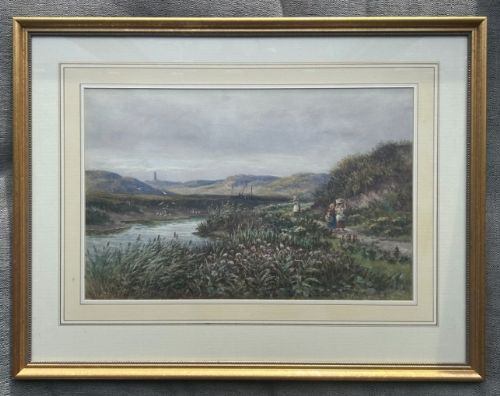
A late 19th century watercolour represents a broad artistic output spanning British landscapes, coastal views, genre portraits, and maritime scenes created during the height of the Victorian period and the Qing Dynasty. Buyers frequently encounter framed works depicting Scottish highlands, Welsh valleys, Thames river scenes, and traditional rural life alongside Chinese export paintings.
The category encompasses both signed original paintings by established professional artists and delicate pencil and watercolour portraits, miniature studies, and travel sketches. These works often arrive in period gilt frames, preserving the intimate scale and transparent washes intended by the original creators.
How They Were Made
Artists of this era applied finely ground watercolour pigments suspended in water onto heavy paper surfaces or traditional pith paper, often building depth through successive transparent washes. Many works combine watercolour with gouache to achieve opaque highlights, whilst others integrate delicate pencil underdrawing to define architectural and figurative details.
Framing typically utilised carved wood and gilt wood surrounds, occasionally incorporating glass protection to safeguard the water-soluble pigments from atmospheric moisture and handling over the decades.
A few ducks paddle forever on nineteenth-century rivers while distant Victorian sheep graze undisturbed beneath painted clouds.
What Varies in Quality
The distinction between standard works and exceptional examples rests upon the surety of the brushwork, the management of light, and the compositional balance achieved across the paper. Top-tier pieces demonstrate confident handling of atmospheric effects such as misty coastal air, storm-tossed seas, or dappled sunlight through foliage, executed by trained professional hands rather than routine commercial studio production.
Preservation of the original pigment vibrancy and paper stability also dictates standing, as exposure to light diminishes fugitive hues. Additionally, the presence of original period gilt frames and documented artist signatures enhances the historical integrity of the piece.
David Law·James Orrock·William Henry Earp·Alfred Young Nutt·Henry Stacy Marks·William Banks Fortescue·John Moxon·Philip Richard Morris·Robert Little·Harry Wanless·Colin H Greenwood·Henry Bailey·John Syer·Robert Buchan Nisbet·Kate E Booth·Clara Montalba·William Tatton Winter·Thomas Pyne·Mary Eley·Carleton Grant·William Shakespeare·John Baragwanath King·William James Boddy·James Robertson Miller·Walter Emsley
The Late 19th Century Watercolour Glossary
- Gouache
- An opaque watercolour paint mixed with a white pigment to create solid, heavier areas of colour. This medium allows artists to add bright highlights and dense details over transparent watercolour washes.
- Pith paper
- A delicate oriental material formed from the pith of the Tetrapanax papyrifer plant, commonly used in nineteenth-century Chinese export paintings. It possesses a velvety texture that absorbs vibrant pigments exceptionally well.
- Pre-Raphaelite
- An artistic movement and style characterised by intense realism, detailed observation of nature, and brilliant colour palettes. Works influenced by this circle display meticulous attention to botanical and figurative elements.
- Seascape
- A pictorial representation of the sea, coastal cliffs, harbours, and maritime shipping activity. These subjects allowed late-nineteenth-century painters to showcase their mastery of restless water and changing atmospheric skies.
Late 19th Century Watercolour: Frequently Asked Questions
How should I hang a vintage watercolour?
Position your painting away from direct sunlight to protect the sensitive water-soluble pigments from fading over time. Maintaining a stable indoor environment without excessive humidity ensures the paper and period wooden frame remain preserved.
Utilising conservation-grade glass during any future reframing also provides an extra layer of defence against atmospheric pollutants and dust.
What subjects are common in these paintings?
Victorian artists frequently recorded British landscapes, dramatic Welsh and Scottish mountain ranges, busy fishing harbours, and tranquil river valleys. Genre portraits and architectural studies of historic towns also appear regularly across these nineteenth-century portfolios.
Alongside domestic British views, Chinese export works depict traditional junks and figural studies on delicate pith paper.
Are these paintings usually signed by the artist?
Many works bear the original signature or monogram of the creator, often placed discreetly in the lower corner of the composition. Some pieces include period annotations, dates, or historical notes written on the reverse of the paper or frame.
Unsigned examples frequently attribute to specific regional schools or followers of well-known nineteenth-century masters based on style and technique.
How do I identify a Victorian frame?
Period frames from this era typically feature heavy moulded wood construction finished with applied composition ornament and traditional water or oil gilding. They often display subtle signs of age such as minor craquelure or gentle rubbing on the gilded surfaces.
These surrounds were specifically proportioned to complement the delicate scale of watercolour paper without overwhelming the artwork.