



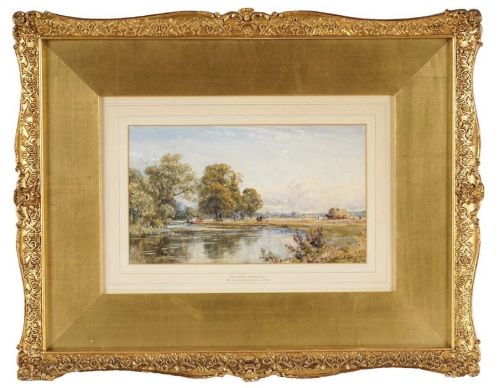
Victorian Watercolour Landscape Painting
When you seek a victorian watercolour landscape painting, you examine framed works on paper capturing nineteenth-century topography, coastal views and rural scenes.
Victorian Watercolour Landscape Painting
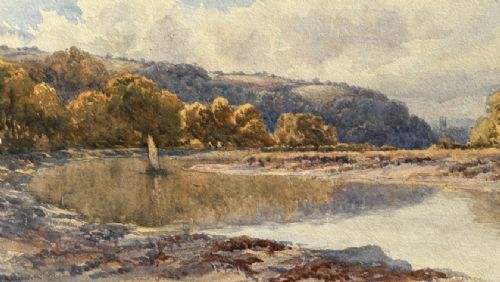
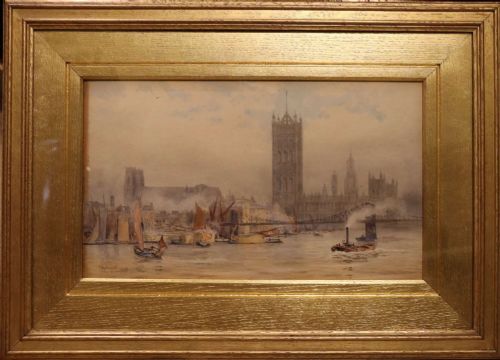
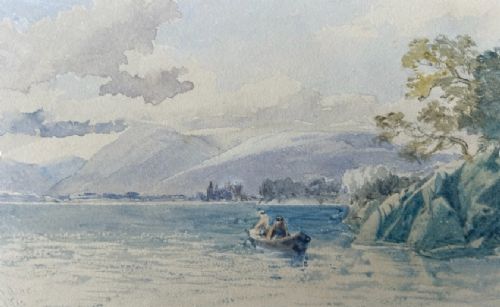
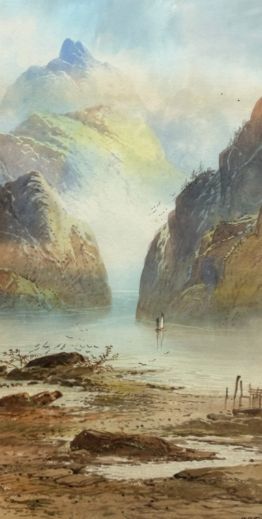
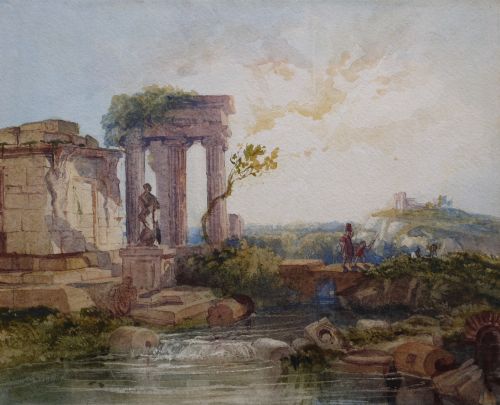
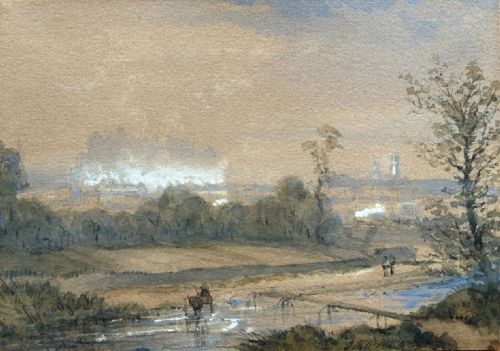
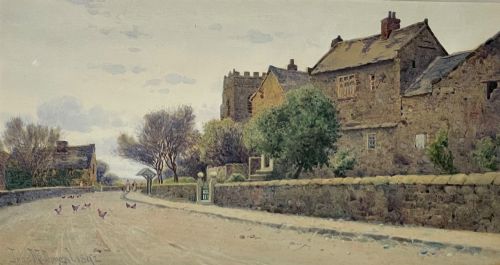
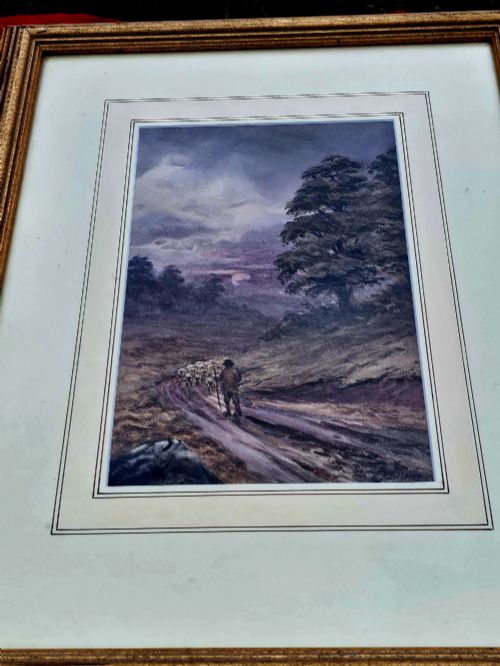
A victorian watercolour landscape painting represents the nineteenth-century British tradition of topographical, rural and coastal art executed on paper. These works frequently record specific scenes across Scotland, Wales and England, ranging from Highland lochs to Yorkshire harbours.
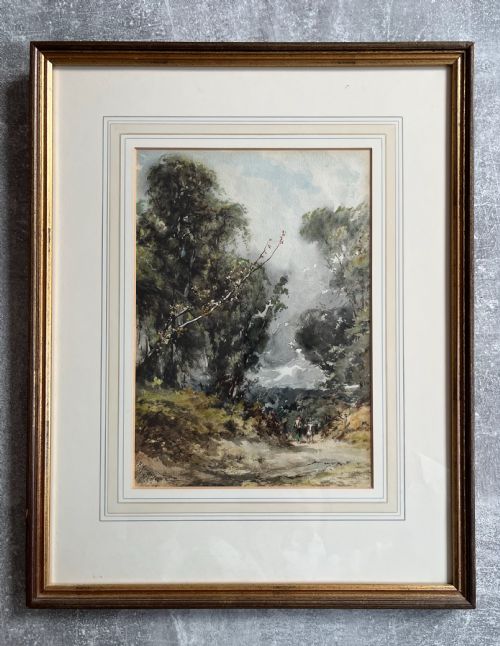
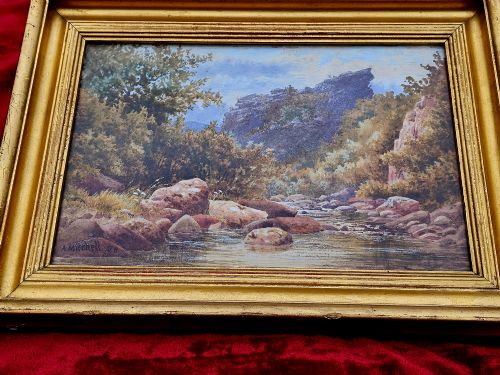
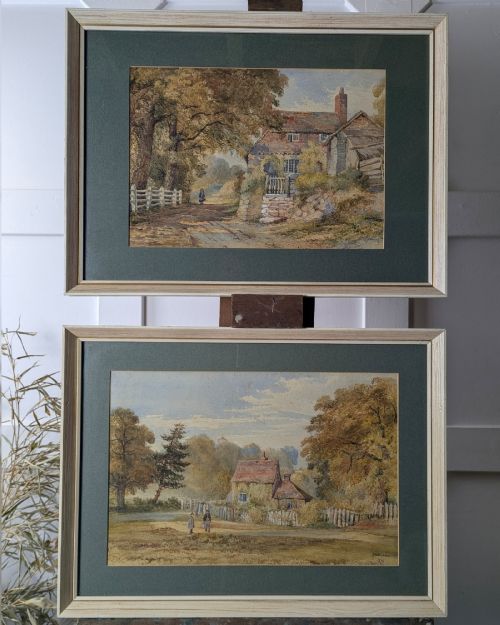
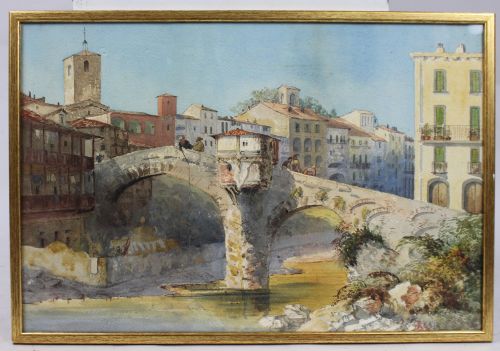
The pieces on this page appear within nineteenth-century frameworks involving glass, wood and gilt frames, often bearing signatures, dates or monograms from period artists. Subjects span from pastoral river valleys and pastoral farmland to busy fishing ports and historic townscapes.
How They Were Made
Artists painted primarily with watercolour pigment suspended in water, applied directly to heavy paper supports using fine or broad brushes. Details were occasionally picked out with bodycolour or gum arabic to add depth and opacity to highlights.
Finished sheets were protected behind glass and housed within wooden frames, frequently finished in gold leaf or gilt wood. This method kept the delicate water-soluble pigments preserved from atmospheric moisture and handling.
Several Victorian artists evidently painted sheep with a penchant for gathering right at the market gates.
What Varies in Quality
Quality rests upon the artist's command of perspective, light and atmosphere, distinguishing skilled professional output from amateur sketches. Stronger examples exhibit confident brushwork, accurate tonal control and a distinct sense of place.
The condition of the paper and pigment integrity also determine standing, alongside the presence of period-appropriate framing and clear signatures or documentation linking the work to a recorded hand.
Thomas Miles Richardson Jnr·James Orrock·William Henry Earp·Richard Principal Leitch·John R Prentice·Alfred Young Nutt·John McDougal·EJ Letheren·William Banks Fortescue·Robert A Nottingham·Robert Thorne Waite·Th Thibault·Hector Caffieri·Ernest Arthur Rowe·Frederick Walker·Frederick James Kerr·Alfred G Morgan·Carlo Ferranti·Bonomi Edward Warren·Henry Martin Pope·David Cox·Herman S Melville·George Stanfield Walters·Henry Barlow Carter·Frederick Hines
The Victorian Watercolour Landscape Painting Glossary
- Watercolour pigment
- Finely ground colour particles mixed with a water-soluble binder, used to create transparent washes on paper.
- Gilt wood
- Timber frames coated in a thin layer of gold leaf or metallic paint, common in Victorian presentation.
- Monogram
- A cipher or initials intertwined by the artist as a signature, frequently found in lower corners of period sheets.
- Topographical
- Representing specific real-world locations and landmarks with geographical accuracy, a central focus of nineteenth-century British art.
Victorian Watercolour Landscape Painting: Frequently Asked Questions
How do I care for a Victorian watercolour?
Keep the framed work away from direct sunlight to prevent the watercolour pigments from fading over time.
Ensure the room maintains stable humidity levels to protect the paper and the wooden gilt frame from environmental stress.
Are these paintings original works?
The listings comprise original hand-painted artworks created on paper by nineteenth-century artists, rather than modern reproductions.
Many pieces bear period signatures, monograms or dates that verify their creation during the Victorian era.
What subjects are most common?
British landscapes dominate the selections, featuring rural valleys, rivers, Highland scenes and pastoral farmland.
Coastal views, fishing boats and harbour scenes from locations like Yorkshire and Cornwall also appear frequently.
How can I tell the date?
Artists frequently signed and dated their watercolours directly on the front of the paper or on the backing.
Stylistic cues, framing materials and accompanying biographical records of the painters help establish the decade of creation.