
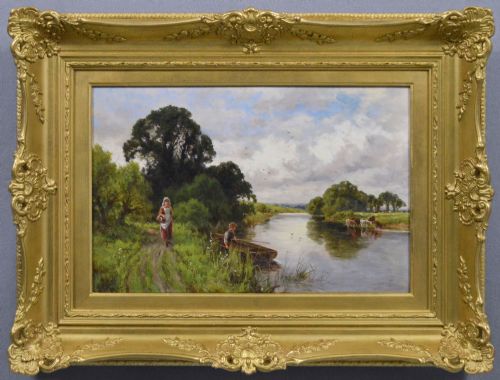
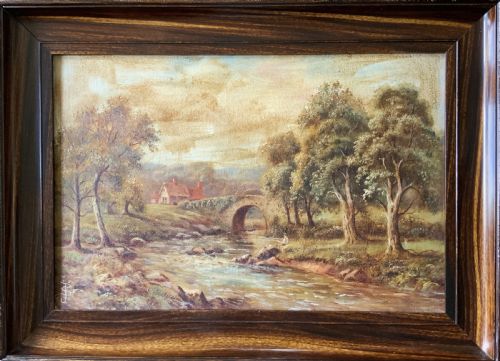


English Country River Painting
An english country river painting captures rural waterways and pastoral scenes across centuries of British landscape art.
English Country River Painting
An english country river painting portrays rural waterways, mills, and bridges throughout the British countryside. These artworks range from early nineteenth-century academic oils to later impressionist watercolours.
The selections on this page feature regional views spanning the Thames, Yorkshire dales, and East Anglian broads. Works vary from detailed Victorian realism to broader twentieth-century brushwork.
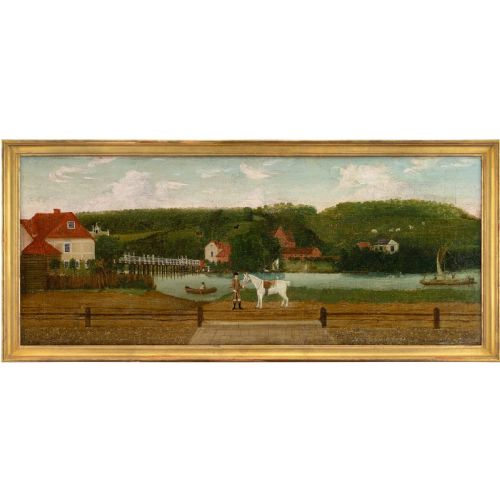
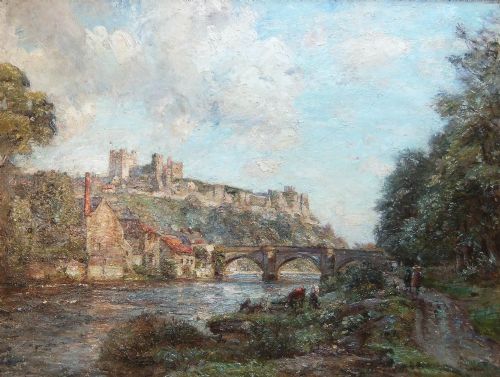
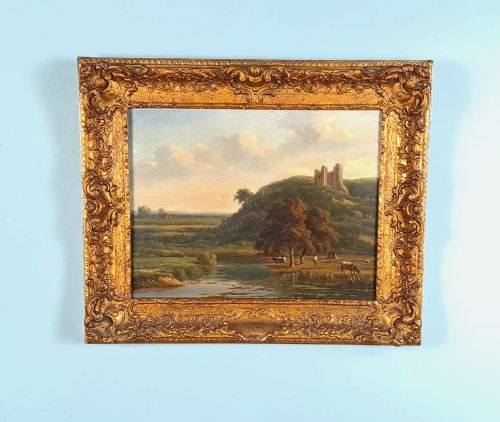
Most examples originate from the nineteenth and early twentieth centuries, recorded on canvas, wood panel, or paper. Subjects frequently include figures, livestock, and vernacular architecture beside pastoral streams.
Materials and Construction
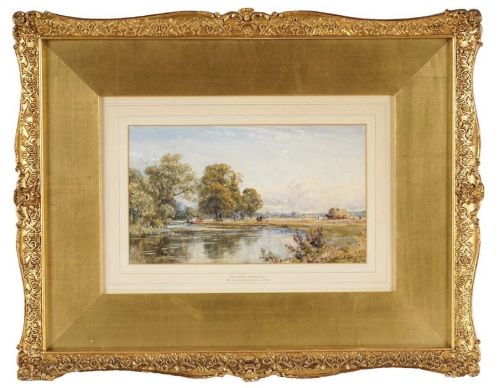
Artists utilised oil paint on stretched canvas, wooden panels, or canvas laid onto board for sturdier compositions. Watercolours were executed on paper, sometimes employing bodycolour to build opaque highlights.
Pigments were applied with traditional brushes, ranging from fine sable hairs for watercolour details to hog-bristle brushes for textured oil applications. Support materials include oak panels and paper sheets watermarked from the period.
Anglers appear patiently waiting by the reeds in several Victorian canvases, perhaps hoping the fish bit as often as the painters dipped their brushes.
Factors of Quality
Quality rests upon the handling of light, atmospheric perspective, and the accurate rendering of water reflections. Superior pieces demonstrate confident brushwork and a balanced composition that anchors the waterway within the landscape.
Condition plays a role, particularly regarding the stability of paint layers on wood panels or the preservation of paper in watercolours. Works by named practitioners holding exhibition records generally show greater refinement in draughtsmanship.
Robert Thorne Waite·Herbert Royle·Henry H Parker·Sydney Yates Johnson·Hubert Wellington·Arthur Reginald Smith·Henry John Kinnaird·George Hilditch·George Arthur Fripp·Frederick G Coulridge·Charles Harmony Harrison·Thomas Baker·William Manners·Thomas James Lloyd·Thomas Creswick·Abraham Hulk Junior·William Traies·Paul H Ellis·Amos Green·William Hoggatt·George Lambert·John Syer Junior·Frederick George Coleridge·Henry Cheadle·Ernest Higgins Rigg
The English Country River Painting Glossary
- Oil on Canvas
- Pigment bound in drying oil applied to a woven fabric support stretched over a wooden frame. This medium allowed artists to rework areas and build rich surface textures.
- Watercolour
- A paint consisting of colour suspended in a water-soluble binder, traditionally applied to paper. It relies on the white of the paper showing through transparent washes.
- Panel
- A rigid support made from wood, such as oak or mahogany, used for painting before canvas became dominant. Panels offer a stable surface that prevents the cracking associated with flexed cloth.
- Board
- A stiff paper-based or wood-pulp sheet utilised as a cheaper alternative to canvas or panel. Artists frequently painted directly onto these supports during plein air excursions.
English Country River Painting: Frequently Asked Questions
How do I date an antique river painting?
Dating relies upon stylistic markers, costume details of figures near the water, and framing techniques. Exhibition labels or inscriptions on the stretcher provide definitive temporal clues.
Material analysis of the canvas support or wood panel further helps narrow the period of creation.
What is the difference between oil and watercolour river paintings?
Oils utilise slow-drying pigmented oil binders on canvas or board, allowing for thick textures and deep tonal ranges. Watercolours employ water-soluble pigments on paper, producing lighter, translucent effects.
Oils typically require heavier framing without glass, whereas watercolours need glazing to protect the paper surface.
Where should I hang a landscape painting?
These works suit dining rooms, studies, or hallways with controlled ambient light away from direct sunlight. Stable indoor humidity protects canvas tension and prevents paper degradation.
Positioning the painting at eye level enhances the perspective of the receding river landscape.
Are most of these paintings signed?
Signatures appear on many examples, often placed discretely in a lower corner near the riverbank. Some nineteenth-century works remain unsigned or carry later attribution inscriptions on the reverse.
Unsigned pieces are frequently attributed to regional schools based on technique and subject matter.