


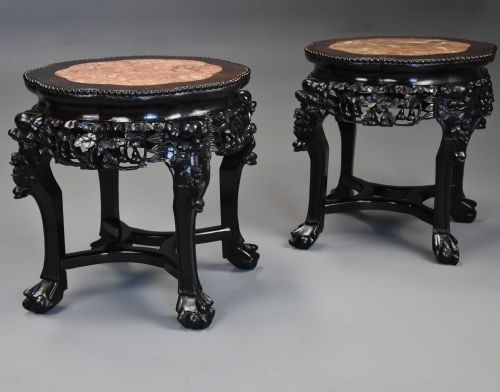


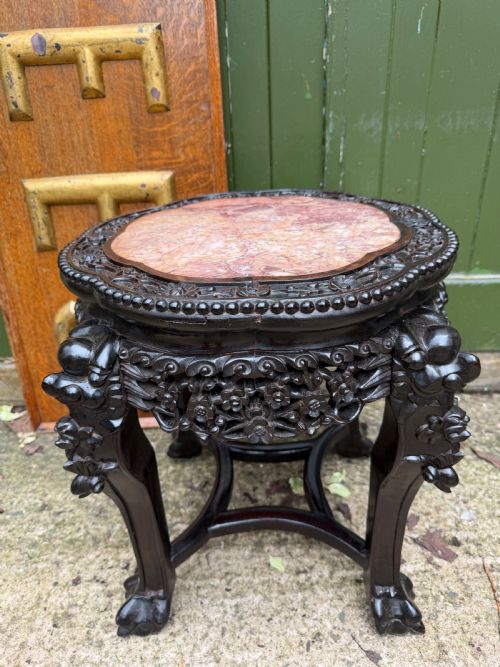


Late 19th Century Chinese Stand
A late 19th century chinese stand brings dense timber, inset stone and steady craftsmanship to an interior.
Late 19th Century Chinese Stand
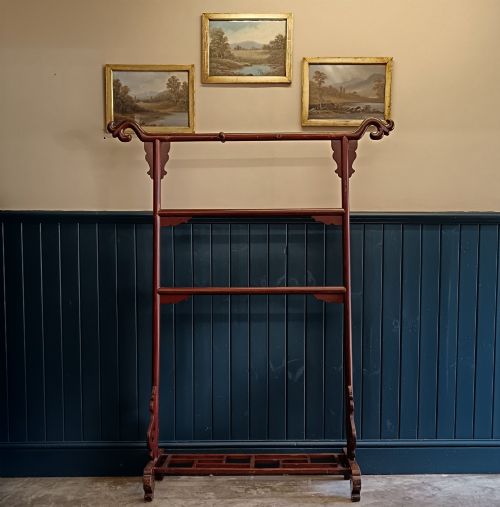
A late 19th century chinese stand serves as a sturdy platform for heavy vessels, plants and decorative objects within a room. The selection here leans heavily toward hardwood pot stands, jardiniere tables and low pedestals originating in the Qing Dynasty.
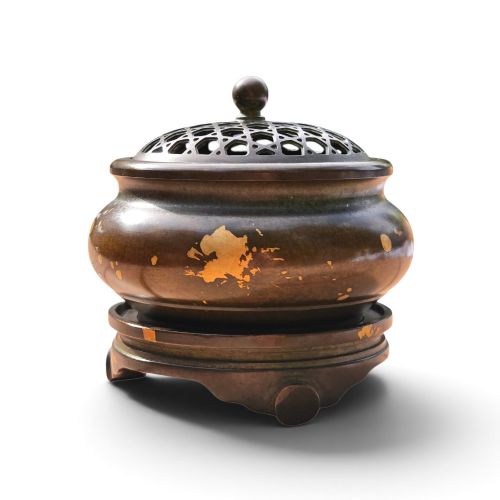
Buyers encounter circular and rectangular occasional tables alongside paired stands designed to hold urns or bronze censers. These domestic furnishings reflect the traditional interior arrangements of the period, employing dense timbers to support display pieces.
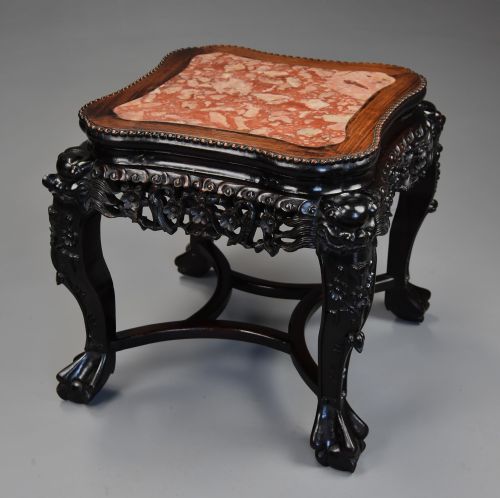
Many items feature inset tops of variegated marble or quartz framed by carved aprons and cabriole legs. The forms range from compact tripod tables to tiered stands built for specific utilitarian display.
How they were made
Maker's workshops utilised dense regional timbers including hongmu, rosewood and ebonised hardwood, selected for their weight and grain. These woods were carved with deep relief motifs, geometric panels and interlocking joinery without relying on modern metal fasteners.
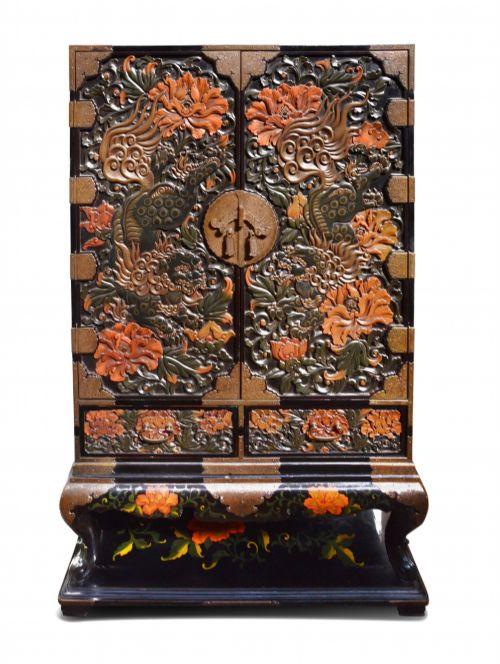
Surfaces frequently incorporate inset panels of rouge marble, quartz or polished stone fitted flush into the wooden frame. Selected bronzes and brass components appear alongside lacquered finishes and gold gilding on specific items.
Late 19th Century Chinese Stand Retail Price Guide 2026
Typical asking prices for late 19th century chinese stand among the pieces listed under this phrase on Sellingantiques today, from the lower quarter to the upper quarter. They describe what is for sale here now, not the wider market.
The listings span the late 19th century into the early 20th century, dominated by hardwood, marble and bronze materials configured as plant stands and low tables.
What varies in quality
The standard of carving dictates the visual strength of the piece, separating deep, crisp relief work from shallow or hurried execution. Proportion and balance in the legs and aprons determine whether a stand holds its visual weight under a heavy vessel.
The stability of the timber joints and the tight fit of the inset marble or stone top mark the difference between standard production and superior workshop output. Original surface patination on the dense hardwood remains a primary indicator of untouched age.
The Late 19th Century Chinese Stand Glossary
- Hongmu
- A dense, heavy tropical hardwood favoured in Qing Dynasty furniture for its deep colour and durability. It takes a high polish and supports intricate hand carving.
- Jardiniere stand
- A low table or pedestal specifically constructed to support a ceramic flower bowl or plant pot. These pieces feature water-resistant stone insets or sturdy wooden platforms.
- Marble inset
- A slab of decorative stone fitted directly into the centre of a table top to resist moisture from plant pots and hot vessels. The stone varieties add contrasting colour to the dark timber frame.
- Qing Dynasty
- The imperial dynasty ruling China from the mid-17th century until the early 20th century. Furniture from this era is characterised by robust hardwoods and traditional decorative motifs.
Late 19th Century Chinese Stand: Frequently Asked Questions
What were these stands used for originally?
These pieces served as elevated platforms for holding bronze censers, heavy ceramic planters, vases and scholar's objects within a home. Their sturdy construction supported substantial weight while lifting display items off the floor.
In traditional settings, placing important objects on dedicated stands highlighted their artistic merit and protected delicate surfaces underneath from moisture or heat.
How do I identify a Qing Dynasty piece?
Identification relies on the use of dense regional hardwoods like hongmu and rosewood combined with traditional joinery methods. Carved motifs typically follow historical Chinese iconography and aesthetic standards of the period.
Examine the weight, the depth of the wood carving, and the integration of inset marble tops, which reflect workshop practices of the late 19th century.
How do I care for hardwood furniture?
Maintain these wooden surfaces by keeping them away from direct heat sources and sudden humidity changes that cause timber to split. Dust regularly with a soft, dry cloth without applying modern chemical polishes.
Periodic application of appropriate wax preserves the natural sheen of the dense wood and protects the historic patination accumulated over generations.
Can these stands support heavy items today?
The dense hardwoods and traditional frame joinery provide immense structural strength designed to bear significant downward weight. Most surviving examples remain entirely capable of holding heavy ceramic pots or stone sculptures safely.
Check the stability of the legs and the tightness of the frame joints before placing valuable or heavy objects upon the surface.