







Asian Carved Plant Stool
These asian carved plant stool examples bring solid wood and marble together to elevate greenery in any room.
Asian Carved Plant Stool
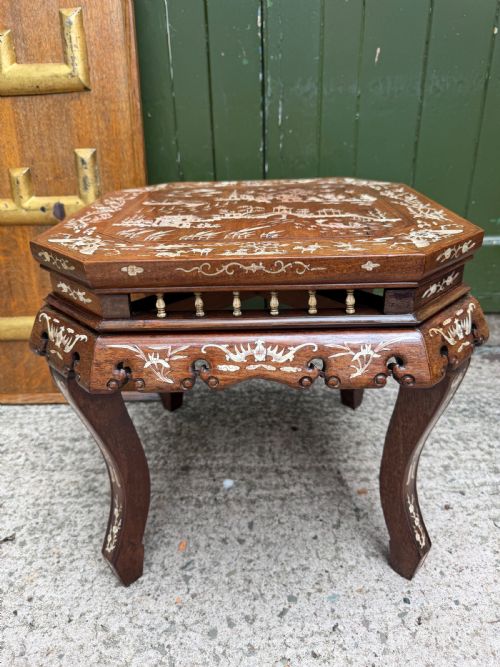
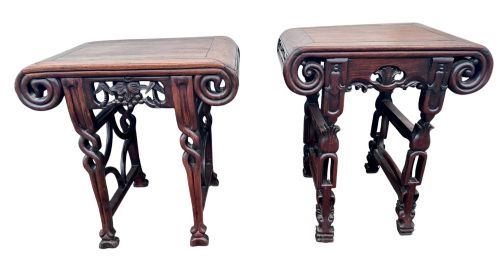
An asian carved plant stool serves primarily as a decorative platform for heavy ceramics, urns, and indoor greenery. Buyers seeking these items will encounter sturdy pedestals, low occasional tables, and compact side tables designed with carved details.
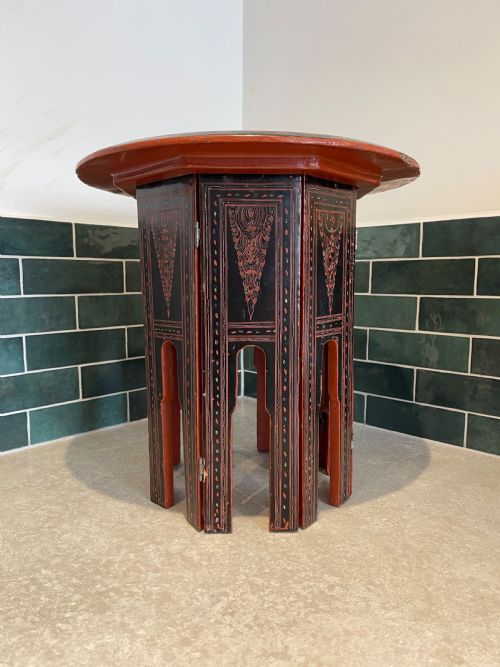
The pieces on this page span the nineteenth century, the Meiji period, the Qing dynasty, and the Chinese Republic period. Forms range from round occasional tables and elephant seats to rootwood stands with quartz tops and lacquered pedestals.
Originating across various Asian traditions, including Chinese vernacular and Anglo-Burmese styles, these items function equally well as accent stools or lamp tables. Hardwoods and marble dominate the construction, providing a robust surface for display.
Materials and construction
Makers utilised dense timbers such as rosewood, teak, hongmu, elm, and rootwood to ensure structural stability for heavy tops. Skilled artisans carved intricate botanical and animal motifs directly into the solid wood frames.
Inset marble slabs and quartz tops frequently form the central surface of the stands, offering a cool, durable plane that resists moisture from potted plants. Surface treatments extend to painted lacquer and accents of gold leaf on select pedestals.
Asian Carved Plant Stool Retail Price Guide 2026
Typical asking prices for asian carved plant stool among the pieces listed under this phrase on Sellingantiques today, from the lower quarter to the upper quarter. They describe what is for sale here now, not the wider market.
Listings feature items dated to the nineteenth century, nineteen hundred, eighteen ninety, nineteen twenty, and the Victorian era.
Distinctions in quality
Quality rests on the depth and precision of the wood carving, where crisp lines and deeply undercut motifs separate superior examples from simpler pieces. The natural figuring of the grain in rosewood and hongmu also elevates the visual appeal of a stand.
The integration of inset marble or stone top components requires precise joinery that remains stable over decades of temperature shifts. Heavier, denser timbers and intact original painted lacquer finishes indicate a higher grade of craftsmanship.
The Asian Carved Plant Stool Glossary
- Hongmu
- A dense, dark hardwood traditionally used in Chinese furniture making. It translates literally to red wood and provides exceptional weight and durability.
- Rootwood
- Timber fashioned from the root systems of trees, utilised for its natural, gnarled contours. Makers select these organic shapes to create singular, rustic stands.
- Meiji Period
- The era in Japanese history spanning from eighteen sixty-eight to nineteen twelve. Pieces from this time often exhibit refined carving and integration with Western tastes.
- Jardiniere
- An ornamental pot or stand for holding plants and flowers. These stands provide an elevated base to showcase large ceramic planters.
- Anglo-Burmese
- A style reflecting nineteenth-century British colonial influence on Southeast Asian furniture production. It combines local timber traditions with specific European functional forms.
Asian Carved Plant Stool: Frequently Asked Questions
What is an asian carved plant stool?
An asian carved plant stool is a small, decorative table or pedestal built from hardwood, often featuring carved floral or animal motifs. These stands were traditionally made to elevate heavy ceramic planters and indoor greenery.
Today, buyers utilise them as side tables, lamp stands, or accent pieces in living spaces. Their compact footprints and decorative carved surfaces make them versatile for displaying objects.
How do I date a carved plant stand?
Dating relies on examining the timber species, joinery techniques, and stylistic markers associated with specific periods like the Qing dynasty or Meiji period. Lighter rootwood examples and heavier rosewood pieces often point to late nineteenth or early twentieth-century production.
Materials such as inset marble tops and painted lacquer finishes also help place the piece within a broader nineteenth or early twentieth-century timeline. Comparing the carving depth and motifs against known regional styles provides further context.
Are these tables strong enough for heavy pots?
These tables are constructed from dense hardwoods like teak, hongmu, and rosewood, which provide substantial structural integrity. The incorporation of solid wooden frames and inset stone tops allows them to support significant weight.
Because they were originally designed to hold heavy planters and decorative urns, they remain well-suited for daily use with potted plants or lamps. Their sturdy leg construction prevents wobbling under load.
How do I style a plant stool at home?
A plant stool works effectively in a corner, beside seating, or beneath a window where natural light reaches the foliage. Placing a trailing plant or a ceramic bowl on top allows the carved wooden base to remain visible.
These pieces also function independently as occasional tables or lamp stands without any greenery on top. Their varied heights and shapes make them useful for creating layered focal points in a room.