




Large Wool Floor Carpet
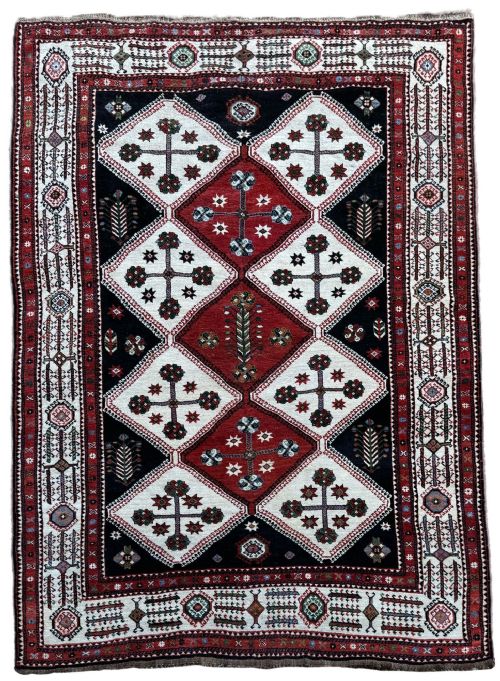
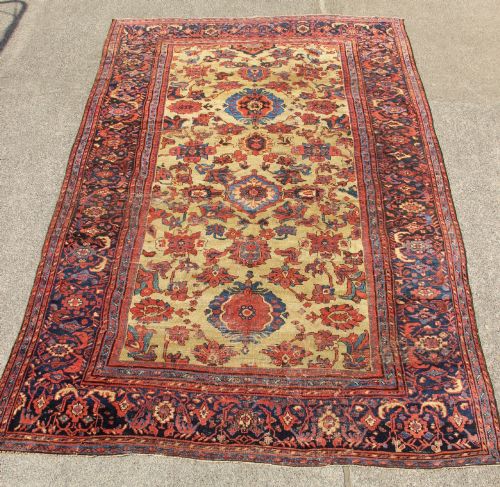
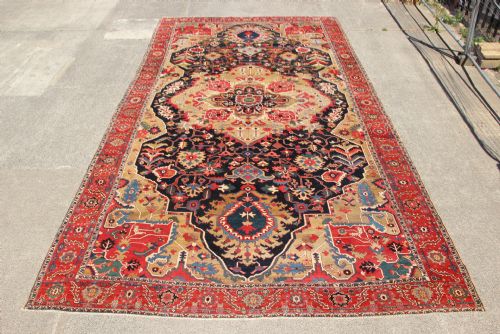
A large wool floor carpet anchors a substantial room with dense patterns and enduring substance woven directly into the fabric.
Large Wool Floor Carpet
A large wool floor carpet serves as a major decorative foundation for spacious rooms, drawing on centuries of weaving traditions from Persian, Ottoman, and tribal workshops. When searching for a large wool floor carpet, buyers encounter expansive room-sized textiles originating primarily from the late nineteenth and early twentieth centuries.
How they were made
These floor coverings rely on natural wool pile hand-knotted onto sturdy cotton foundation warps and wefts, ensuring a dense structure that withstands centuries of foot traffic. Artisans utilised traditional hand-spinning and dyeing techniques, extracting rich tones from natural materials to build intricate geometric and floral layouts.
Weavers constructed each piece on upright looms, tying precise knots by hand before clipping the pile to an even height and securing the ends with woollen or cotton selvedges.
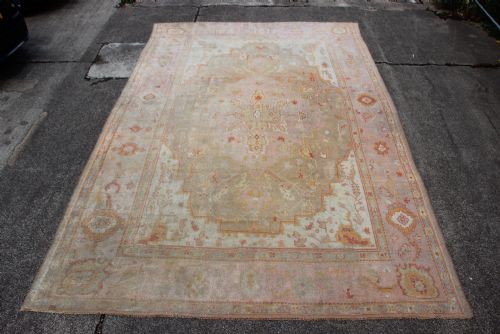
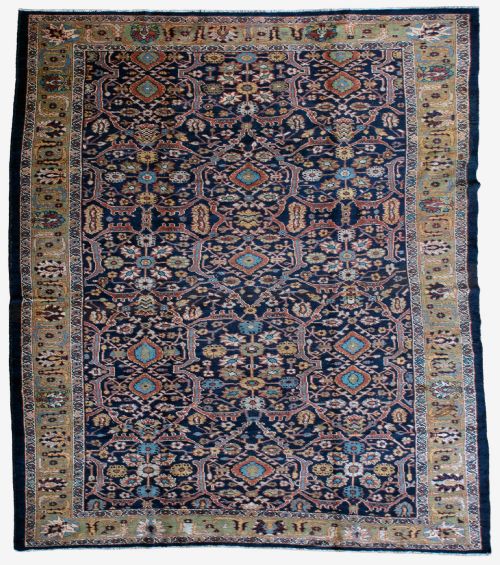
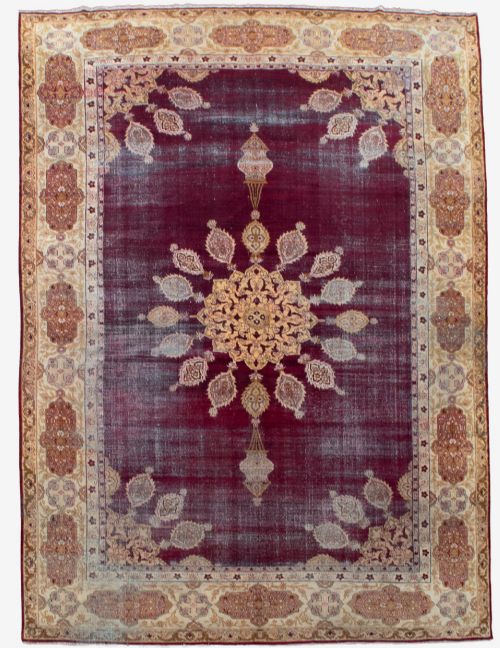
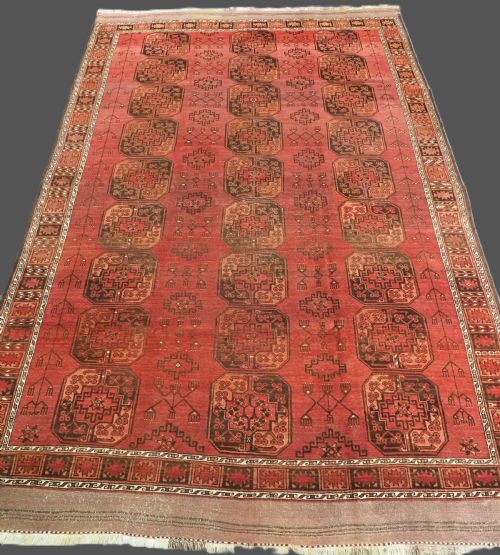
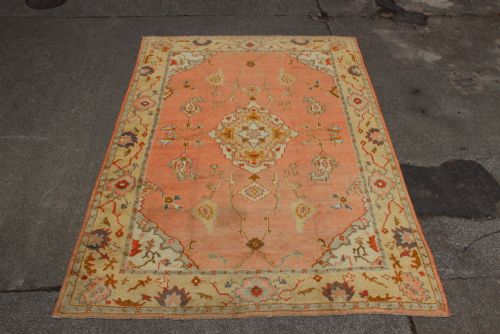
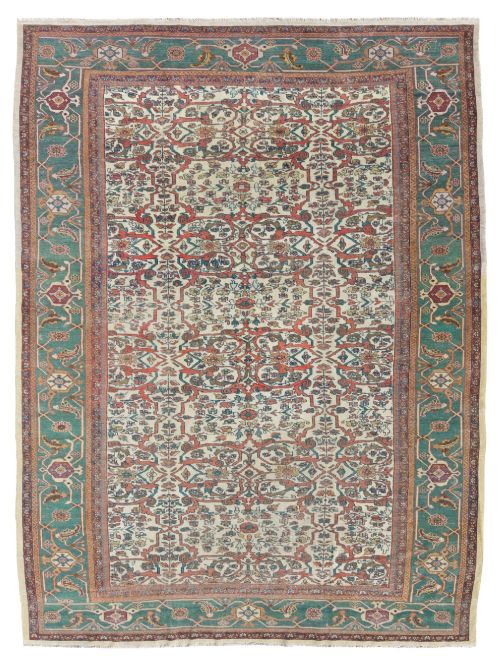
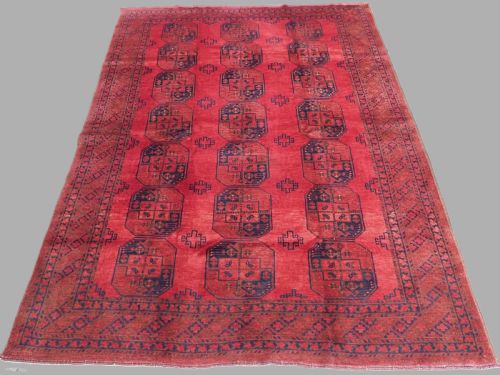
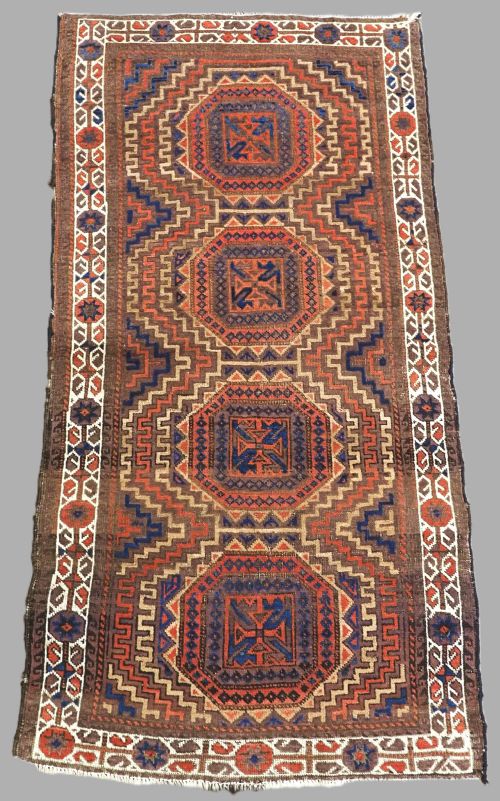
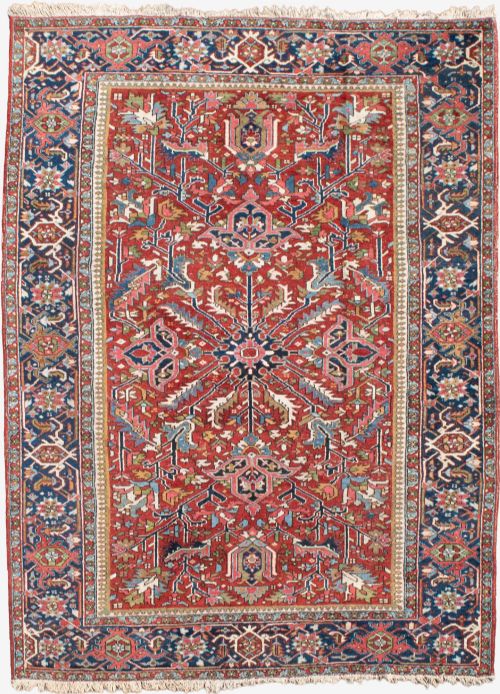
Listings feature room-sized pieces dated across the late nineteenth and early twentieth centuries, dominated by Heriz, Tabriz, and Oushak styles.
What varies in quality
Quality rests primarily on the fineness of the knotting density and the crispness of the design execution across the field. Tighter knots allow intricate medallions and delicate borders to hold their definition clearly from a distance.
The depth and brilliance of the wool pile also separate ordinary examples from exceptional ones, as lustrous wool retains rich saturations of colour even after decades of natural wear.
Haji Jalili
The Large Wool Floor Carpet Glossary
- Pile
- The upright yarn loops that form the tactile surface of the carpet. This dense layer of wool absorbs heavy wear while displaying the woven design.
- Warp
- The vertical foundation threads stretched tightly on the loom before knotting begins. These cotton cords carry the entire structural tension of the textile.
- Weft
- The horizontal threads passed between rows of knots to bind the structure together. They stabilise the width of the carpet behind the pile.
- Medallion
- The prominent central ornamental motif found in many traditional Persian and Anatolian designs. It anchors the visual symmetry of the entire field.
- Selvedge
- The finished side edges of a carpet bound tightly to prevent fraying. This protective wrapping secures the outer warps along the length.
Large Wool Floor Carpet: Frequently Asked Questions
How do I clean a wool carpet?
Gentle vacuuming without a rotating brush roll removes surface dust safely from the wool pile. Professional specialist cleaning remains essential for removing deep dirt without damaging natural dyes.
Water exposure must be strictly controlled to prevent colour bleed or foundation shrinkage. Periodic professional inspection preserves the structural integrity of older fibres.
Where should I place a large carpet?
These room-sized pieces anchor principal reception rooms, dining areas, and expansive hallways with heavy foot traffic. Placing furniture partly on the rug helps unify seating arrangements within the space.
Underlay provides essential grip and cushioning on hard wood or stone floors. This protective layer reduces friction between the wool pile and the subfloor.
How do I tell Heriz from Oushak?
Heriz carpets feature bold geometric medallions and sturdy, architectural corner spandrels woven in structured palettes. Their robust wool suits formal drawing rooms and libraries.
Oushak carpets display softer, more curvilinear floral patterns with muted terracotta, blue, or ivory tones. Their relaxed weave creates a calmer decorative presence in modern interiors.
Are these carpets suitable for daily use?
Dense hand-spun wool and sturdy cotton foundations make these antique textiles remarkably durable for everyday life. Generations of traditional households walked on these exact floor coverings.
Rotating the rug every year ensures even wear patterns across high-traffic zones. Proper placement away from direct harsh sunlight prevents uneven fading of natural dyes.