

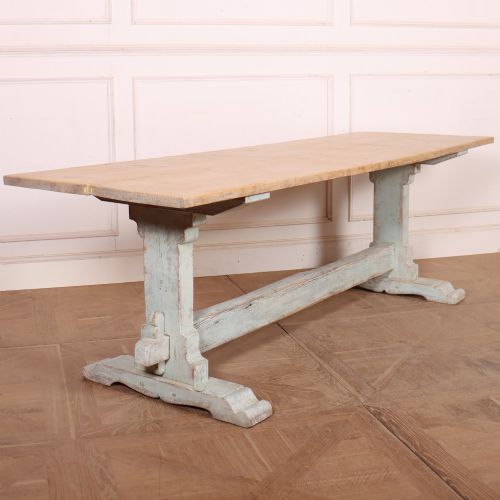
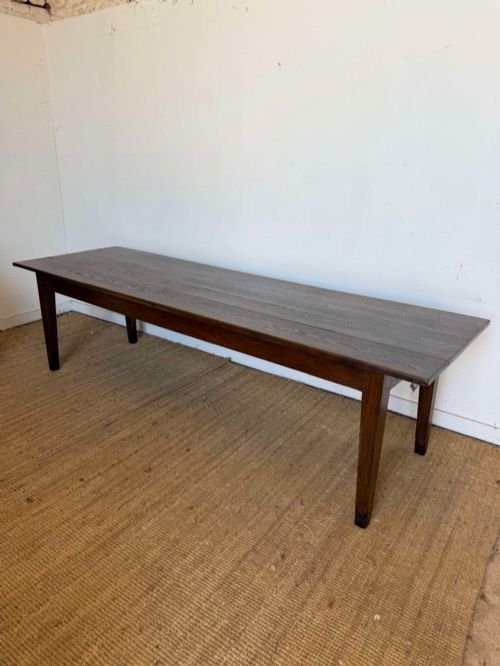
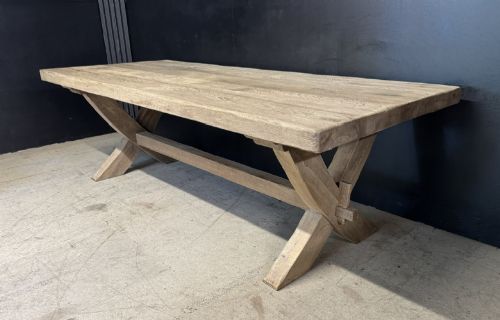
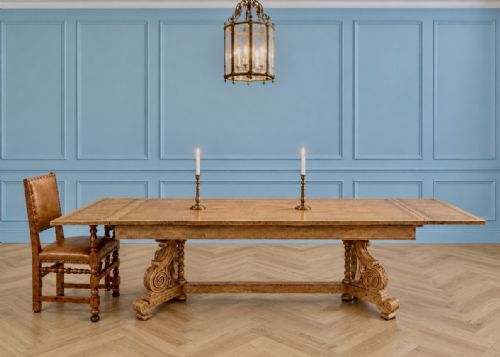
Large Wooden Trestle Table
A large wooden trestle table provides a generous surface for dining and gathering, grounded in centuries of practical craft.
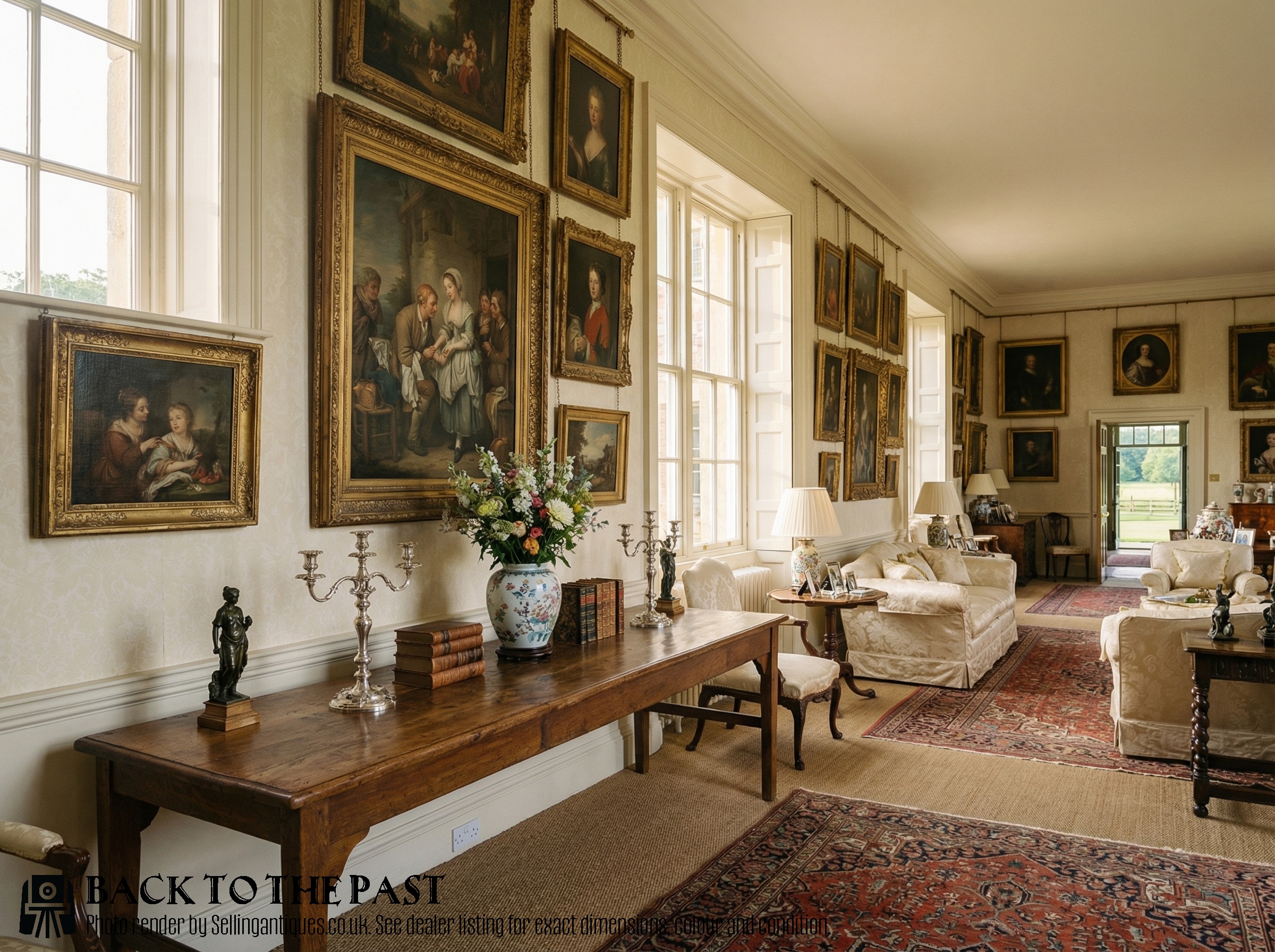
Large Wooden Trestle Table
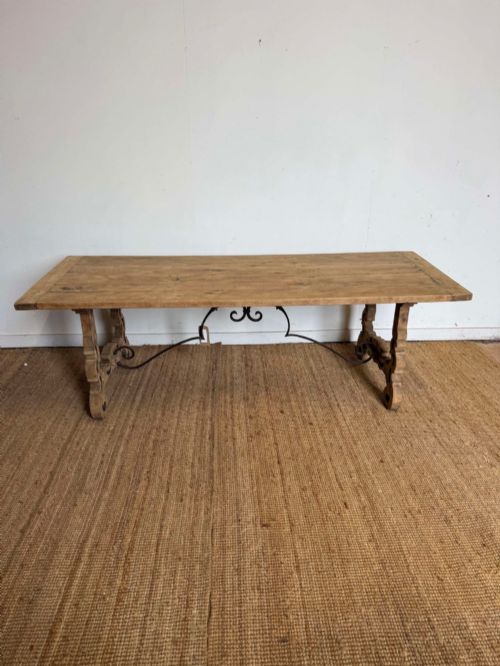
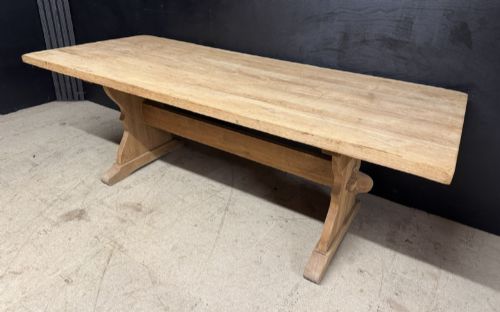
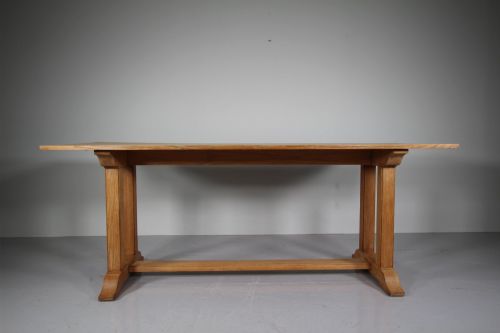
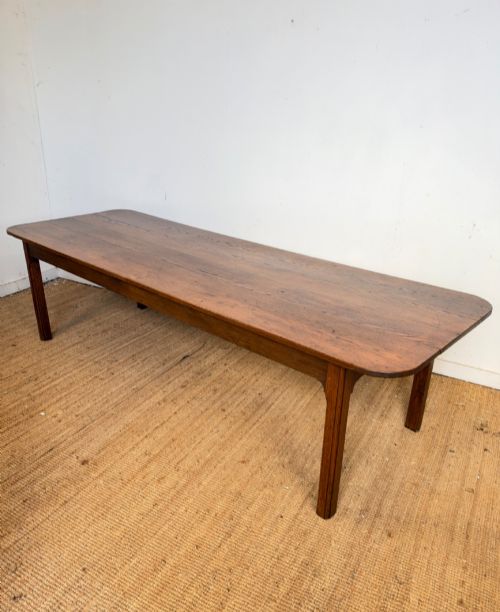
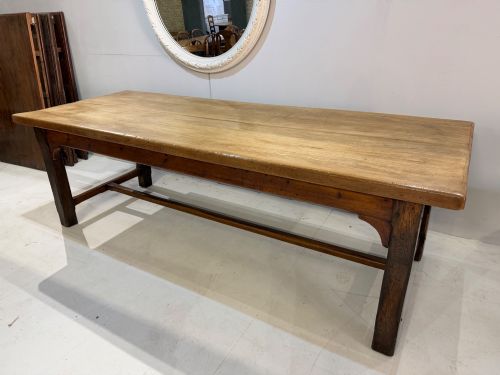
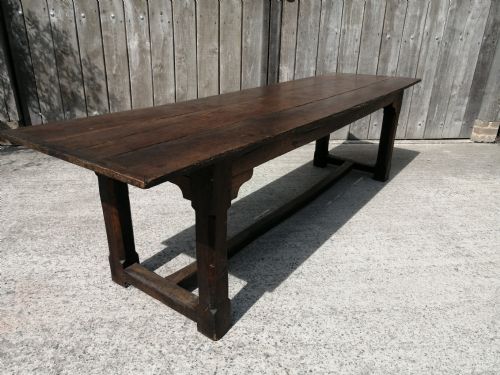
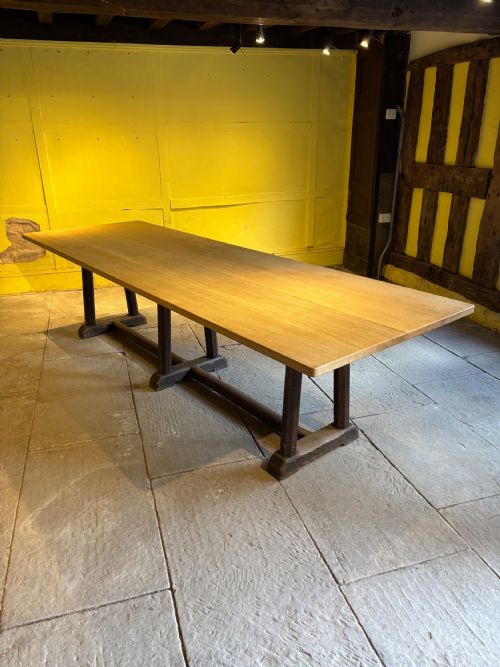
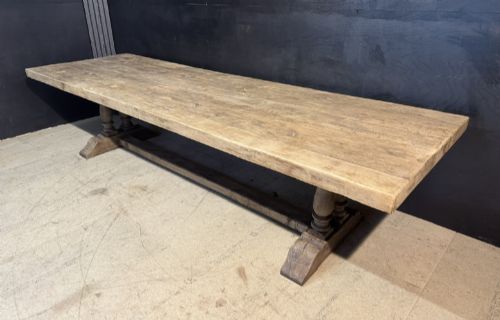
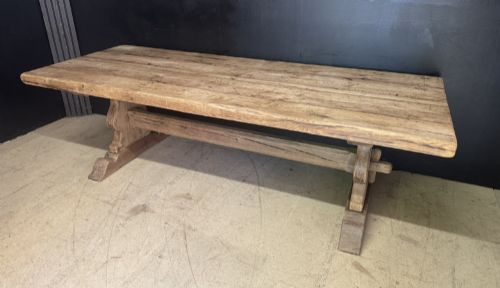
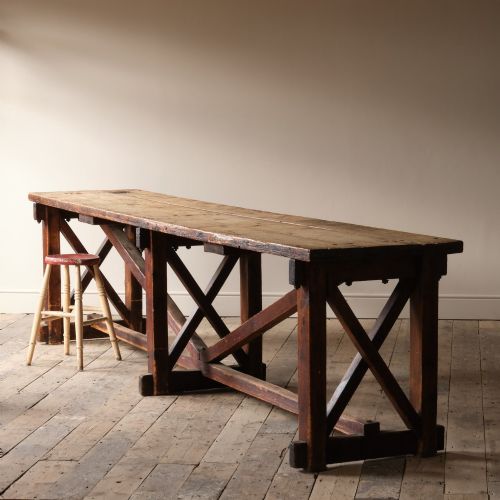
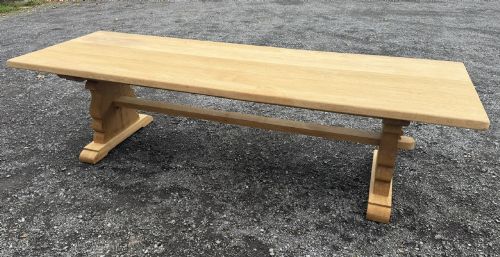
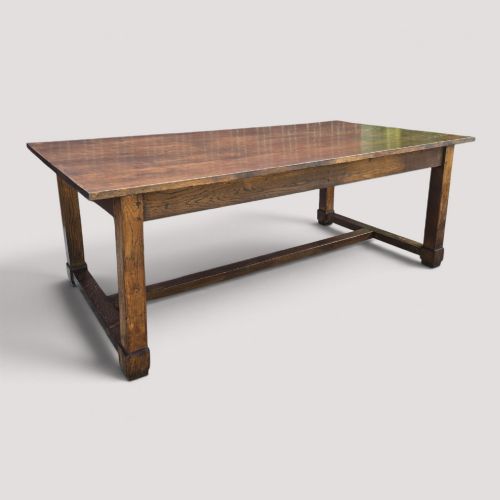
When you search for a large wooden trestle table, you enter a domain defined by sturdy surfaces and supporting ends. The pieces seen here span centuries of domestic and institutional use, taking the form of refectory tables, farmhouse dining tables, library tables, and tavern tables.
The most common examples on this page date from the 19th century and the early decades of the 20th century, drawing on rustic farmhouse, French provincial, and Edwardian styles. These tables often measure several feet in length, designed originally to seat large households or gatherings in communal halls and kitchens.
Earlier iterations stretch back into the 18th and 17th centuries, showing simpler joins and heavier timbers. Whether built for a public school library or a French country kitchen, each piece centres on longevity and utility.
Materials and Construction
Makers relied primarily on heavy hardwoods and resilient softwoods, utilising oak, pine, elm, walnut, beech, cherrywood, and chestnut. Tops frequently consist of solid single planks or two-board arrangements joined across substantial lengths.
Support structures rely on shaped trestle ends, refectory framing, or barrel legs rather than standard corner posts. Carpenters secured these massive timbers with traditional joinery, occasionally incorporating drawers beneath the tabletop for storage.
Large Wooden Trestle Table Retail Price Guide 2026
Typical asking prices for large wooden trestle table among the pieces listed under this phrase on Sellingantiques today, from the lower quarter to the upper quarter. They describe what is for sale here now, not the wider market.
Some historic examples come straight from school libraries, carrying the invisible ink stains of generations of restless students.
Assessing Quality and Build
The distinction between standard utility tables and superior examples rests upon timber selection and structural integrity. Tables featuring single plank elm tops or thick English oak demonstrate a higher grade of material sourcing.
Proportion and the handling of shaped trestle ends reveal the maker's hand, distinguishing straightforward workshop output from more ambitious Jacobean revival or Arts and Crafts pieces. Surface patination achieved through decades of use also marks the distinction between untouched age and later intervention.
The Large Wooden Trestle Table Glossary
- Trestle table
- A table featuring a horizontal beam supported by two vertical uprights or feet at each end. This design allows maximum legroom along the length of the top.
- Refectory table
- A long dining table historically used in monasteries and schools. It typically incorporates sturdy stretcher rails connecting the legs for added stability.
- Plank top
- A tabletop constructed from wide boards joined side by side. Single plank versions are particularly prized for their width and unified grain.
- Patina
- The surface sheen and colour developed by wood over years of handling, polishing, and exposure to light. It serves as an indicator of genuine age.
- Stretcher
- A horizontal wooden bar connecting the legs or trestles of a table to prevent them from bowing outward under weight.
Large Wooden Trestle Table: Frequently Asked Questions
What is a trestle table?
A trestle table uses two supporting feet or uprights connected by a central beam to hold up a long top. This construction method leaves the sides completely open for seating.
Historically, these tables could be dismantled easily for storage or transport in large halls.
How do I care for an old wooden table?
Protect the surface by using placemats and avoiding direct heat or extreme moisture. Regular dusting and occasional waxing help preserve the natural timber.
Keep the table away from direct sunlight to prevent the wood from drying out or splitting.
What periods do these tables come from?
The selection spans from the 17th century through the Edwardian era and into the early 20th century. Many pieces reflect 19th-century farmhouse traditions or revival styles like Jacobean and Arts and Crafts.
Earlier examples display hand-cut joinery while later pieces incorporate early 20th-century production methods.
Were these tables used in kitchens?
Many of these large tables served as farmhouse kitchen or refectory dining tables where families and communities gathered daily. Some larger formats also functioned as library or tavern tables.
Their robust timber construction allowed them to withstand heavy daily use in busy domestic spaces.