


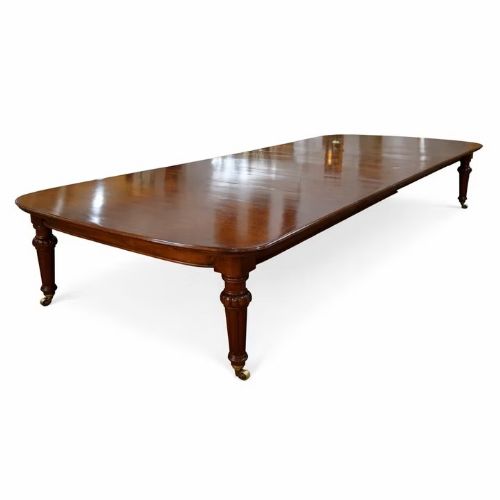

Large Wooden Banquet Table
A large wooden banquet table brings genuine scale and history to a room, offering both practical dining space and striking craftsmanship.
Large Wooden Banquet Table
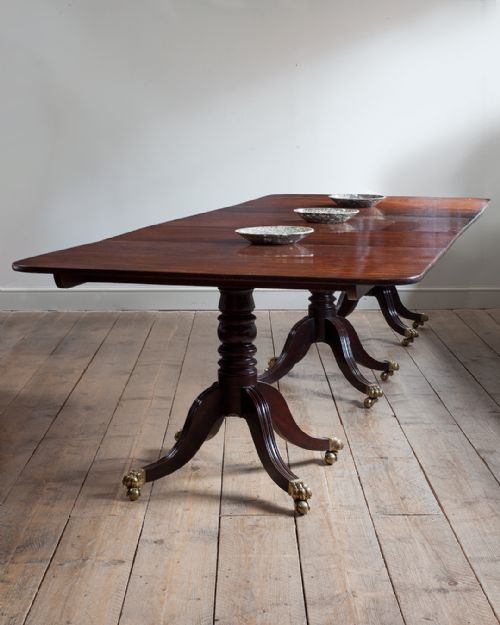
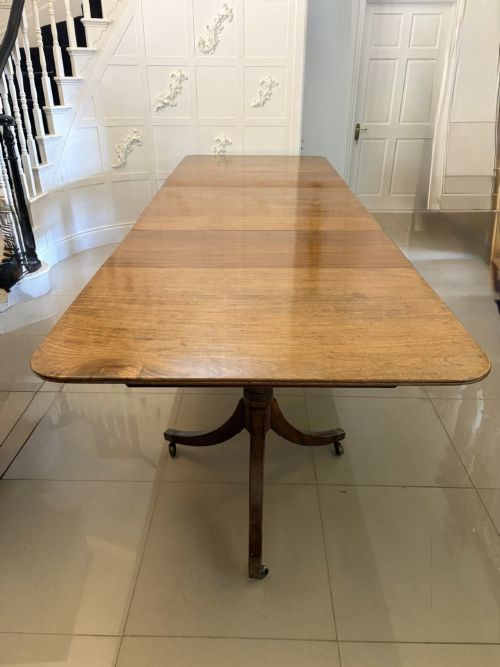
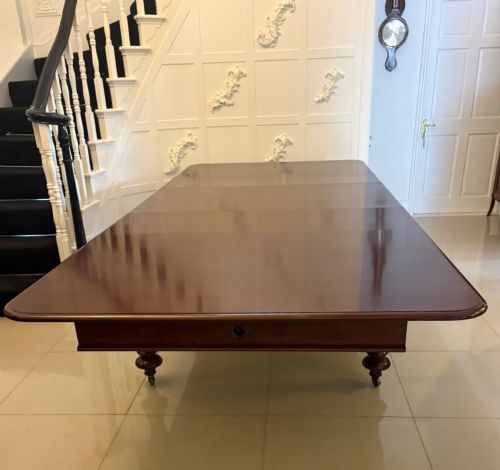
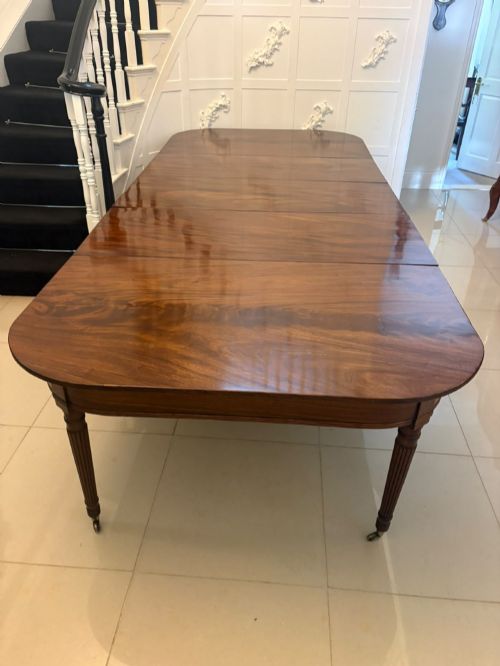
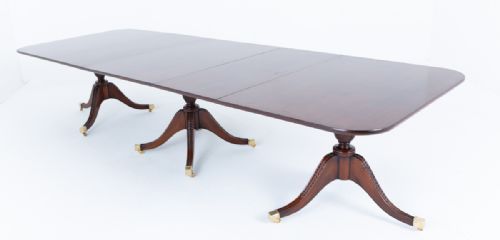
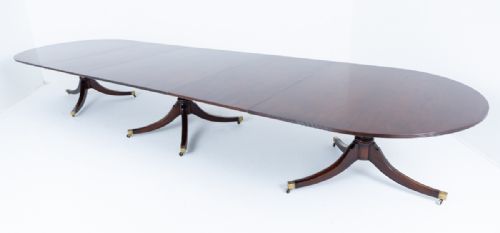
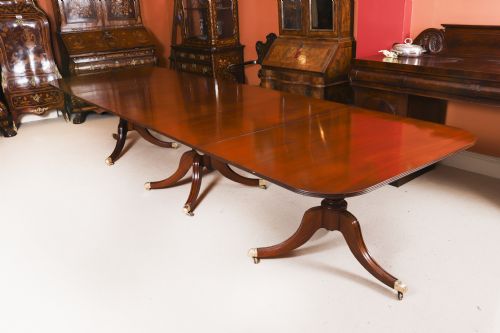
A large wooden banquet table serves as a central gathering place for substantial dining rooms, most frequently taking the form of an extending dining table supported by multiple pedestals or pillars. These pieces originate across the nineteenth and early twentieth centuries, spanning periods such as the Regency, Victorian, and Edwardian eras.
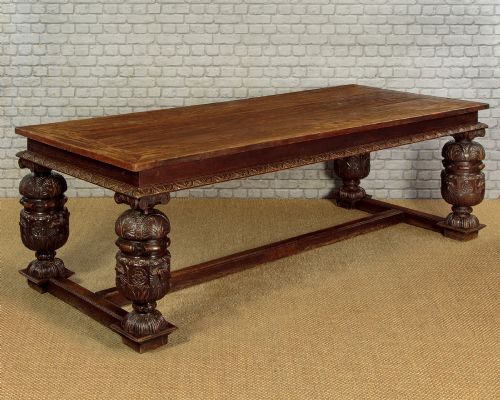
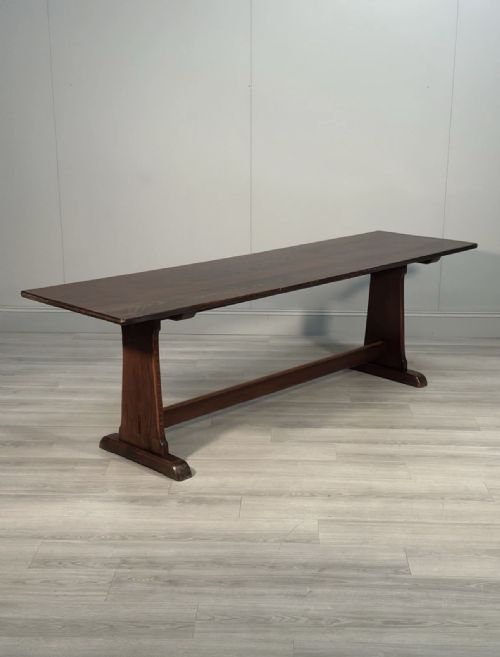
Proportions dictate how these large dining tables function in a modern setting, with multi-pillar systems allowing the table length to alter according to the number of diners. The selection balances formal pedestal dining pieces against simpler refectory construction.
Distinctions in quality and execution
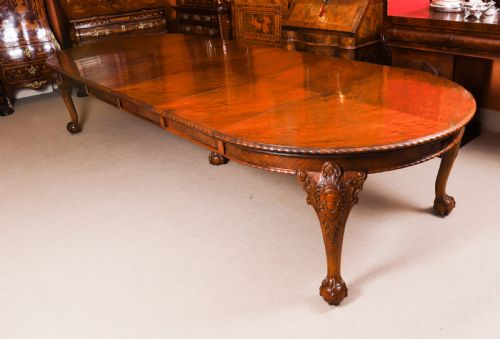
The degree of refinement in the timber selection and carving separates standard production from exceptional pieces, particularly seen in the depth of figured mahogany or burr walnut grain on the top. Well-executed carving on pedestal bases and legs indicates superior workshop standards.
The precision of the extending mechanism and the matching of separate leaves determine the structural integrity of the table when fully expanded. Superior examples maintain a level surface across all added leaves without sagging at the joints.
Listings feature mahogany, oak, walnut, and rosewood across nineteenth-century and early twentieth-century periods.
Gillows·Maple and Co·Whytock and Reid
The Large Wooden Banquet Table Glossary
- Extending dining table
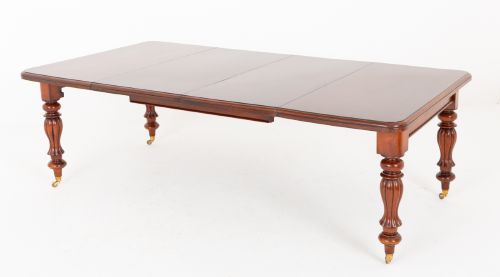
- A table designed with a mechanism or removable leaves to increase its overall length for large gatherings. These systems often use central wind-out screws or drop-in boards.
- Pedestal base
- A central column support resting on carved feet that holds up the table top, allowing more legroom for seated guests than traditional four-legged designs. Multiple pedestals support the longest tables.
- Refectory table
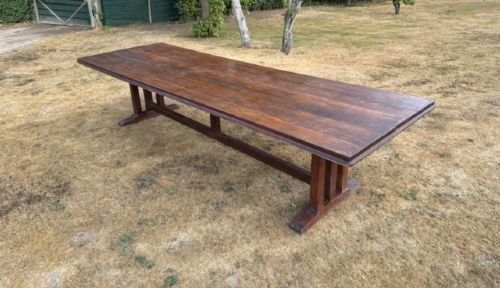
- A long, narrow table originating from monastic dining halls, characterised by solid timber construction and stretcher rails connecting the legs. Examples appear in oak and other heavy woods.
- Figured mahogany
- Timber cut to reveal distinctive patterns in the grain, such as flame or fiddleback effects, highly prized for table tops. This material defined high-status dining furniture.
- Wind-out table
- An extending table operated by a detachable crank handle that turns internal metal screws to separate the top halves and insert leaves. This innovation gained popularity during the nineteenth century.
Large Wooden Banquet Table: Frequently Asked Questions
How many people do these tables seat?
These large dining tables typically accommodate anywhere from ten to over twenty guests, depending on the length and the number of leaves inserted. Many listings specify seating capacities ranging from ten to twenty-two.
Buyers should measure their dining room space carefully to ensure adequate clearance around the table when fully extended with all leaves in place.
How do extending mechanisms operate?
Many nineteenth-century examples utilise a wind-out screw action operated by a handle, which parts the table halves to receive matching leaves. Other tables rely on simple drop-in boards supported by intermediate frames.
These mechanical systems allow the table to contract for daily use and expand smoothly for large dinner parties.
What is the difference between pedestal and refectory styles?
Pedestal styles feature one or more central pillars branching into feet, which leaves the perimeter free of corner legs for seating comfort. Refectory styles use four corner legs united by low stretcher rails for structural stability.
Pedestal tables are predominantly mahogany from the Regency and Victorian periods, while refectory versions are typically constructed from oak.
How do I care for a antique wooden table?
Polishing the timber surfaces regularly with appropriate wax helps maintain the lustre of the wood and protects the finish from minor moisture marks. Avoiding direct sunlight and sudden temperature changes prevents the timber leaves from warping.
Using felt pads under serving dishes preserves the antique polish during family meals and gatherings.