



Cherry Wood Farmhouse Table
A cherry wood farmhouse table brings a warm, fruitwood glow and honest proportions to a room, built for daily dining and family gatherings.
Cherry Wood Farmhouse Table
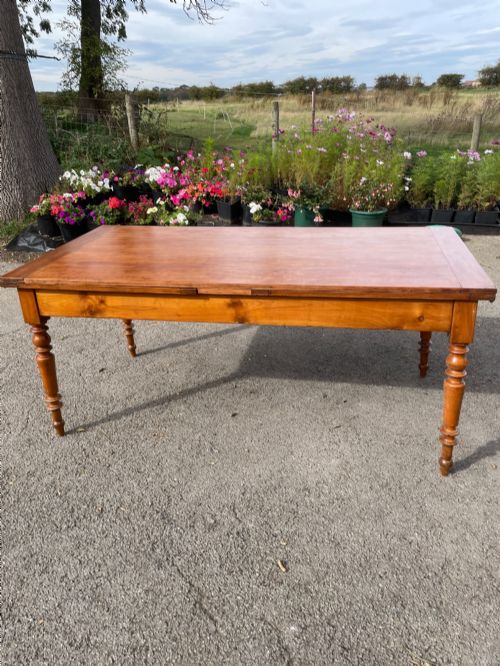
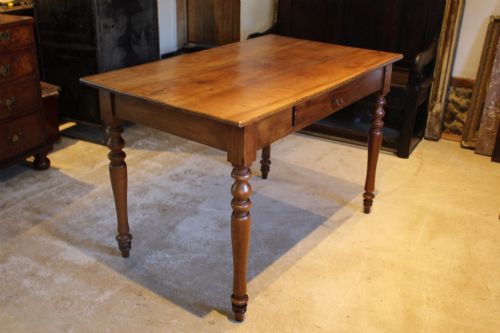
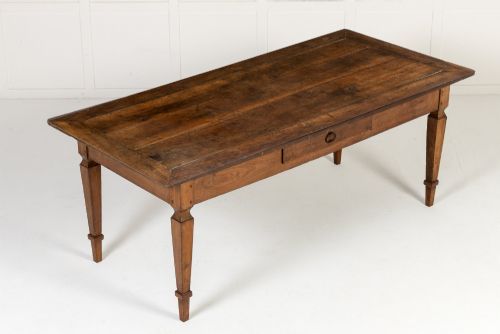
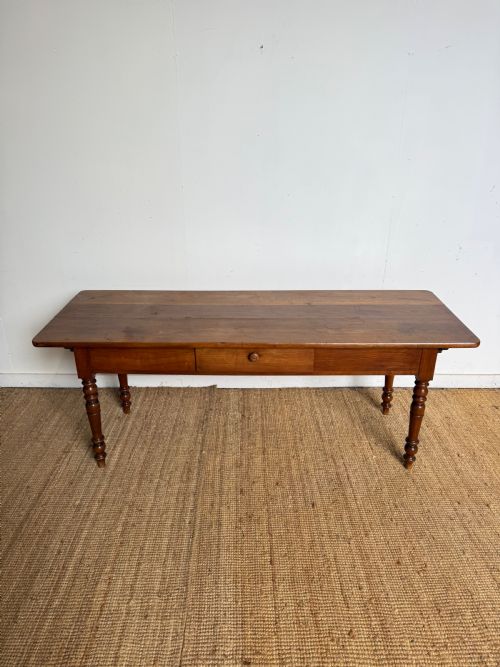
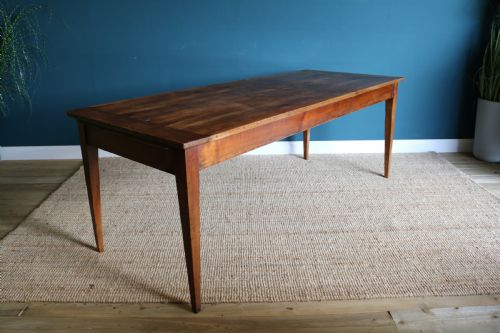
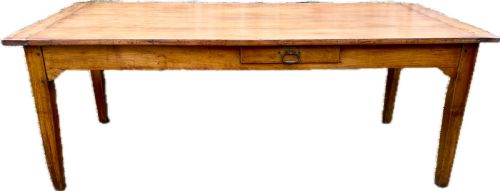
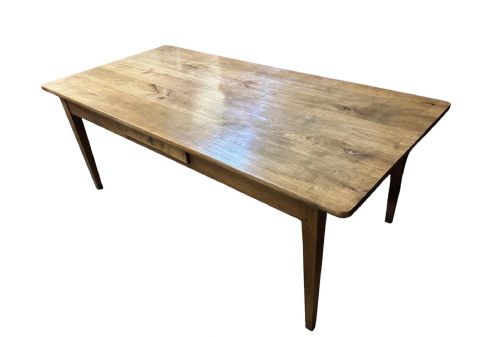
When you search for a cherry wood farmhouse table, you find sturdy timber boards built for heavy daily use in kitchens and dining rooms. These pieces originate largely from French provincial workshops across the eighteenth and nineteenth centuries, spanning rustic farmhouse styles and refined provincial designs.
The version you meet most often on this page is the traditional French farmhouse or refectory table constructed from cherrywood, occasionally incorporating fruitwood or poplar elements. They appear in formats ranging from compact kitchen tables to large dining surfaces measuring over two metres, sometimes equipped with extending leaves or sliding bread boards.
How They Were Made
Cabinet makers utilised dense cherry wood, cherrywood and related fruitwood alongside structural timber to build these tables, relying on the natural strength of the timber for heavy plank tops and sturdy underframes. Metal, brass and iron fixings occasionally support extending mechanisms, drawers and structural joints.
Construction methods focus on utility and endurance, visible in wide plank surfaces, robust refectory stretchers, cabriole legs and integrated drawers for kitchen implements. Timbers developed rich patinas over decades of use, reflecting the French country and provincial traditions from which they emerged.
Many French farmhouse tables retain drawer spaces once reserved for keeping coarse linen napkins and the household bread knife close at hand.
What Varies in Quality
Proportion and regional detail elevate certain pieces, such as manor house tables featuring cabriole legs, sliding bread boards, or functional drawers. The depth of the natural patina and the integrity of the original joints ultimately determine the standing of each piece.
The Cherry Wood Farmhouse Table Glossary
- Bread slide
- A pull-out wooden board mounted beneath the table top, historically used for cooling bread or extending the working surface. These mechanisms run on wooden runners built into the apron.
- Refectory table
- A long dining table traditionally used in communal halls and farmhouses, characterised by straight legs linked by a low stretcher rail for stability. This form provides ample legroom along the length of the table.
- Cabriole leg
- A furniture leg that curves outward in a convex arc and tapers inward in a concave arc, mirroring the shape of an animal's leg. This style appears on more formal French provincial dining tables.
- Fruitwood
- A collective term for timber harvested from fruit-bearing trees such as cherry, pear and apple, valued for its fine grain and warm tone. These woods take polish exceptionally well over centuries of use.
- Patina
- The deep, lustrous surface sheen developed on timber through age, handling and exposure to light. A rich patina indicates decades of continuous use and careful maintenance.
Cherry Wood Farmhouse Table: Frequently Asked Questions
How do I date a cherry wood farmhouse table?
Dating relies on construction methods, timber choice, and hardware style. Eighteenth-century examples typically feature hand-pewed pegged joints and thicker plank tops.
Nineteenth-century versions often incorporate mechanical extensions or simpler framing. Comparing the leg profile and apron design to known regional French styles helps narrow the decade.
Are these tables suitable for everyday dining?
These pieces were built specifically for daily domestic life in French farmhouses and kitchens. Their robust cherry construction withstands regular family meals and gathering.
Using placemats and coasters protects the historic surface while allowing you to enjoy the table daily.
What is a bread slide used for?
A bread slide is a pull-out wooden board mounted directly beneath the table top. Historically, bakers placed freshly baked loaves on this surface to cool before slicing.
Today, it serves as a convenient extension for extra serving space during meals.
How do I care for a cherry wood table?
Maintain cherry wood by dusting regularly with a dry, soft cloth and avoiding silicone-based polishes. Keep the table away from direct heat sources and strong sunlight to prevent timber warping.
Occasional application of natural beeswax preserves the warm patina of the wood.