
Brown Wood Extending Table
A brown wood extending table brings centuries of dining heritage into a room, offering adaptable scale through clever mechanisms.
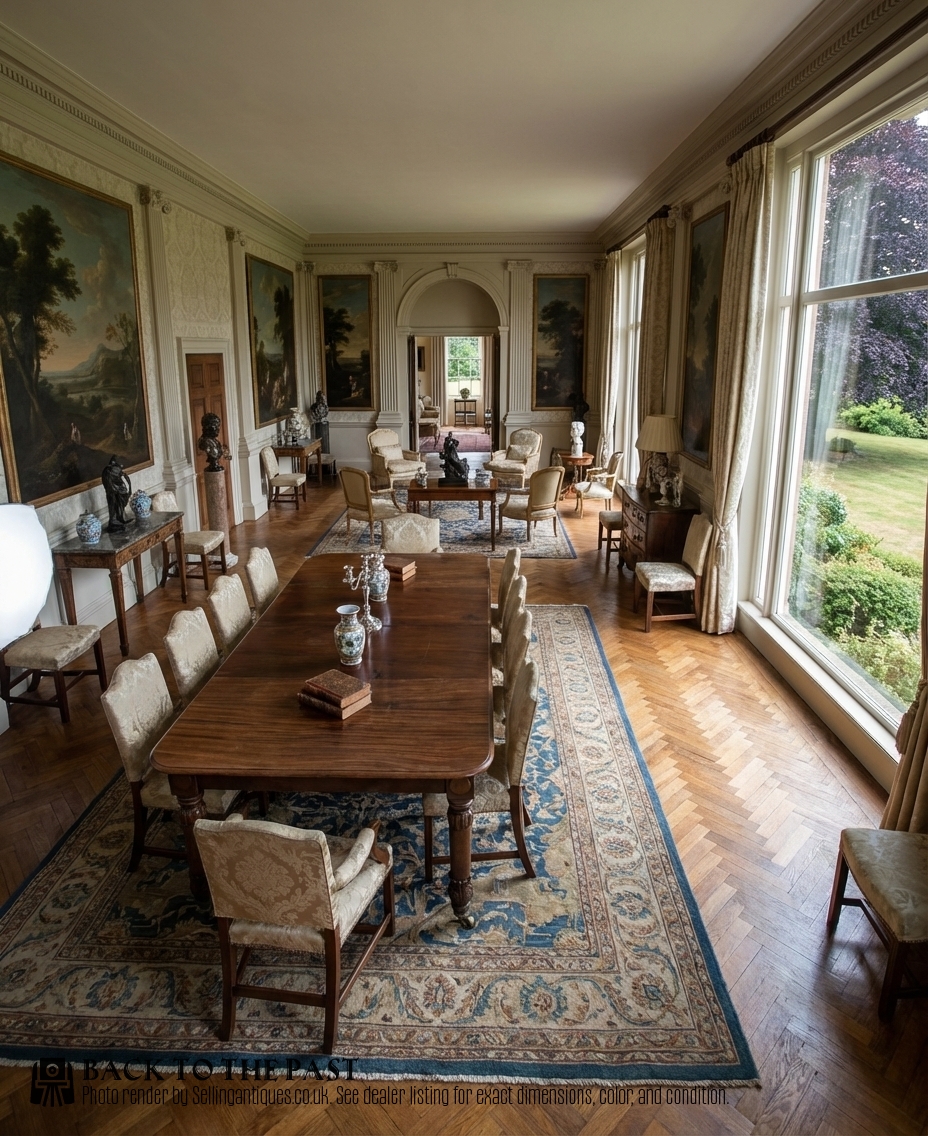
Brown Wood Extending Table
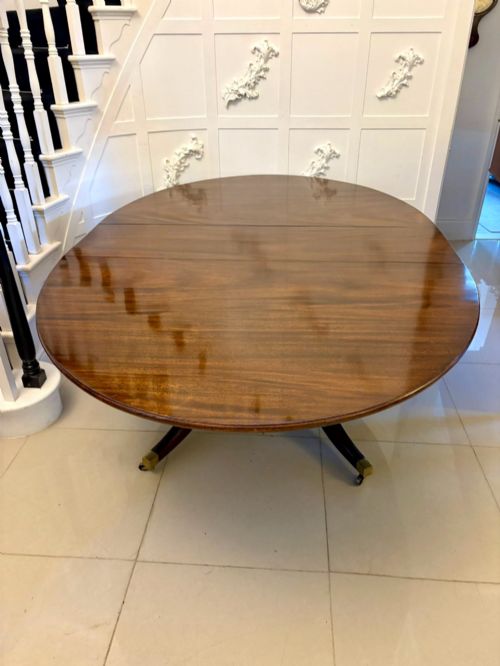
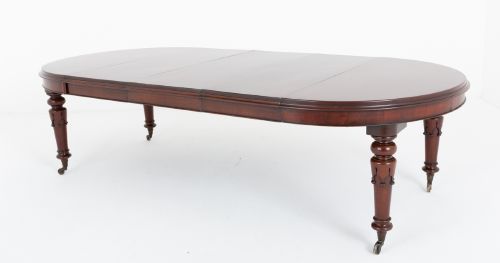
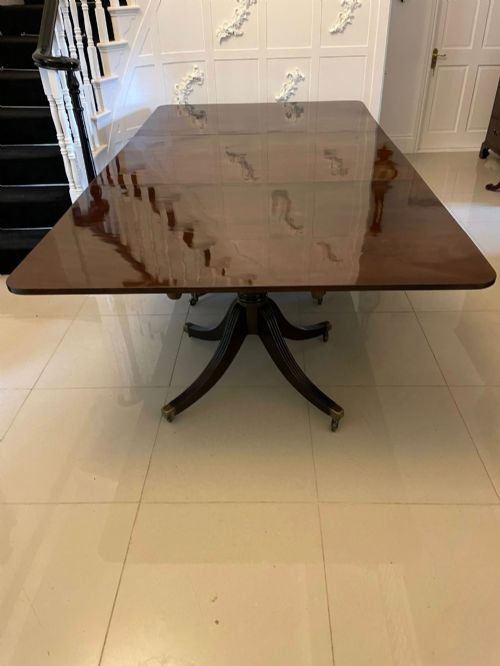
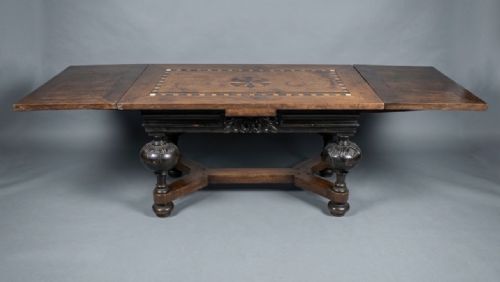
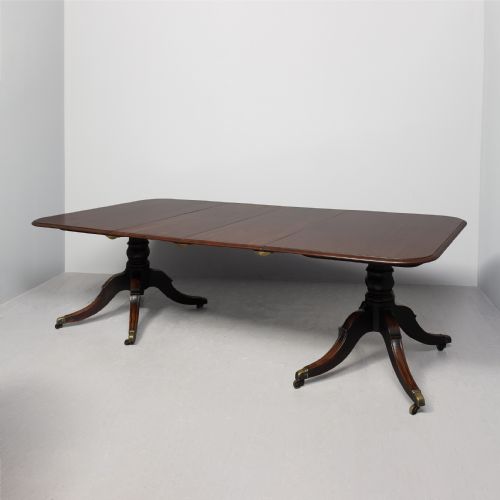
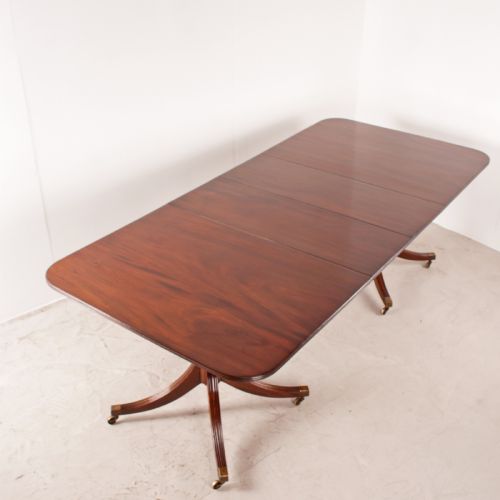
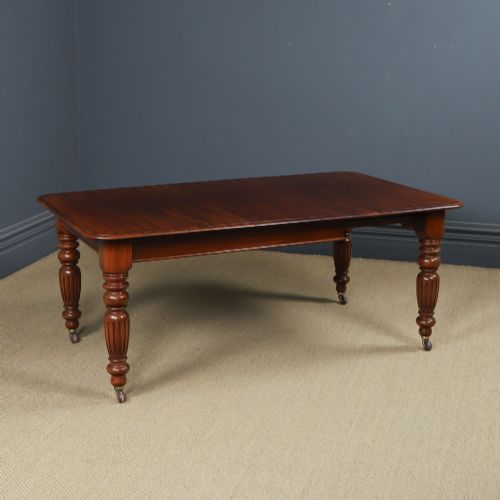
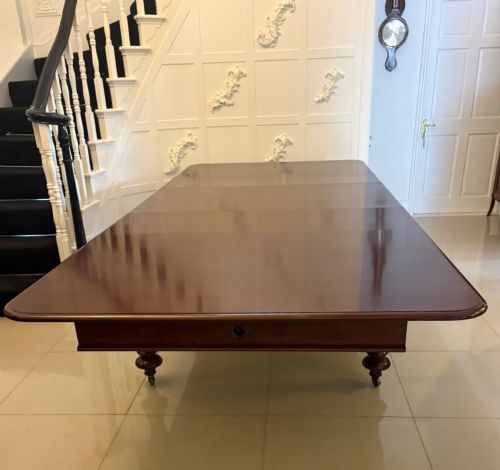
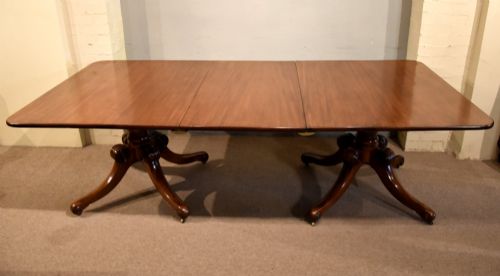
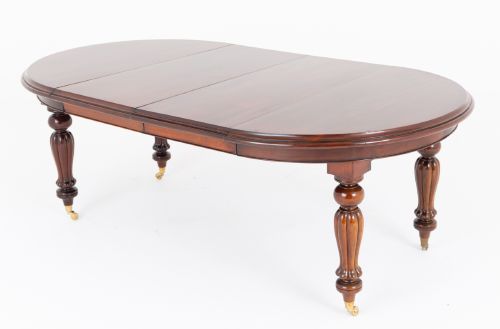
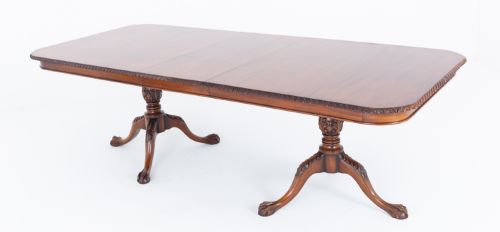
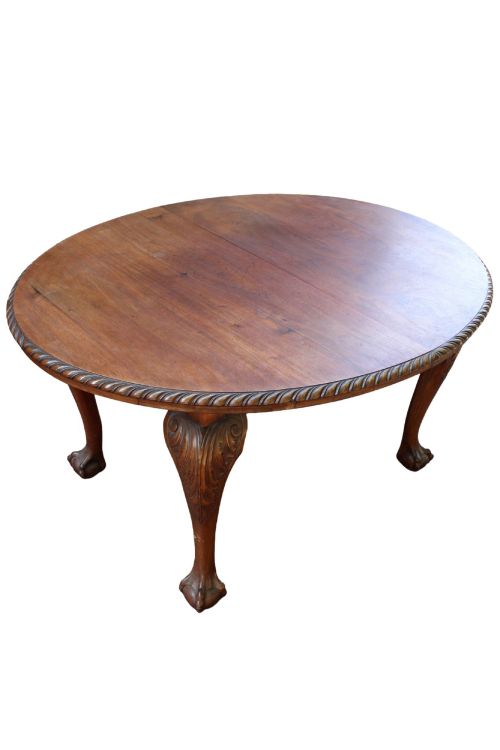
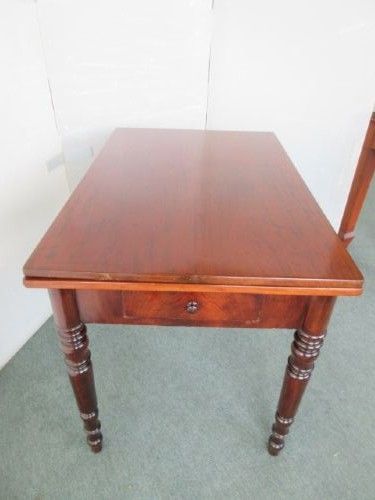
A brown wood extending table primarily serves as a dining surface, appearing across forms such as twin pedestal tables, triple pedestal tables, and draw leaf tables. These pieces date across the 18th, 19th, and early 20th centuries, spanning periods from the Georgian and Regency eras through to the Victorian, Edwardian, and later revival styles.
Materials and Technique
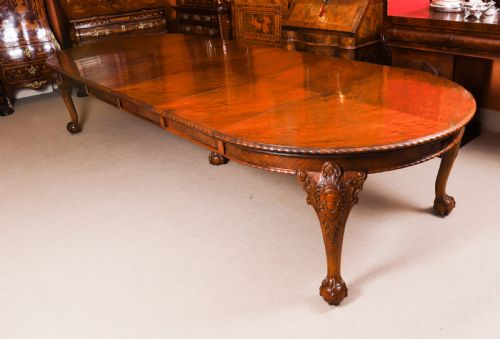
Makers utilised solid timbers and figured veneers, notably selecting flame mahogany, burr walnut, and cherry wood for their rich grain patterns and warm tones. These primary woods frequently combine with secondary structural elements, while brass fittings appear on castors and mechanism components.
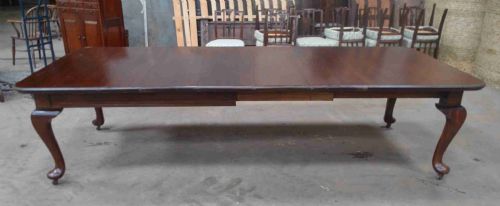
Extending systems rely on robust internal runners, draw leaf mechanisms, or removable leaves supported by multiple pedestals and pillars. Cabinetmakers shaped cabriole legs, turned columns, and inlaid borders to unite mechanical utility with formal elegance.
Listings feature mahogany as the predominant timber, accompanied by walnut, cherry wood, and oak across multiple 19th-century periods.
The Spectrum of Craft
Quality rests upon the selection of timber, visible in the depth of figured mahogany or burr walnut grain and the integrity of matched veneers. Superior examples display meticulous attention to the sliding mechanisms and pillar supports, ensuring the top remains stable and level when fully extended.
Finer pieces are distinguished by restrained carving, precise inlay work, and balanced proportions across multiple pedestals. Lesser examples exhibit simpler construction methods and plainer timber selection without the same nuance in joinery or decorative detail.
Maple & Co·Gillows
The Brown Wood Extending Table Glossary
- Pedestal table
- A table supported by one or more central pillars rather than traditional corner legs. This design allows greater legroom and simplifies the placement of chairs around an extended top.
- Draw leaf table
- A table equipped with concealed leaves stored beneath the main top that pull out from each end. This mechanism extends the surface quickly without requiring separate loose leaves.
- Flame mahogany
- Mahogany timber cut to reveal a distinctive flickering, flame-like grain pattern. Cabinetmakers reserved this prized veneer for prominent table tops and primary surfaces.
- Extra leaf
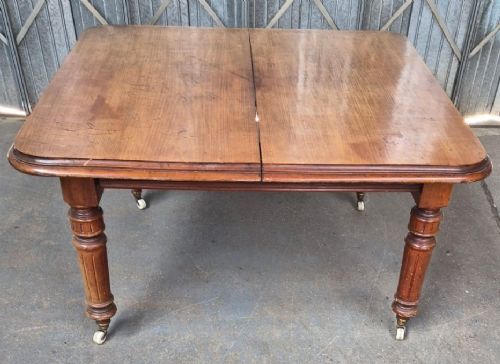
- A removable section of timber inserted into the centre of a table to increase its length. These leaves are often stored separately when the table is closed.
- Pedestal
- The central column supporting the weight of a pillar table. It typically stands upon reeded or sabre legs fitted with brass castors.
Brown Wood Extending Table: Frequently Asked Questions
How do extending mechanisms function on these tables?
These tables utilise either central screw or runner mechanisms that part the top to accept removable leaves, or draw leaf systems where hidden sections pull out from beneath.
Such engineering allows a compact daily footprint to expand significantly for larger gatherings without losing stability.
How do I distinguish between Regency and Victorian examples?
Regency tables generally display restraint, linear design, and brass-fitted pillar bases typical of the early nineteenth century.
Victorian pieces often scale up in size, incorporating heavier proportions, deeper figured mahogany timbers, and elaborate pedestal carving.
Can I seat large groups at these dining tables?
Many examples accommodate substantial gatherings, with multi-pedestal formats supporting tables designed for ten to twenty diners.
Extra leaves provide the necessary length while maintaining a unified grain and surface appearance across the extended span.
What maintenance do wood surfaces require?
Routine care involves gentle dusting with a soft cloth and occasional treatment with appropriate traditional waxes to nourish the timber grain.
Avoiding direct heat and moisture preserves the polished finish and protects the underlying mahogany or walnut veneers.