



George IV Extending Table
A george iv extending table is a substantial dining piece built for hospitality, offering clever mechanisms to host large parties.
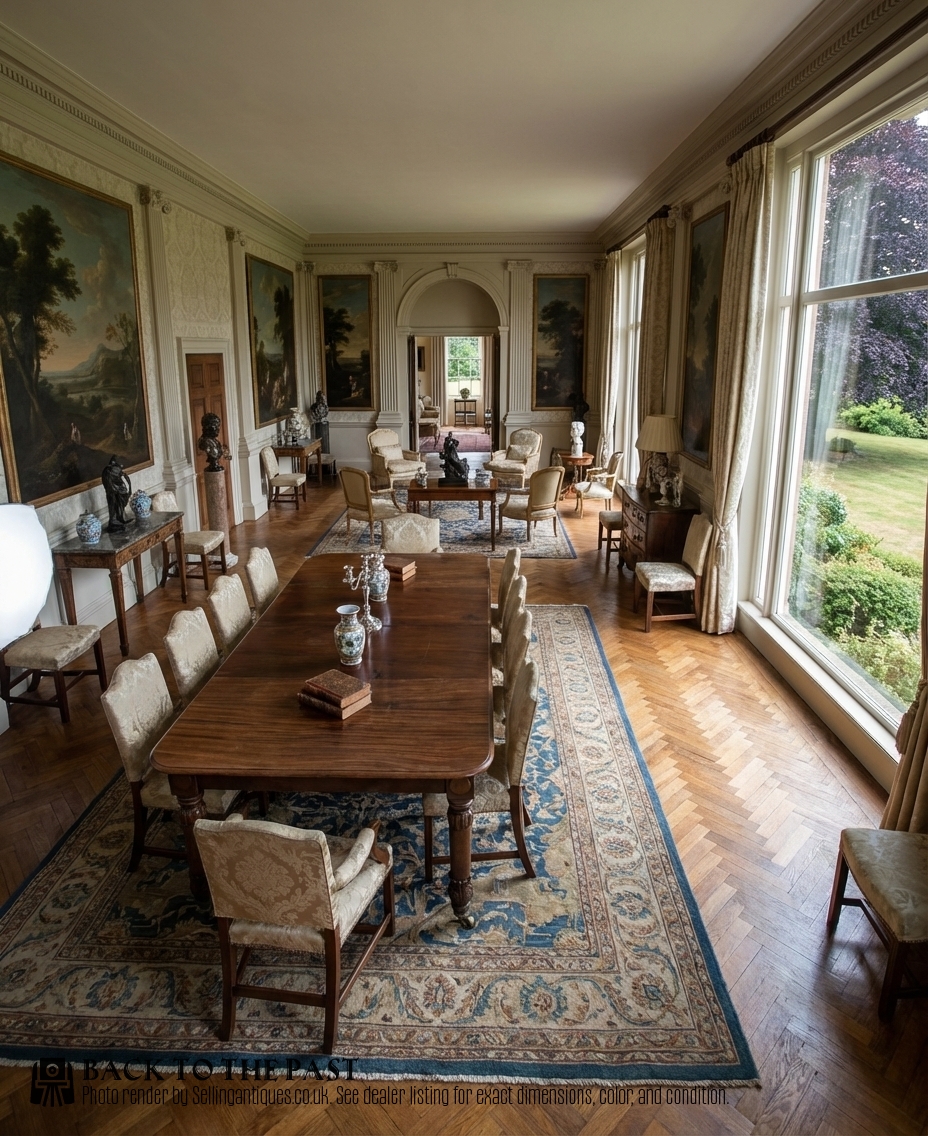
George IV Extending Table
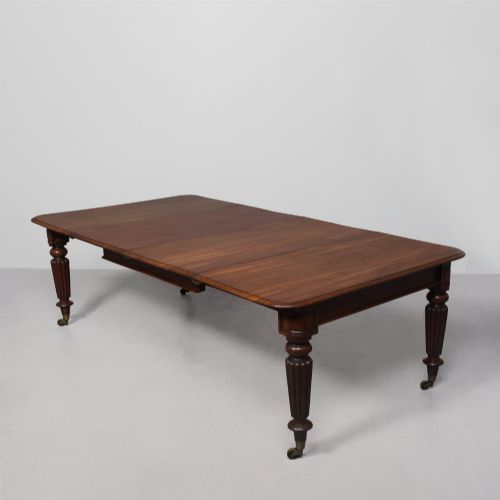
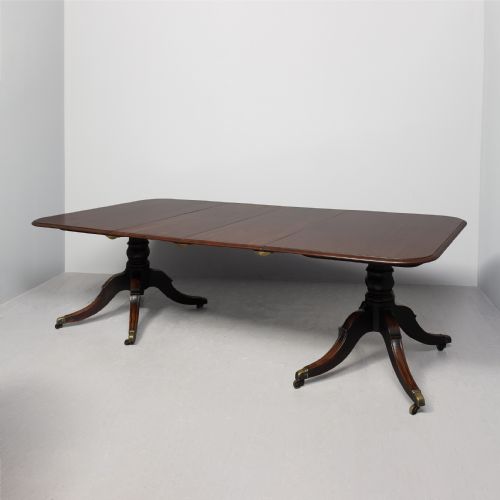
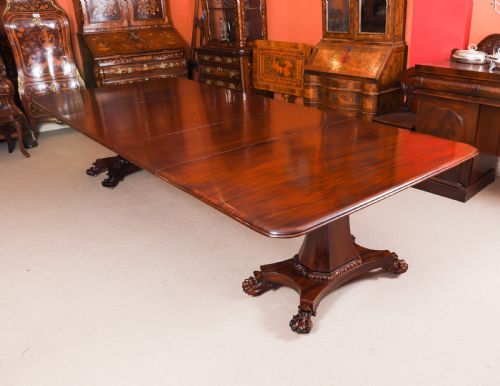
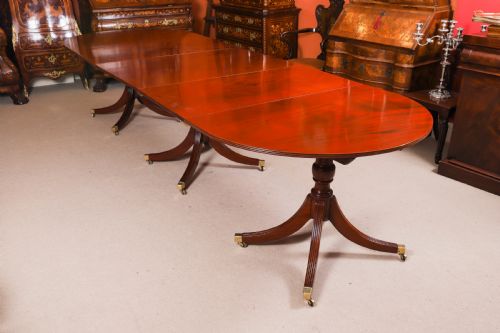
A george iv extending table is primarily encountered as a twin or triple pillar dining table designed to accommodate extra leaves for large gatherings. These pieces originate from the early nineteenth century and span the Georgian, Regency, and George IV periods.
Buyers will most frequently find mahogany examples featuring D-end configurations or robust pedestals. Some pieces also take the form of console dining tables or utilise specialised patent actions for smooth extension.
The construction serves large dining rooms, allowing hosts to alter the table length depending on the number of guests. Such adaptability makes these tables practical centrepieces for traditional interiors.
Materials and construction methods
Makers relied heavily on solid and veneered mahogany, sometimes accented with ebony stringing to define the edges and borders. This timber provided both the rich dark grain and the structural stability required for heavy pillar supports.
Brass featured prominently in the hardware, particularly for castors beneath pedestals and within the mechanical pull-out or patent action runners. These metal components ensured that heavy sections could move smoothly apart when adding extra leaves.
George IV Extending Table Retail Price Guide 2026
Typical asking prices for george iv extending table among the pieces listed under this phrase on Sellingantiques today, from the lower quarter to the upper quarter. They describe what is for sale here now, not the wider market.
Some tables hide ingenious patent mechanisms that let a lone host slide a massive banquet table apart without breaking a sweat.
Factors of distinction
The sophistication of the extending mechanism dictates much of the distinction between standard formats and patent designs like the Imperial action. Smooth operation and original winding hardware reflect superior workshop standards.
Timber selection and the depth of the mahogany grain govern the visual appeal of the top and pedestals. Finely figured surfaces and well-matched extra leaves indicate greater care during the initial commission.
Cope and Collinson·Mack Williams and Gibton·Wilkinson
The George IV Extending Table Glossary
- D-end
- A table end shaped in a semi-circle resembling the letter D, allowing separate console sections to join a central dining table.
- Patent action
- A mechanical extending system patented by makers to simplify the expansion of dining tables using internal screws or runners.
- Twin pedestal
- A table base style featuring two central columns supported by branching legs, commonly fitted with brass castors.
- Extra leaf
- A removable section of timber inserted into the centre of an extending table to increase its seating capacity.
George IV Extending Table: Frequently Asked Questions
How do these tables extend?
These tables typically use pull-out wooden runners or specialised patent actions that allow the top to separate smoothly.
Extra leaves are then dropped into the central gap to increase the overall surface area for dining.
Where were they used?
They were built for formal dining rooms in large houses where hosts entertained substantial parties.
Their adaptability meant the table could remain compact for daily family use and expand for banquets.
How do I care for mahogany?
Keep the timber away from direct heat sources and strong sunlight to prevent the polish from fading or cracking.
Regular polishing with traditional wax helps maintain the deep lustre of the grain.
Can I use all the leaves at once?
You can insert as many original extra leaves as the table was designed to hold with its pillar support system.
Using the full set requires a spacious room to ensure adequate clearance around the chairs.