

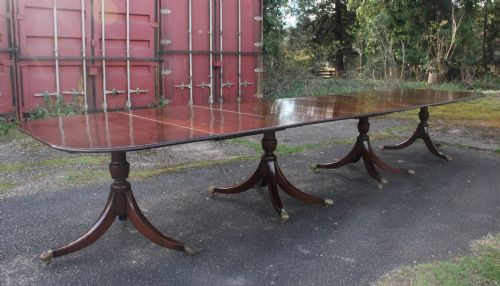
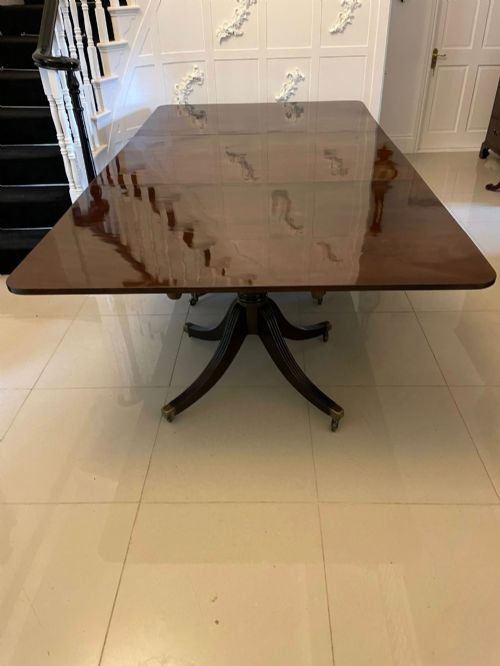
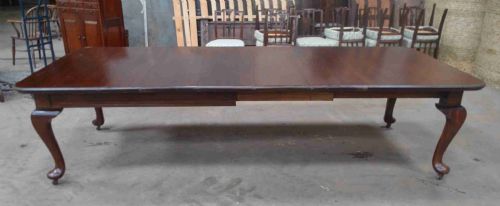
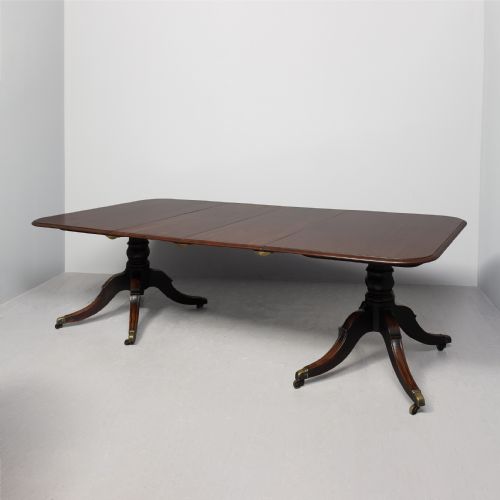
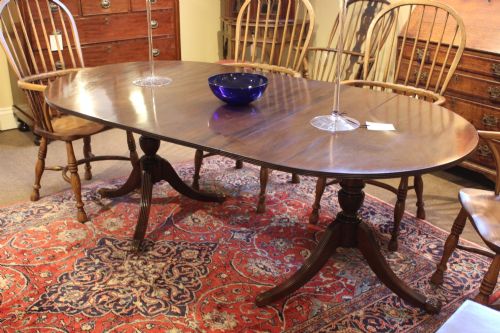
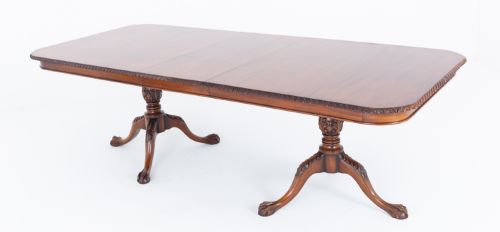
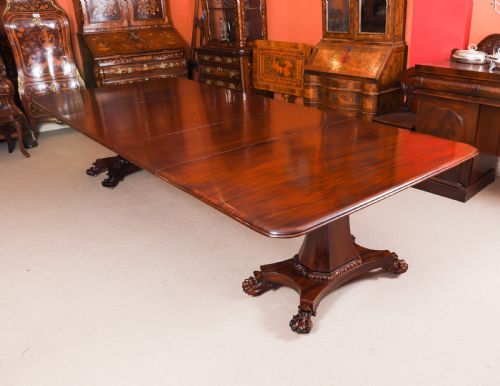
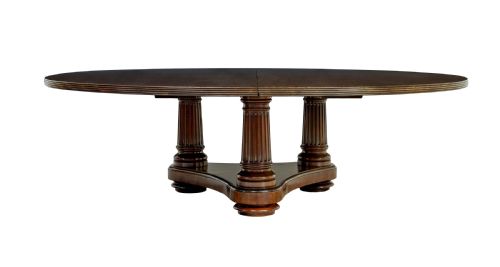
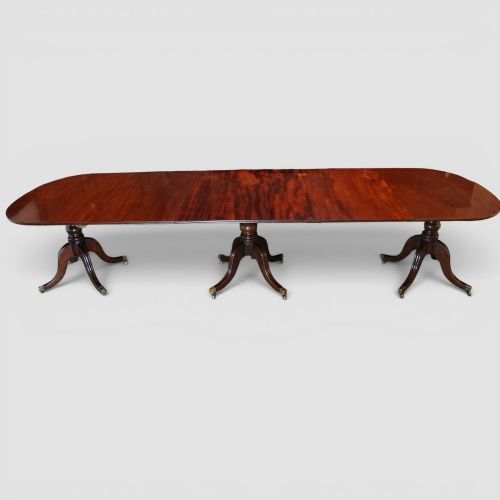
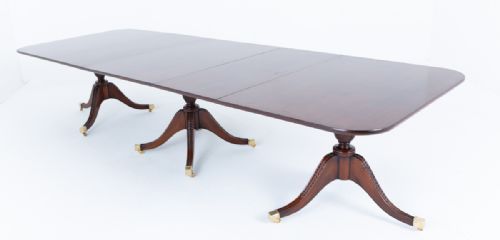
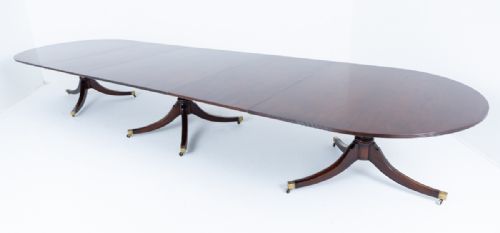
Dark Mahogany Conference Table
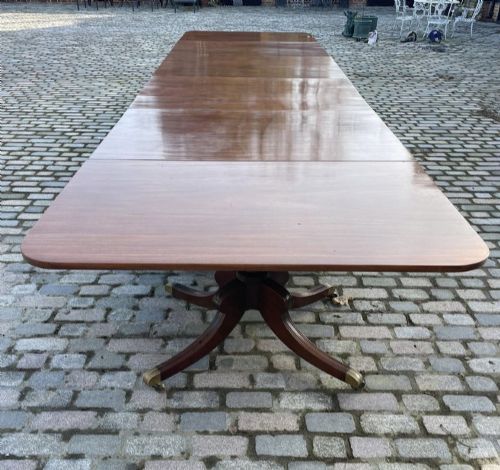
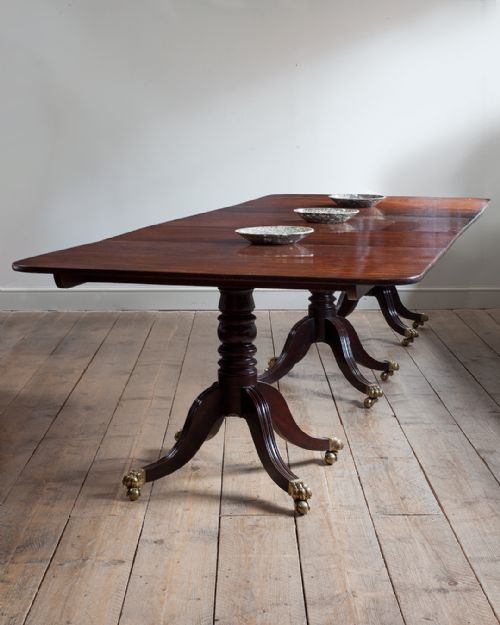
A dark mahogany conference table brings substantial timber and period proportion to a room, offering a commanding surface built for gathering.
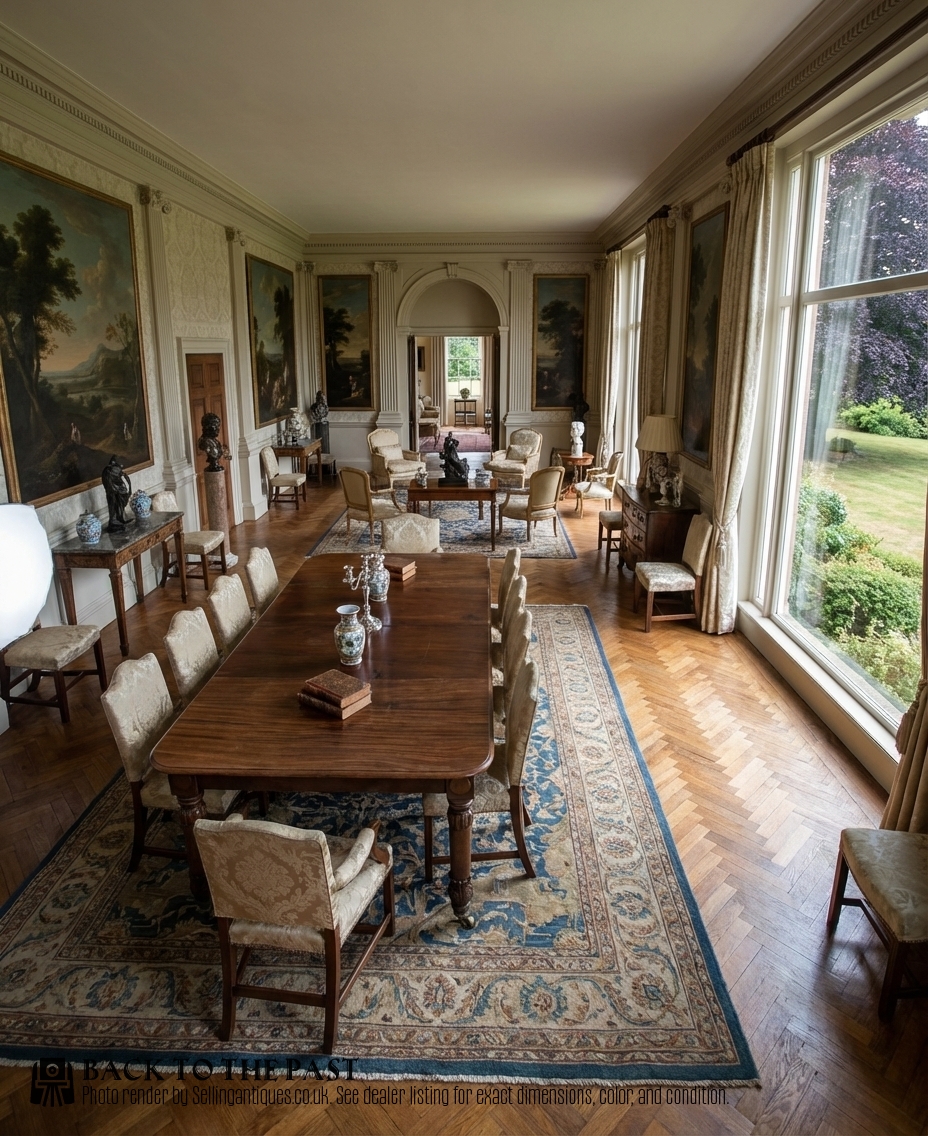
How they were made
Cabinet makers utilised dense timber such as Cuban mahogany and figured mahogany, often paired with secondary woods for internal framing. Surfaces were polished to a deep lustre, revealing rich grain patterns.
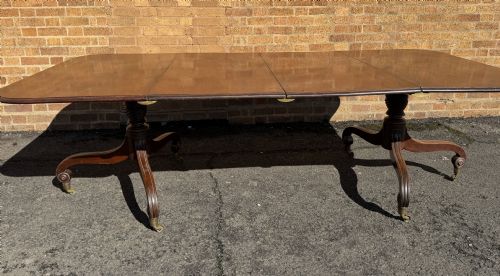
Structural stability was achieved through heavy metal mechanisms and brass castors fitted to pedestal feet, allowing large multi-pillar tables to separate and accept extra leaves.
What varies in quality
The selection of timber dictates the visual depth of the surface, with highly figured mahogany and Spanish mahogany commanding greater presence than plain stock. Consistency of grain across added leaves marks superior construction.
The engineering of the pedestal mechanism and the weight of the brass fittings determine how smoothly a large multi-pillar table extends and how solidly the pedestals bear the load of the top.
Some tables require an army of diners just to reach the salt cellar down six metres of polished mahogany.
Gillows
The Dark Mahogany Conference Table Glossary
- Pedestal
- A central columnar support, often carved, that rises from a set of splayed legs to hold the table top. Multiple pedestals are necessary to support extended lengths.
- Extending dining table
- A form designed to grow in length through the insertion of removable leaves supported by internal runners or separate pillar bases.
- Figured mahogany
- Timber exhibiting distinctive, mottled or rippled grain patterns that catch the light. It was selected for high-status surfaces.
- D-end
- A semi-circular table end shape popular in the Regency period, allowing sections to stand independently or join to form a long oval.
- Leaf
- A removable timber panel inserted into the centre of an extending table to increase its seating capacity.
Dark Mahogany Conference Table: Frequently Asked Questions
How many people do these tables seat?
Capacity depends on the length and number of pedestals, with standard models accommodating ten to twelve guests.
Larger multi-pillar variants can seat upwards of twenty to twenty-eight people when fully extended with multiple leaves.
How do extra leaves work?
Extra leaves drop into the centre of the table when the pedestals are pulled apart along internal runners or sliding frames.
Metal clips or brass pins often secure the leaves in place to keep the surface flat and steady.
How do I distinguish Georgian from Victorian pieces?
Georgian and Regency examples tend to show lighter proportions, refined reeded pillar turning, and subtle brass castors.
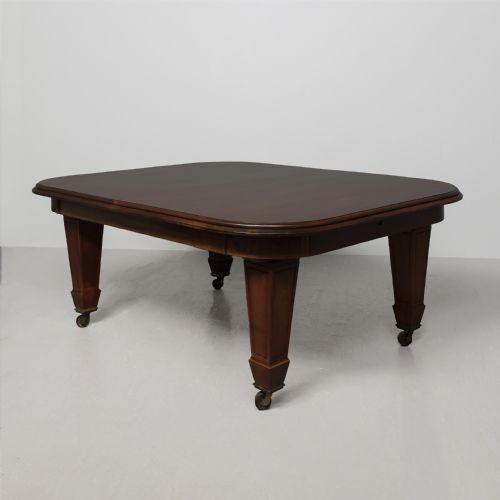
Victorian and later nineteenth-century pieces often present grander, heavier proportions with substantial timber scantlings and robust pedestals.
Are these tables suitable for modern offices?
Their substantial surface area and sturdy multi-pillar construction provide practical scale for boardrooms and meetings.
The extending mechanism allows the footprint to adjust according to the room dimensions.