

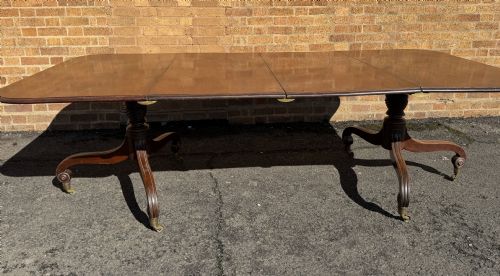

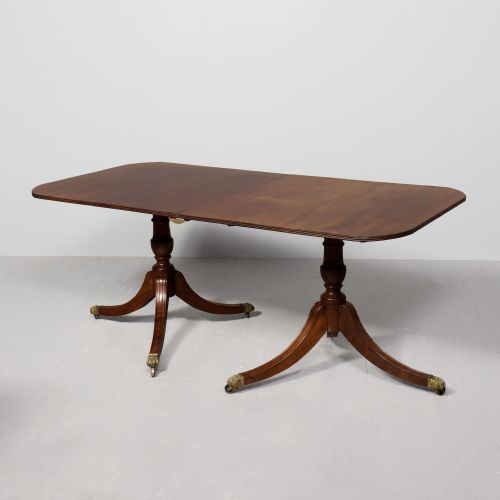


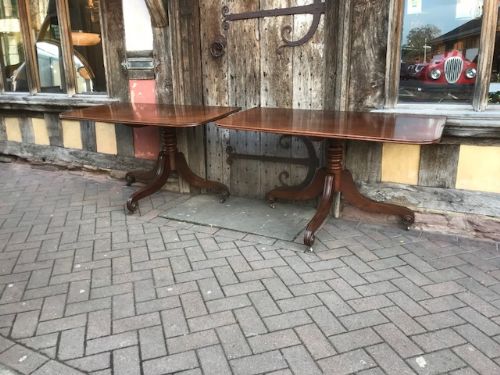

Vintage Twin Pillar Table
A vintage twin pillar table offers dual pedestals and adaptable dining space, bringing period proportion and traditional craftsmanship into the modern interior.
Vintage Twin Pillar Table
When you search for a vintage twin pillar table, you are looking at substantial timber dining furniture constructed with two central pedestals that support a long mahogany surface. These tables appear in forms that range from authentic early nineteenth-century George III examples to twentieth-century Regency Revival and Sheraton Style interpretations.
You are most likely to meet pieces dating from the nineteen-twenties and nineteen-thirties, alongside genuine Georgian and Regency periods, plus Edwardian variations. Most listings comprise dining tables designed for hosting, though occasional clock forms also appear in the record.
Materials and construction
The architecture relies upon two heavy wooden pillars or pedestals attached to multi-branched legs, often accompanied by removable leaves to adjust the overall length of the surface. Joinery traditions reflect classic cabinet-making standards of the Georgian era and later revivals.
Vintage Twin Pillar Table Retail Price Guide 2026
Typical asking prices for vintage twin pillar table among the pieces listed under this phrase on Sellingantiques today, from the lower quarter to the upper quarter. They describe what is for sale here now, not the wider market.
Current listings span periods from George III and Regency through to Edwardian, nineteen-twenties, and nineteen-thirties revivals, constructed predominantly in mahogany and brass.
Distinguishing quality across the range
Quality in these tables rests upon the selection of timber and the fidelity of the period revival style, distinguishing simpler twentieth-century interpretations from older, finer examples. The depth of the mahogany grain and the casting quality of the brass fittings dictate the visual presence of the piece.
Proportion and versatility also set items apart, particularly where tables include original or matching removable leaves that maintain structural harmony when fully extended.
The Vintage Twin Pillar Table Glossary
- Twin-pillar
- A table design supported by two distinct central pedestals rather than four corner legs. This configuration allows greater legroom for diners seated along the sides.
- Pedestal
- The central upright column of a table base, typically rising from splayed wooden legs. It provides the primary vertical support for the top.
- Leaf
- A removable section of timber inserted into the centre of the table to extend its length. Leaves allow the furniture to adapt for larger gatherings.
- Spanish mahogany
- A dense, highly prized variety of timber known for rich figuring and deep colour. Cabinet-makers favoured it for formal dining furniture.
- Sheraton style
- A neoclassical furniture design characterised by elegant proportions, straight tapering legs, and classical inlay motifs. Thomas Sheraton popularised these geometries.
Vintage Twin Pillar Table: Frequently Asked Questions
What is a twin pillar table?
A twin pillar table is a formal dining table supported by two central pedestals rather than standard corner legs.
This construction provides better seating arrangements and allows the table to accept removable leaves.
How do I use a removable leaf?
Removable leaves slide into the centre of the table when the two main sections are pulled apart.
They are secured with internal brass clips or pins to create an extended, seamless dining surface.
Are these tables from the Regency period?
Some pieces date directly to the Regency and George III eras of the early nineteenth century.
Others are twentieth-century revivals built in the Regency and Sheraton styles during the nineteen-twenties and thirties.
What wood is used?
The listings show mahogany as the primary timber utilised for construction, including fine Spanish mahogany.
Hardware elements such as castors and feet incorporate brass.
How do I care for mahogany?
Mahogany surfaces benefit from regular dusting with a soft cloth and occasional waxing to preserve the finish.
Keep the timber away from direct heat sources and strong sunlight to prevent fading and splitting.