
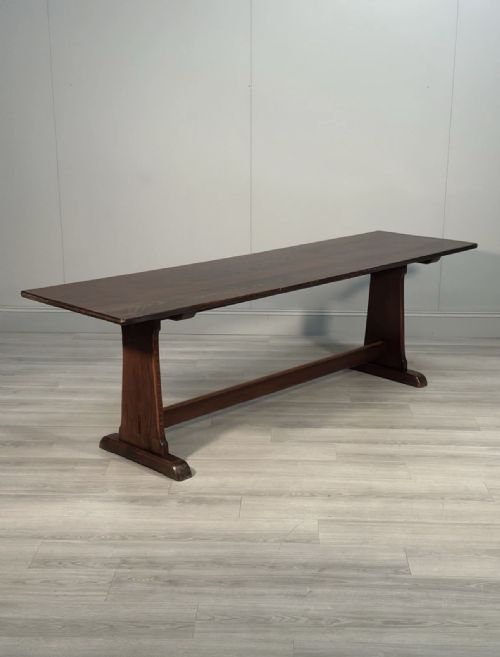

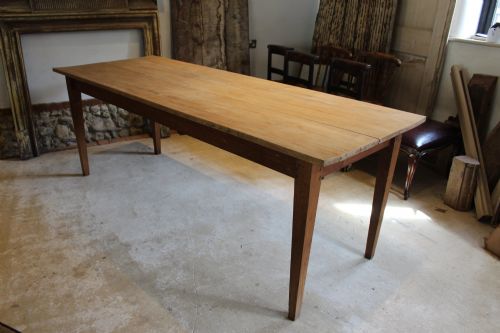

Edwardian Trestle Dining Table
An Edwardian trestle dining table brings solid timber construction and practical form to a room, offering sturdy seating space rooted in historic design.
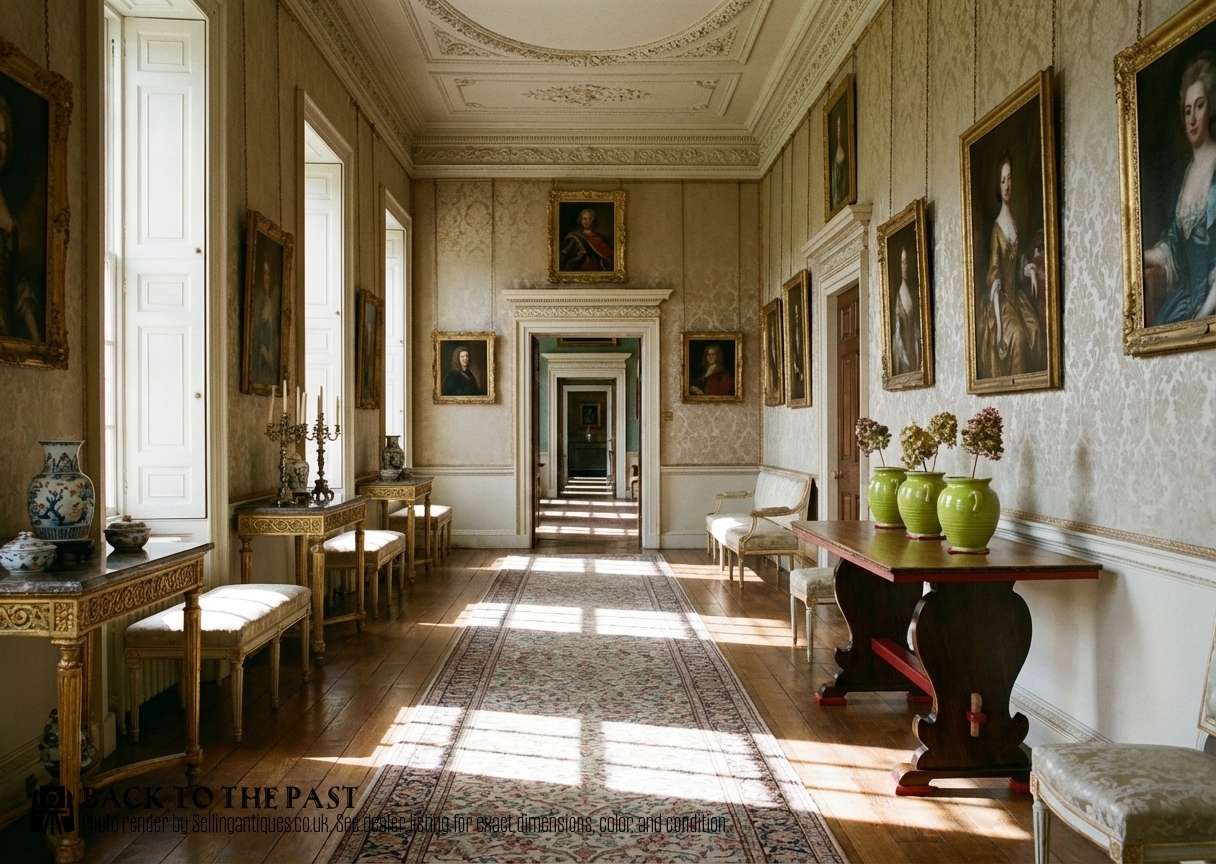
Edwardian Trestle Dining Table
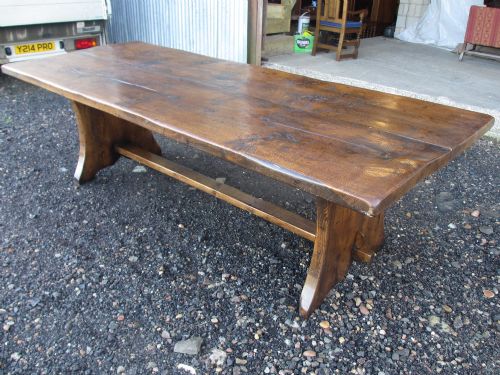
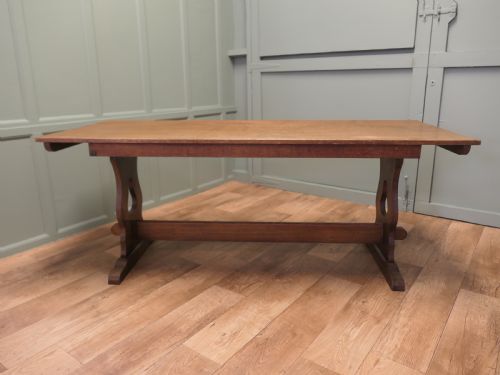
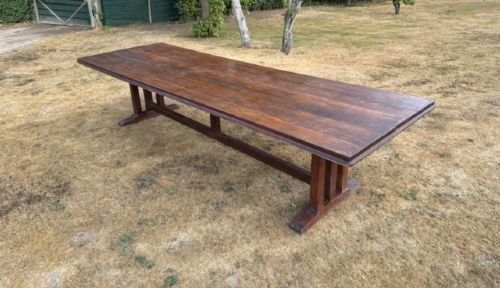
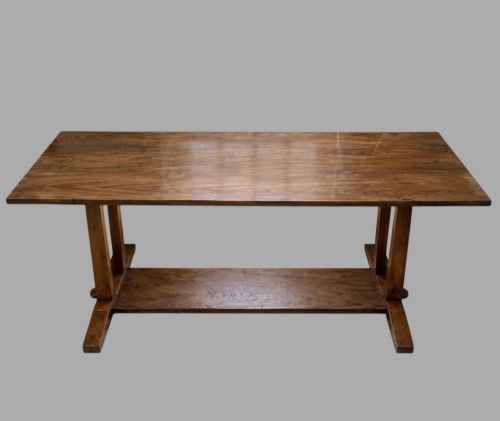
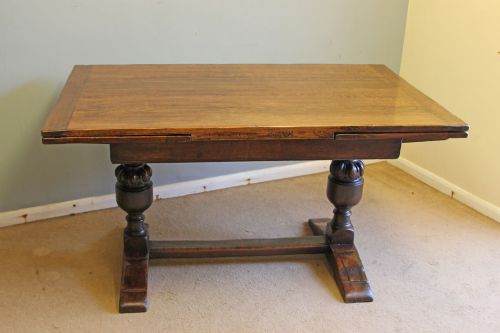
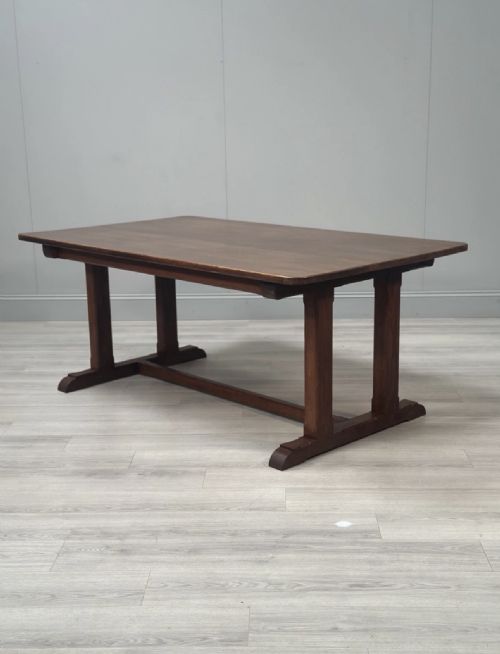
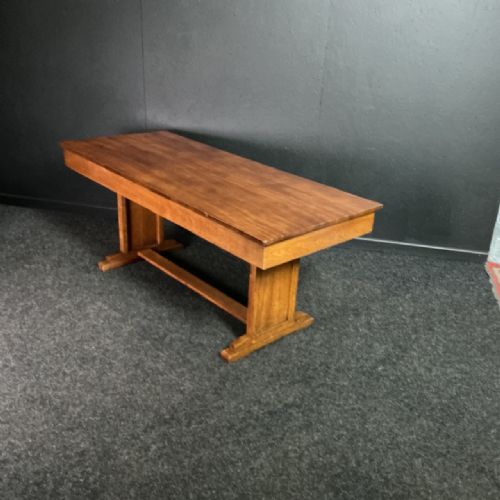
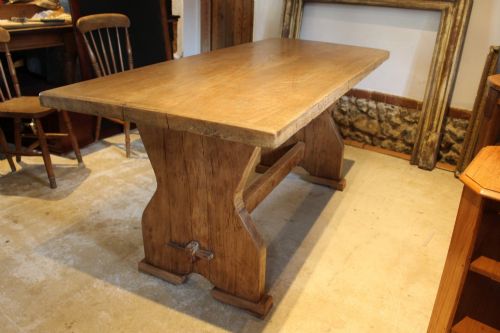
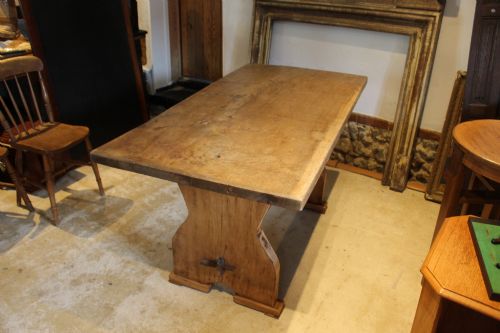
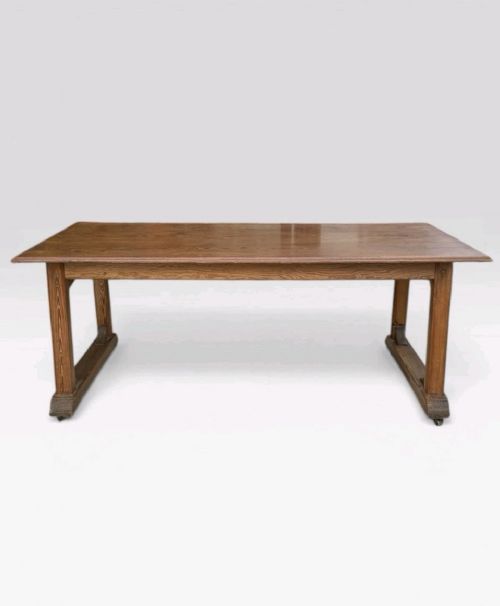
An edwardian trestle dining table typically presents a long rectangular top supported by shaped end uprights rather than four corner legs. These surfaces serve large gatherings in farmhouse kitchens, school libraries, and boardrooms.
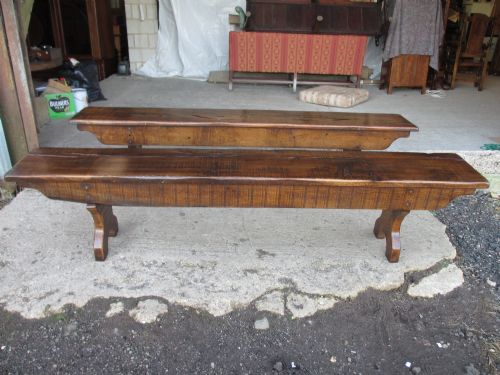
The pieces appearing here span the Edwardian period alongside adjacent years from the late Victorian era through the 1940s. Alongside the primary refectory and trestle tables, related forms include matching benches, library tables, and drop-leaf variants.
Makers and designers working within the Arts and Crafts ethos shaped many of these examples, prioritising straightforward utility and honest construction. Oak predominates, accompanied by walnut, pine, and elm.
Materials and construction
Solid hardwoods form the backbone of these pieces, with heavy oak and quarter-sawn oak appearing alongside walnut and elm. Pine provides a softer alternative for farmhouse kitchen and work table variations.
Metal elements such as brass and iron appear in structural or supporting roles, particularly on industrial and work table variants. Joinery relies on traditional methods suited to long boards and heavy trestle ends.
Edwardian Trestle Dining Table Retail Price Guide 2026
Typical asking prices for edwardian trestle dining table among the pieces listed under this phrase on Sellingantiques today, from the lower quarter to the upper quarter. They describe what is for sale here now, not the wider market.
Listings feature oak, walnut, pine, elm, iron, and brass across periods spanning the Victorian era through the 1940s.
Markers of distinction
The choice of timber dictates the initial character of a table, from plain pine to quarter-sawn oak displaying prominent medullary rays. Selected golden oak and figured walnut mark out pieces from notable workshops.
Proportion and scale distinguish standard utility items from grand boardroom tables or pieces designed by named architects and retailers. The detailing on shaped trestle ends and the weight of the timber reflect the original commission.
Heals of London·Sir Robert Lorimer
The Edwardian Trestle Dining Table Glossary
- Refectory table
- A long narrow dining table originally used in monastic dining halls. These examples often feature stretcher bases and substantial timber construction.
- Trestle ends
- Support structures placed near the ends of a table top rather than standard vertical legs. They provide extra knee clearance along the sides.
- Quarter-sawn oak
- Timber cut radially from the log to produce characteristic growth ring patterns and increased dimensional stability. This grain configuration is prized in Arts and Crafts furniture.
- Gateleg table
- A drop-leaf table with hinged legs that swing out to support the lowered leaves. These provide flexible surface area in compact spaces.
- Stretcher
- A horizontal wooden brace connecting the legs or trestles of a table to improve rigidity. They often run the full length of refectory designs.
Edwardian Trestle Dining Table: Frequently Asked Questions
How do I seat guests comfortably?
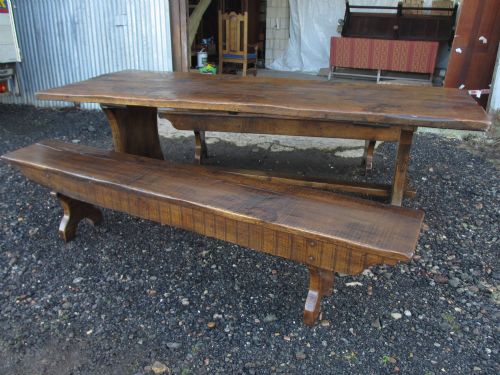
Trestle ends place the structural supports inward from the corners, which allows benches and chairs to slide underneath along the full length without interference from legs.
Matching benches or narrow forms provide flexible seating arrangements that adapt to different numbers of diners.
Where were these tables used?
Original locations ranged from country farmhouses and public school libraries to boardrooms and domestic dining rooms.
Heavier refectory formats suited communal spaces, while smaller pine or dropleaf variants served everyday kitchen and breakfast use.
How do I care for the timber?
Solid oak, walnut, and elm surfaces benefit from regular dusting and occasional waxing to nourish the grain and protect against moisture.
Avoiding direct heat sources prevents the solid timber boards from splitting or warping over time.
What defines the Arts and Crafts style?
This design movement values visible construction, honest materials, and the character of the wood over applied surface ornament.
Tables from this tradition often display quarter-sawn oak boards and robust trestle architecture.