

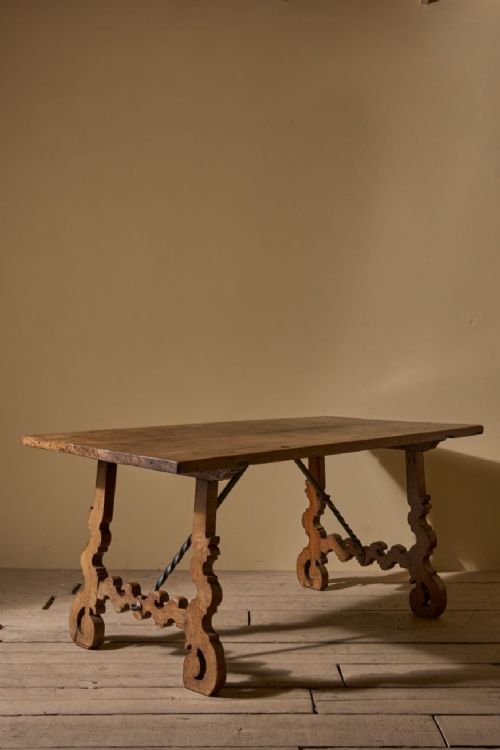
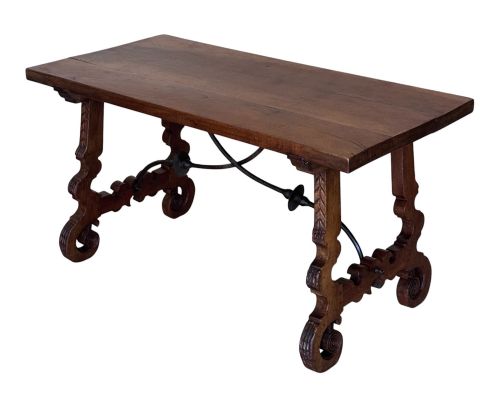
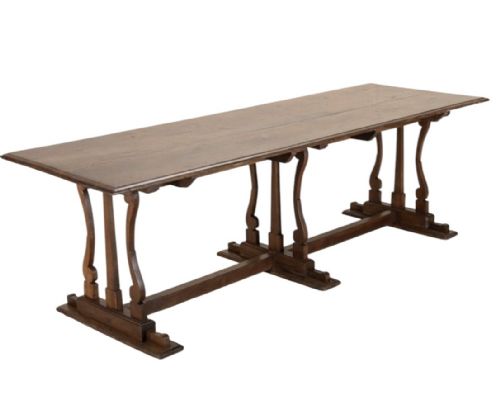


Dark Walnut Refectory Table
A dark walnut refectory table brings immediate architectural presence to a dining room through rich timber and strong proportions.
Dark Walnut Refectory Table
A dark walnut refectory table represents a long dining surface rooted in European domestic and monastic traditions, appearing across seventeenth, eighteenth, and nineteenth century periods. These tables serve large gatherings, utilising substantial timber boards supported by trestle frames or carved bases.
The versions most commonly met on this page span Spanish Baroque, Italian Renaissance, and Jacobean Revival styles, alongside provincial iterations. Pieces originating from Spain and Italy dominate the forms, frequently employing solid walnut or red walnut timbers.
Makers built these forms for communal dining, meaning surviving examples retain deep patination from centuries of daily use. Buyers encounter both fixed boardroom proportions and nineteenth century extending formats designed for modern dining rooms.
How they were made
Cabinetmakers constructed these tables primarily from solid walnut, occasionally pairing walnut tops with oak or wrought iron stretchers for added structural stability. Joinery relied on heavy pegging and solid timber construction rather than modern adhesives.
Bases often featured carved trestles, solid plank feet, or forged iron supports that braced the long spans against lateral movement. Surfaces received hand-planed finishes that matured over generations into deep, original patinas.
Dark Walnut Refectory Table Retail Price Guide 2026
Typical asking prices for dark walnut refectory table among the pieces listed under this phrase on Sellingantiques today, from the lower quarter to the upper quarter. They describe what is for sale here now, not the wider market.
Several tables carry the invisible echoes of monks quietly spooning broth in stone-cold refectories centuries ago.
What varies in quality
Quality rests in the integrity of the timber top and the depth of the original surface patination developed over centuries. Early seventeenth century pieces demonstrate superior timber selection through wide, single-board walnut tops rather than multi-piece laminates.
Carving execution on the bases distinguishes standard regional workshop production from master craftsmanship. Tightly integrated iron stretchers and substantial structural framing indicate robust construction designed for heavy daily service.
The Dark Walnut Refectory Table Glossary
- Refectory table
- A long dining table traditionally used in monastic refectories for communal meals. These forms rely on linear proportions and sturdy underframes.
- Trestle table
- A table supported by two or more vertical frames connected by a horizontal beam or stretcher. This design maximises legroom along the length of the top.
- Patina
- The surface sheen and colour developed on timber through age, handling, and wax polishing. Good patina shows deep warmth and honest wear.
- Baroque style
- An ornate design movement spanning the seventeenth and eighteenth centuries characterised by dramatic carving and robust architectural elements.
Dark Walnut Refectory Table: Frequently Asked Questions
How do I care for an antique walnut table?
Feed the timber periodically with traditional beeswax to maintain moisture and protect the surface grain from drying out. Avoid placing hot dishes or wet glasses directly onto the bare wood to prevent staining the antique finish.
Keep the table away from direct heat sources and strong sunlight, which can cause timber to warp or fade over time. Gentle dusting with a dry, soft cloth preserves the original patina without abrading the surface.
Will a refectory table fit my dining room?
Measure your dining space carefully to ensure adequate clearance around all sides for chairs and comfortable movement. Refectory tables offer generous length, so confirm that doorways and stairwells allow for straightforward delivery.
Consider the placement of the trestle base or legs relative to your seating arrangement to ensure diners have sufficient legroom. These long tables work best in rooms with substantial proportions that can balance their visual weight.
How do I distinguish seventeenth century from nineteenth century tables?
Seventeenth century pieces exhibit hand-hewn tool marks, pegged joinery, and deep patination accumulated over centuries of service. Timber selection in earlier periods typically involves wider solid walnut boards joined with traditional methods.
Nineteenth century revival pieces often incorporate mechanical extensions or machine-sawn components hidden within the frame construction. Examining the underside and joint structures reveals the technological markers specific to each era.
What is the difference between Spanish and Italian refectory tables?
Spanish tables frequently utilise bold wrought iron stretchers and simpler, robust trestle supports suited to monastic environments. The timber choice often leans towards heavy red walnut with minimal surface embellishment.
Italian examples often display classical Renaissance architectural details, including carved acanthus leaves and refined pedestal bases. These provincial and formal Italian pieces emphasise proportion and carved ornamentation over plain utility.