

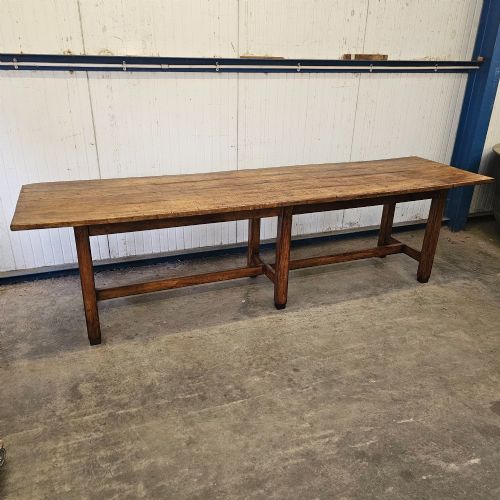
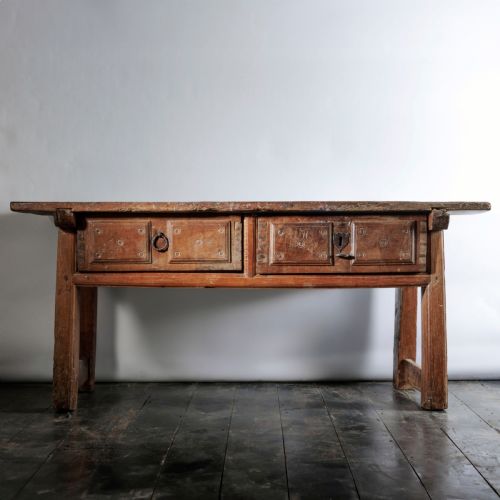
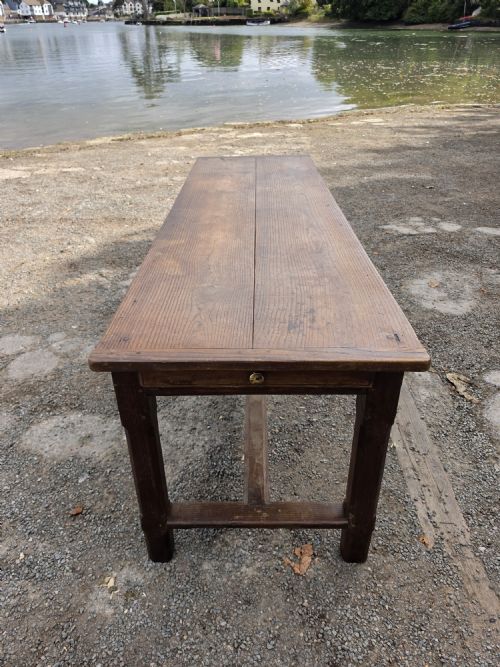
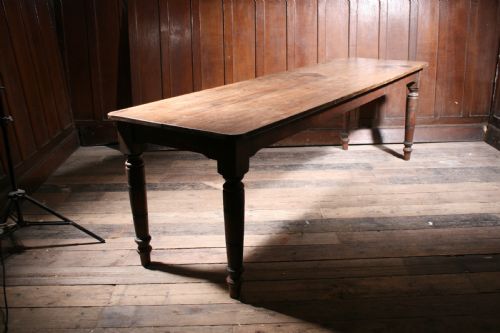
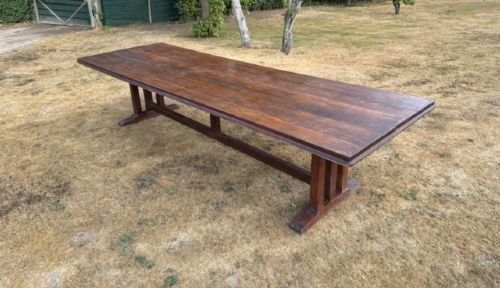
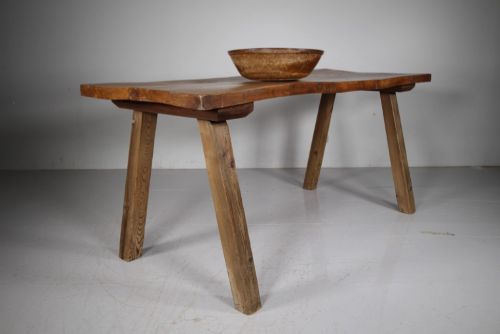
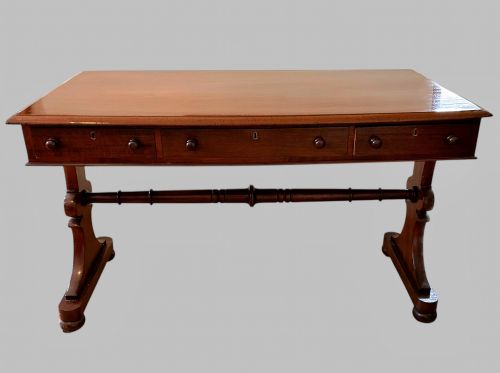
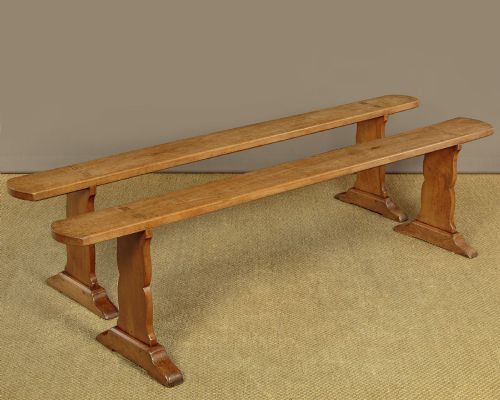
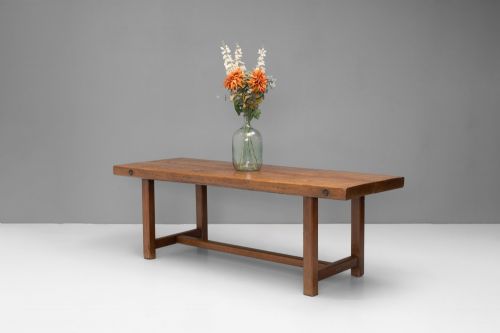
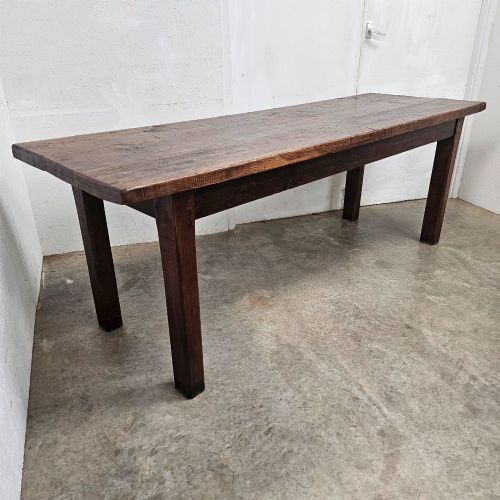


Brown Timber Trestle Table
These brown timber trestle table pieces offer sturdy surfaces and honest construction, bringing historical character straight into modern dining rooms.
Brown Timber Trestle Table
A brown timber trestle table serves as a sturdy surface for dining, work, or gathering, drawing on historical forms ranging from country kitchens to grander spaces. When searching for a brown timber trestle table, buyers encounter formats like refectory dining tables, tavern tables, and work tables built for utility. These pieces originate across the eighteenth and nineteenth centuries, spanning Edwardian, Victorian, and rustic vernacular styles.
The selection here includes examples in oak, elm, walnut, and pine, often paired with robust framing or iron supports. Forms extend from long farmhouse boards to narrower serving tables and low coffee pieces. Buyers most frequently meet nineteenth-century English and French country designs showing practical construction and honest wear.
Materials and construction
Carpenters built these tables using dense domestic hardwoods like oak, elm, walnut, and fruitwood, alongside pitch pine for utility pieces. Timbers were selected for their strength and stability, often resulting in thick plank tops that could withstand heavy daily use. Iron bracing appeared in industrial work tables to reinforce the structural span.
Joinery relied on traditional pegged joints, dovetails, and sturdy cross-base or trestle framing rather than modern adhesives. Surfaces were finished simply through planing, scraping, and waxing, allowing the natural grain and growth marks of the timber to remain visible.
Brown Timber Trestle Table Retail Price Guide 2026
Typical asking prices for brown timber trestle table among the pieces listed under this phrase on Sellingantiques today, from the lower quarter to the upper quarter. They describe what is for sale here now, not the wider market.
The listings span the eighteenth to the early twentieth century, incorporating oak, elm, fruitwood, and pitch pine across various European origins.
Assessing quality and proportion
Quality in these tables rests primarily on the integrity of the timber selection and the weight of the top planks. Superior examples feature thick, stable boards cut from single trees, whereas lesser pieces use thinner laminates or secondary timber patches. The depth of the natural patina and the crispness of the original joinery further separate utilitarian work benches from finer dining furniture.
Proportion and structural balance also dictate value, with well-balanced trestle supports offering both aesthetic harmony and practical legroom. Tables that retain their original surface finishes without excessive sanding demonstrate better historical survival. The presence of secondary woods or later alterations shifts an example away from its original workshop standard.
The Brown Timber Trestle Table Glossary
- Trestle
- A structural support consisting of a horizontal beam fixed to two splayed legs, designed to bear heavy downward weight. This form provides maximum legroom beneath the surface.
- Refectory
- A long dining table traditionally used in monasteries or large halls for communal meals. These pieces typically feature long timber boards resting on substantial end supports.
- Patina
- The surface sheen and colour developed over decades of handling, polishing, and exposure to light. It serves as an indicator of age and continuous use.
- Vernacular
- Everyday objects made by local tradesmen for practical local needs rather than high-style urban workshops. These designs prioritize function and regional material availability.
Brown Timber Trestle Table: Frequently Asked Questions
How do I clean a timber table?
Dust the surface regularly with a soft, dry cloth to prevent grit accumulation in the grain.
Nourish the timber periodically with traditional beeswax to maintain the finish without sealing the pores.
Can these tables be used daily?
Most of these tables were built for heavy domestic or working use and remain exceptionally sturdy for modern dining.
Using felt pads and coasters protects the historic timber surface from excessive moisture and heat marks.
What rooms suit a trestle table?
Dining rooms and large kitchens accommodate the substantial length and social layout of a refectory or farmhouse format.
Narrower hall or serving tables fit neatly along corridors and living spaces where floor area is restricted.
How do I spot an older table?
Look for hand-planed surface textures, pegged joinery, and natural timber movement rather than modern machine-cut precision.
Signs of honest wear, timber shrinkage, and a warm wax patina indicate extended historical use.