

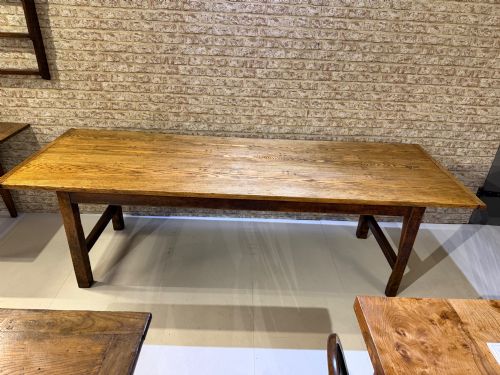
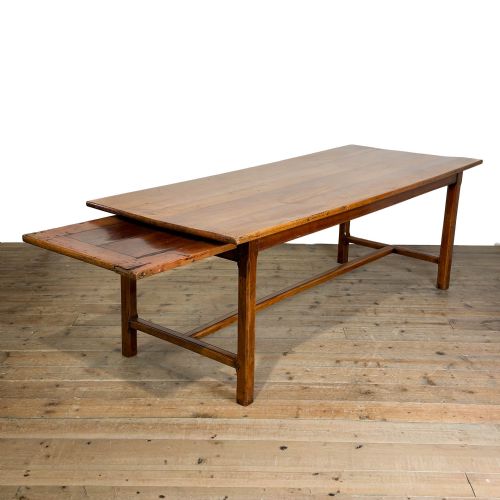
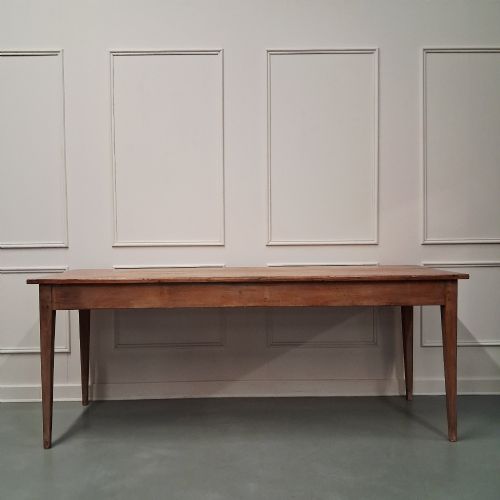
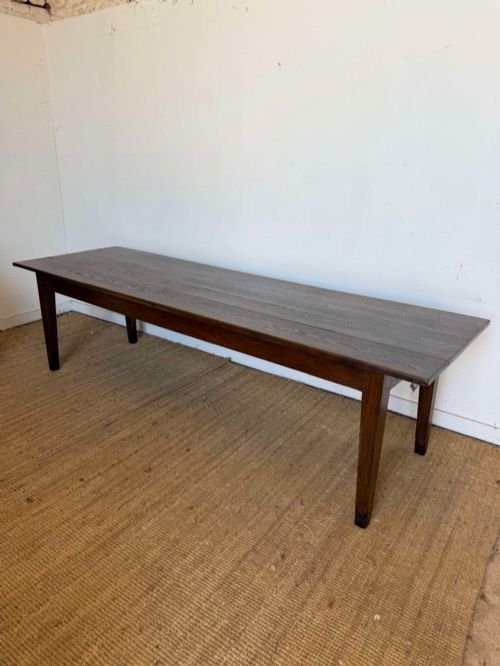
Large Country Kitchen Table
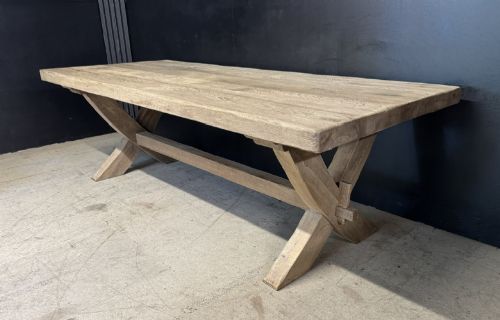
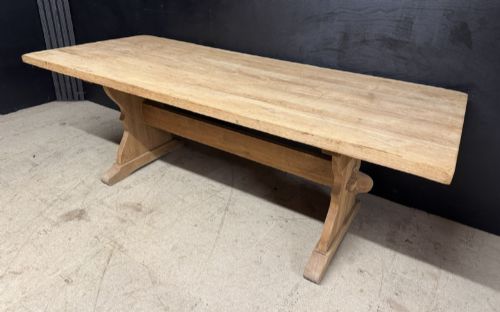
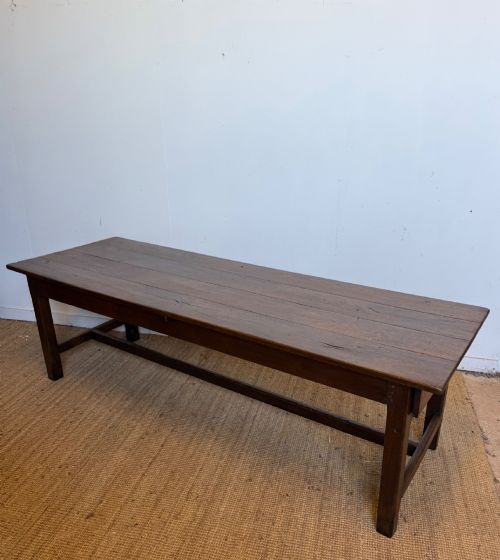
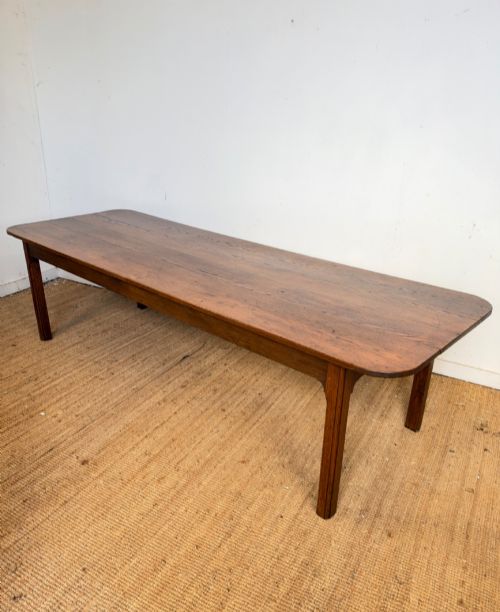
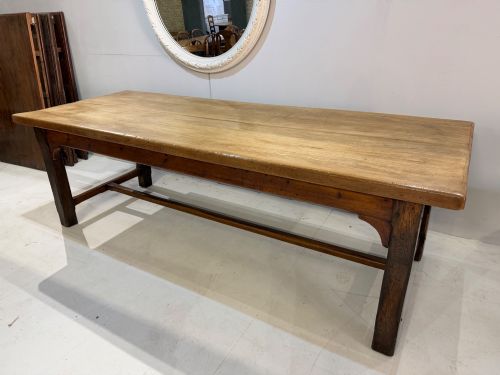
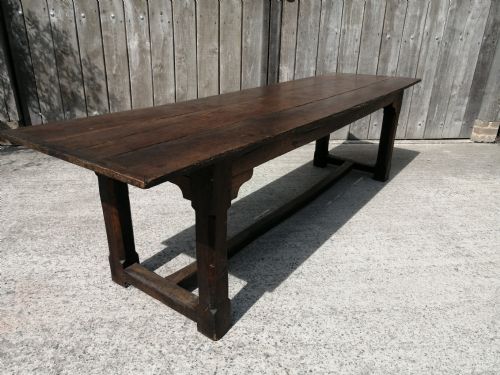
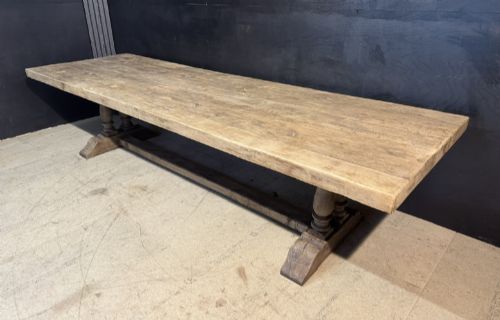
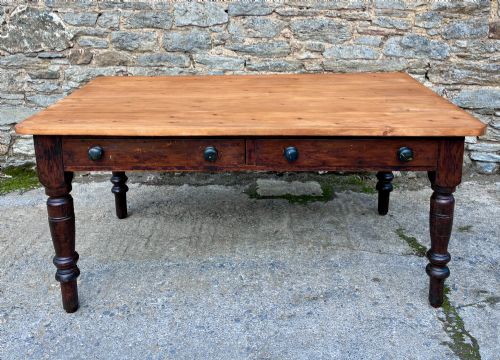
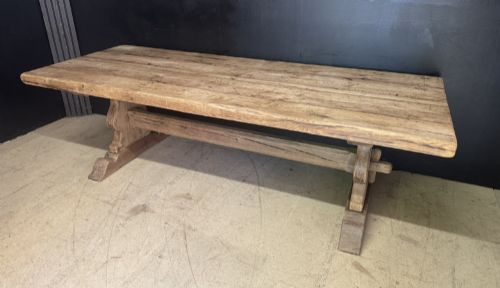
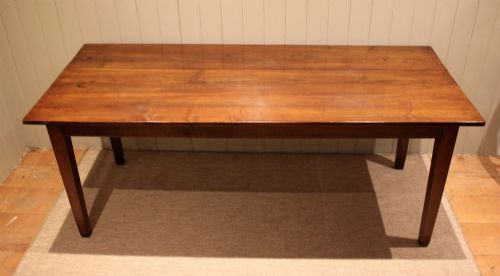
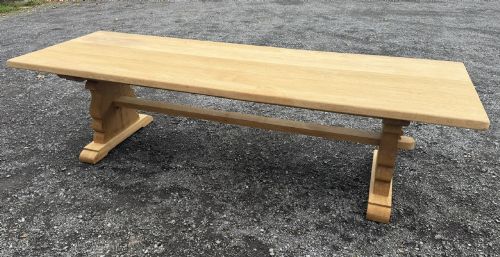
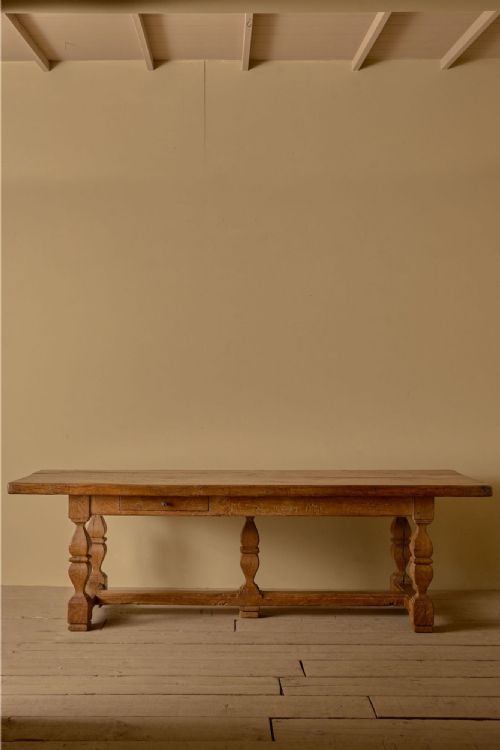
A large country kitchen table anchors a room with heft and utility, offering generous proportions built for gathering.
Large Country Kitchen Table
A large country kitchen table represents the heart of domestic life, designed to seat ten to fourteen diners comfortably for daily meals and gatherings. These substantial dining pieces span the nineteenth century, Edwardian era, and around nineteen hundred, emerging from domestic country houses and farmhouses.
The dominant forms on this page include scrubbed pine surfaces, oak refectories, and drop-leaf formats. French provincial and rustic farmhouse styles shape the aesthetic, featuring square section supports and heavy timber construction.
Origins vary across English country houses and continental farmhouses, bringing diverse regional character to each large kitchen dining table. Walnut, fruitwood, elm, and pear wood appear alongside traditional pine and oak.
Materials and construction
Makers utilised solid native timbers such as oak, pine, walnut, fruitwood, elm, and pear wood to construct these heavy dining surfaces. Planks were joined to span considerable lengths, often reaching eight and a half feet or more to accommodate large households.
Supports range from sturdy square section legs to refectory bases and gateleg mechanisms. Surfaces were left natural or scrubbed clean through generations of use, while some examples retain original painted finishes.
Large Country Kitchen Table Retail Price Guide 2026
Typical asking prices for large country kitchen table among the pieces listed under this phrase on Sellingantiques today, from the lower quarter to the upper quarter. They describe what is for sale here now, not the wider market.
Listings feature pine and oak most frequently, accompanied by walnut, fruitwood, and paint across the nineteenth century and Edwardian period.
Judging quality
Quality rests in the integrity of the timber selection and the honesty of the surface patina. Dense grain in oak and fruitwood or deep character in scrubbed pine distinguishes superior examples from lesser utilitarian builds.
Proportion and scale dictate the distinction, where well-balanced leg supports and substantial timber thickness sustain the vast surface area without sagging. The harmony between the base construction and the top planking marks the difference between standard workshop output and exceptional farmhouse carpentry.
The Large Country Kitchen Table Glossary
- Refectory table
- A long narrow dining table traditionally used in monastic refectories and later adopted in large country houses.
- Scrubbed pine
- A wooden surface washed repeatedly with soap and water to achieve a pale, clean, matt finish.
- Gateleg table
- A dining table with hinged leaves supported by swing-out legs.
- Square section supports
- Straight legs with a four-sided profile lacking turned decoration.
- Drop-leaf table
- A table featuring hinged flaps on the sides that fold down to save space.
Large Country Kitchen Table: Frequently Asked Questions
How many people do they seat?
These large tables routinely seat ten to twelve diners, with some expansive examples accommodating up to fourteen people.
Their generous length makes them practical for hosting large gatherings in spacious kitchens and dining rooms.
What woods were used?
Pine and oak appear most frequently in the listings, alongside walnut, fruitwood, elm, and pear wood.
Each timber brings a distinct weight and grain pattern, influencing the overall colour and character of the piece.
Are they all from the Victorian era?
While many examples date from the Victorian period and around nineteen hundred, the selection also includes nineteenth-century pieces and earlier Georgian gateleg formats.
Stylistic markers and construction methods help distinguish the Edwardian and Victorian iterations from earlier provincial designs.
How do I live with a scrubbed pine top?
Scrubbed pine surfaces tolerate daily domestic use well because their untreated timber absorbs everyday wear without formal polish.
Regular cleaning maintains the pale, tactile finish developed over generations of kitchen life.