
Wooden Country Dining Table
A wooden country dining table brings practical utility and simple warmth to a kitchen or dining room, anchoring the space with honest timber construction.
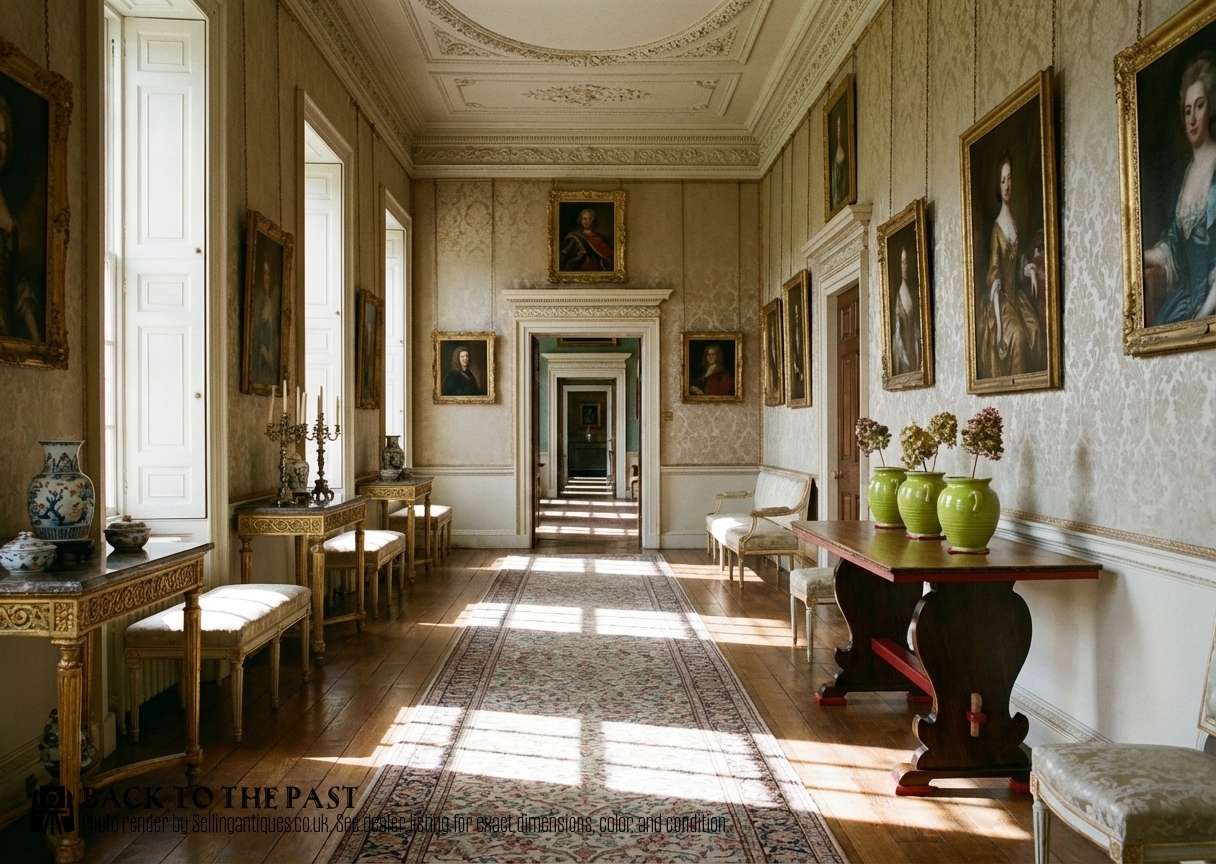
Wooden Country Dining Table
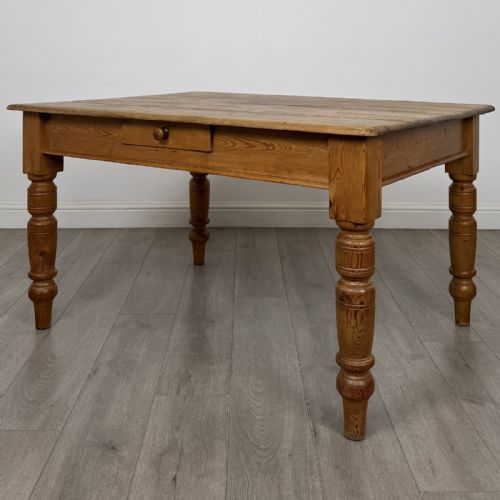
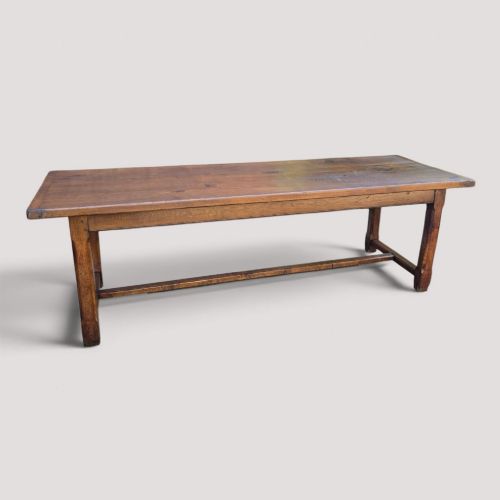
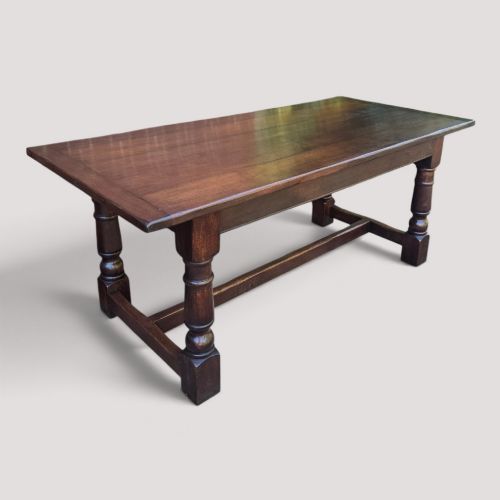
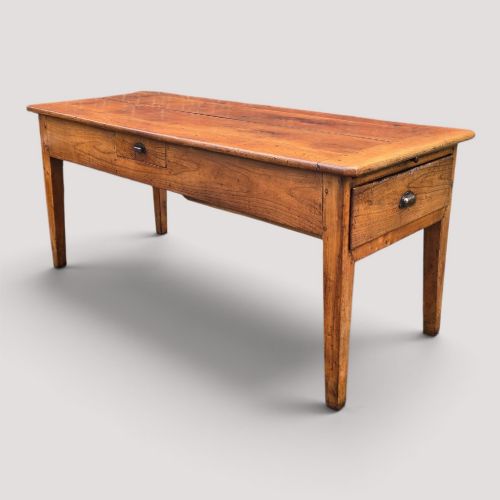
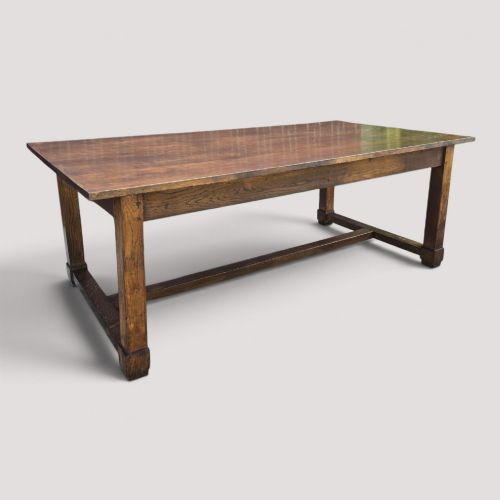
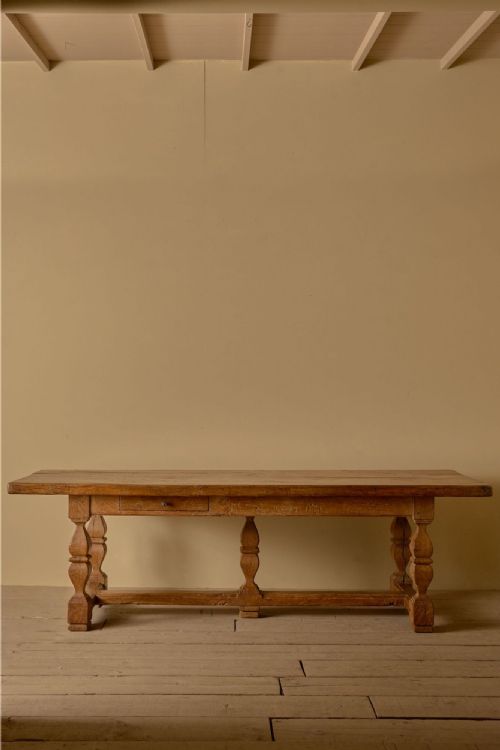
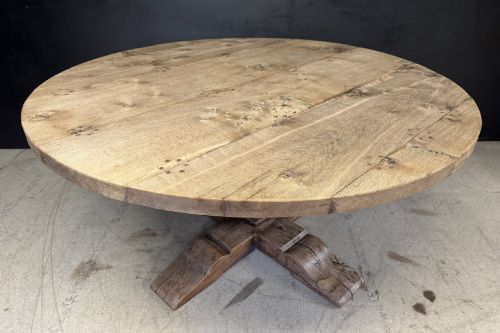
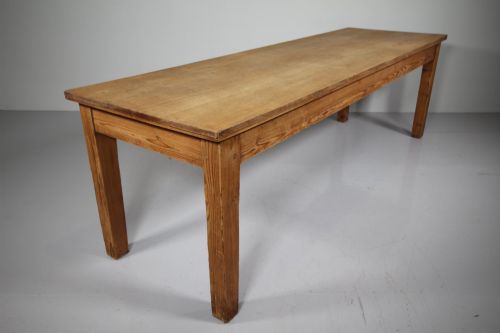
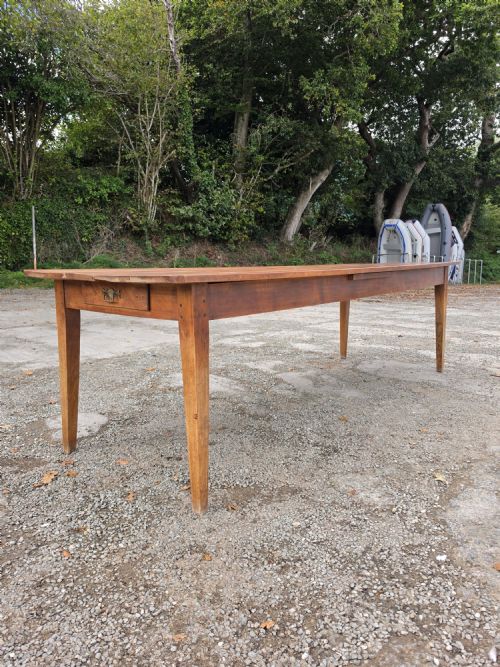
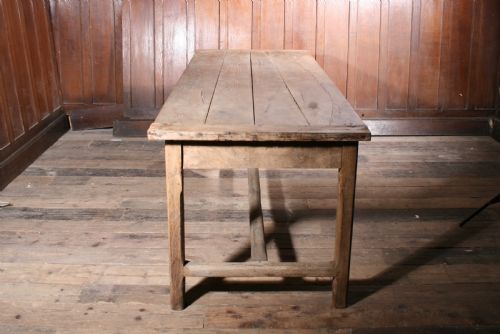
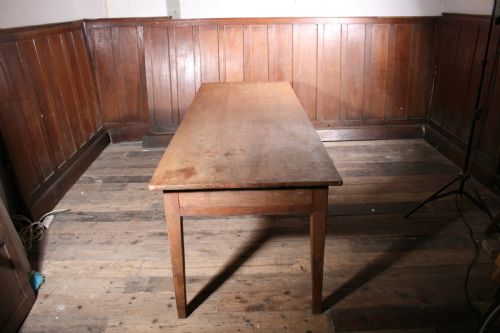
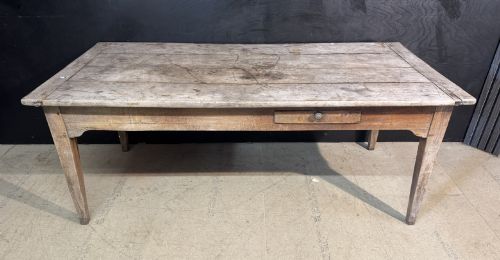
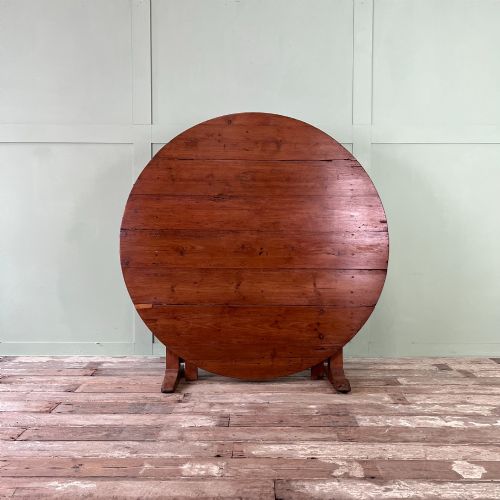
When searching for a wooden country dining table, buyers encounter sturdy surfaces designed for daily domestic life rather than formal entertaining. The most common examples on this page are generous farmhouse tables, refectory designs, and tavern tables dating from the eighteenth century through to the early twentieth century.
These tables typically originate from British, French, or Spanish domestic settings, reflecting regional preferences in their proportions and timber selection. Forms range from long oak refectory boards to deep pine kitchen surfaces and round French fruitwood or walnut pieces.
Materials and construction methods
Makers relied primarily on native timbers such as oak, pine, elm, and fruitwood to build these tables, often combining harder woods for structural frames with softer varieties for tops. Oak and elm provide exceptional strength for refectory styles, while pine and fruitwood offer lighter tones and smooth surfaces suited to kitchen use.
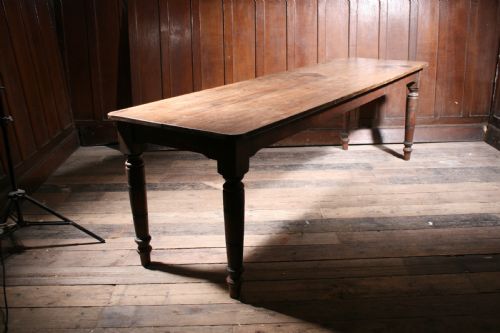
Joinery techniques focused entirely on strength, utilising pegged mortise and tenon joints to secure the legs and rails under heavy daily loads. Turned elements like bobbin legs, tapered supports, and sturdy stretchers added stability while complementing the utilitarian character of the timber.
One school dining table managed to survive decades of ink stains and enthusiastic scholarship before finding a quiet retirement.
Assessing construction and material quality
The primary distinction in quality lies in the integrity of the timber and the honesty of the construction, where boards show uniform seasoning and minimal structural intervention. Superior examples retain their original structural timber, showing natural patination accumulated through generations of domestic use.
The finesse of the turning on legs and the tightness of the original joints separate standard utilitarian boards from finer pieces commissioned for larger country houses. Heavy gauge tops and balanced proportions indicate a higher grade of craftsmanship, even within rustic and provincial traditions.
The Wooden Country Dining Table Glossary
- Refectory table
- A long, narrow dining table traditionally used in monasteries and large halls, characterised by substantial legs joined by a low stretcher. These pieces offer significant surface area for communal dining.
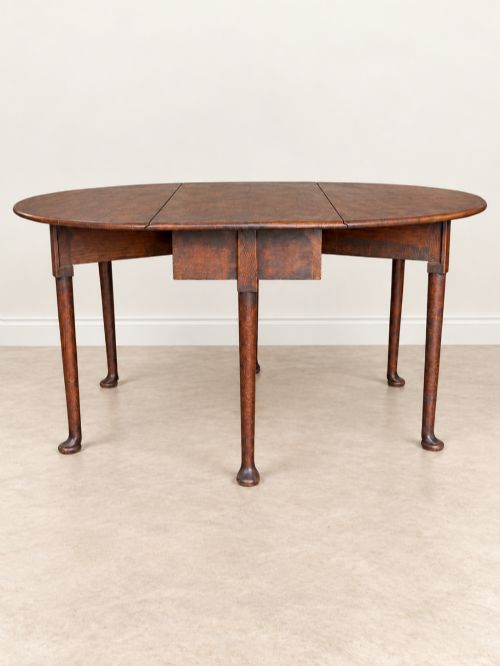
- Gate-leg table
- A table with hinged leaves supported by swing-out legs that resemble a swinging gate. This design allows the table to expand or contract according to space requirements.
- Fruitwood
- A dense, fine-grained timber harvested from fruit-bearing trees such as cherry, pear, or apple. It provides a warm, smooth finish favored in French provincial cabinet-making.
- Stretcher
- A horizontal wooden bar connecting the legs of a table to improve structural rigidity. In country furniture, these often double as footrests.
- Patina
- The surface sheen and coloration developed by wood over decades of handling, cleaning, and exposure to light. A desirable patina signals age and authentic domestic use.
Wooden Country Dining Table: Frequently Asked Questions
How do I choose the right size?
Consider both the available floor space in your room and the number of people you intend to seat regularly. Long refectory and harvest formats accommodate larger groups easily, while gate-leg variations suit more compact dining areas.
Measure your dining space carefully to allow sufficient clearance around the table for chairs to pull out comfortably. Account for the fixed position of table legs and stretchers when planning seating arrangements.
Are these tables suitable for daily use?
These tables were originally built for heavy daily domestic life, making them exceptionally well-suited for modern family dining and kitchen tasks. Their robust construction handles regular activity without difficulty.
Using appropriate surface protection helps preserve the historic timber and established patina against moisture and heat. Regular waxing maintains the moisture balance in older woods like oak and pine.
How do I clean an antique wooden table?
Dust the surface regularly with a soft, dry cloth to prevent grit accumulation that might scratch the finish over time. Avoid harsh chemical cleaners and excessive water, which can damage aged timber and historic wax surfaces.
Apply a traditional beeswax polish occasionally to nourish the wood and maintain its natural lustre. Buff gently with a clean cloth after application to protect the grain.
How do I date a country table?
Examine the timber preparation methods, tool marks on the underside, and the style of the joinery to establish an approximate period of manufacture. Hand-sawn boards and pegged joints typically point to eighteenth or nineteenth-century craftsmanship.
Compare the turned leg profiles and overall proportions against established stylistic periods like Victorian, Edwardian, or Jacobean revival. Secondary woods used in the underframe often provide additional clues regarding regional origins.