


Vintage Pine Worktable
A vintage pine worktable brings honest utility and warmth to a kitchen, offering a sturdy surface shaped by decades of honest domestic use.
Vintage Pine Worktable
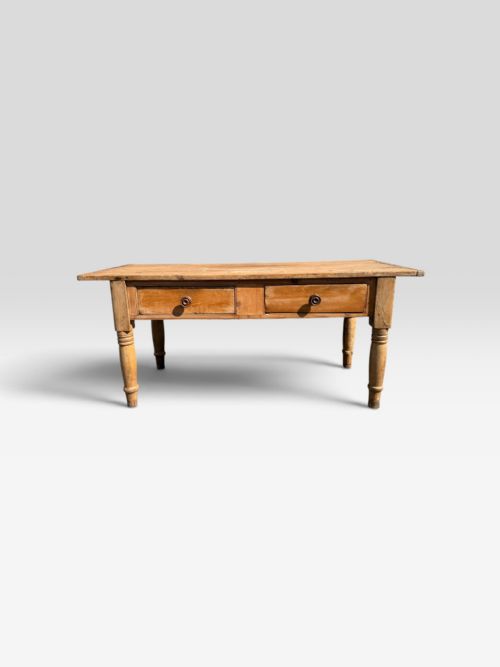
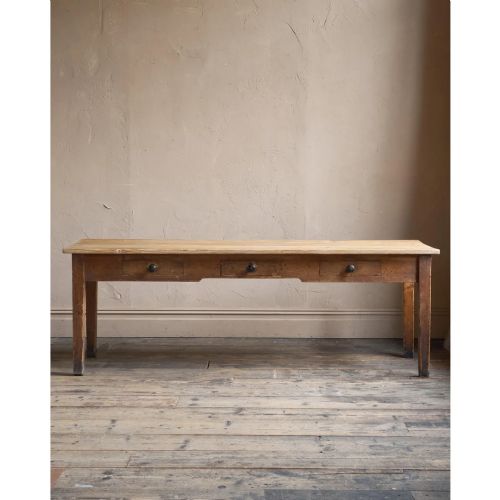
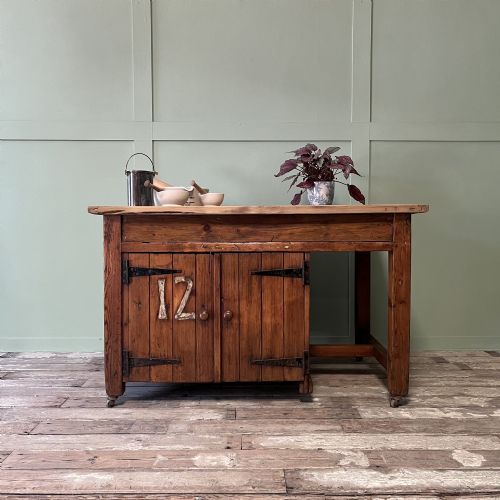
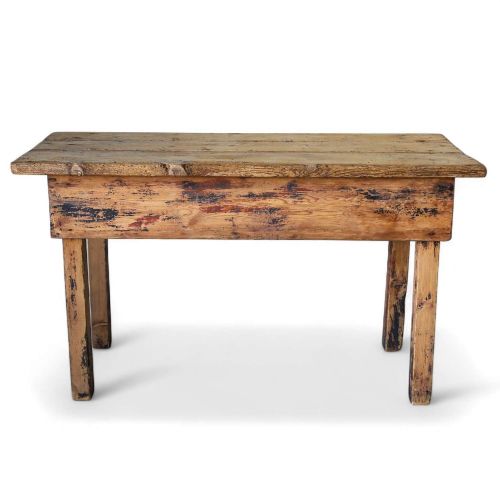
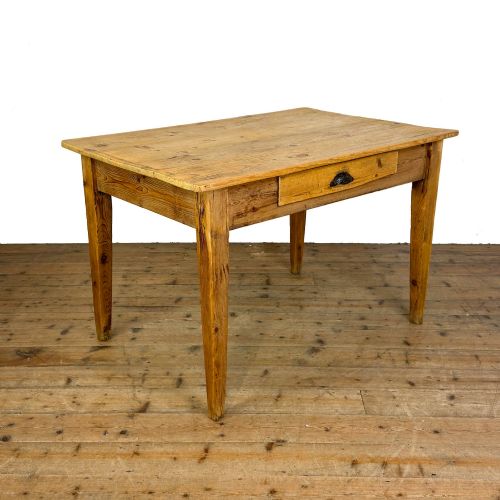
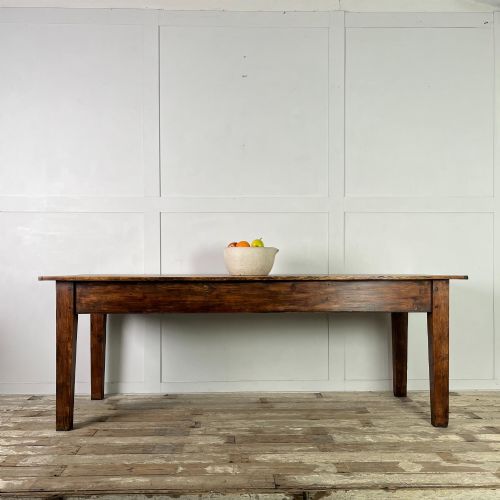
A vintage pine worktable is a practical surface designed for food preparation, scullery tasks, and kitchen labour. The selection on this page spans the nineteenth century up to nineteen thirty, taking forms such as bakers prep tables, scullery tables, and farmhouse dining preparation tables.
You are most likely to encounter nineteenth-century examples and early twentieth-century pieces spanning nineteen twenty to nineteen thirty. These items originate from British, French, and Scandinavian traditions, presenting styles that range from rustic farmhouse and rustic country to industrial and Scandinavian country.
The forms function primarily as kitchen tables, prep tables, and work tables, alongside console pieces. They often feature drawers for storage and surfaces built to handle heavy daily use.
Materials and construction
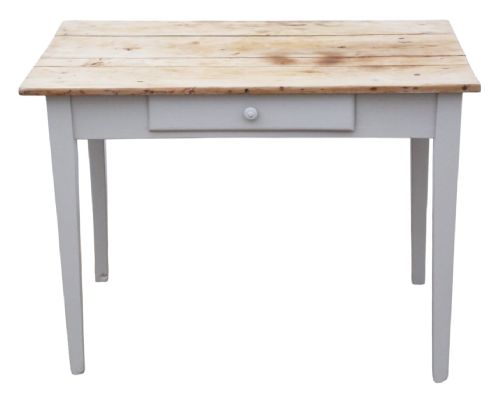
These tables are constructed from solid timber, predominantly utilising pine and pitch pine for their robust frames and tops. Some examples incorporate painted timber or retain their original paint finish in shades that reflect their Scandinavian or country origins.
Hardware details include cast iron and brass components, appearing on structural elements and drawers. The construction relies on traditional joinery suited to heavy preparation work in kitchens and sculleries.
The listings on this site feature nineteenth-century and early twentieth-century pieces, including items dated to nineteen twenty and nineteen thirty.
Assessing quality and character
Quality in a vintage pine worktable rests on the integrity of the timber and the depth of its working patina. Scrub-tops and heavy pine tops show the marks of historical use, where the grain and scrubbing tell the story of the piece.
Proportion and scale distinguish finer examples, particularly in larger formats such as grand Swedish prep tables and expansive farmhouse tables. Original painted surfaces add distinction compared to later or stripped finishes.
The Vintage Pine Worktable Glossary
- Scrub-top
- A wooden tabletop designed to be scrubbed clean with water and sand after food preparation. This process creates a pale, smooth surface with a characteristic grain texture.
- Pitch pine
- A dense, resinous variety of pine timber known for its durability and prominent grain pattern. It was frequently utilised for heavy-duty furniture.
- Bakers table
- A specialist work table featuring a wide, flat top suited to kneading dough and pastry work. These often include under-tier storage or drawers for utensils.
- Scullery table
- A utilitarian table kept in the domestic scullery for washing, cleaning, and messy kitchen tasks. They are typically built for endurance rather than display.
- Scandinavian country
- A stylistic classification reflecting minimalist yet practical furniture design from northern Europe. It often incorporates pale painted finishes and clean structural lines.
Vintage Pine Worktable: Frequently Asked Questions
What is a vintage pine worktable used for?
These tables serve as central workspace surfaces in kitchens, handling food preparation, baking, and daily dining. Their robust construction makes them suitable for active domestic environments.
Historically, they stood in sculleries and farmhouses where durability mattered more than polite decoration. Today, they function as kitchen islands, prep benches, and farmhouse dining tables.
How do I date a vintage pine worktable?
Dating relies on examining the construction methods, timber type, and hardware like iron or brass fittings. Pieces from the nineteenth century often feature hand-cut joints and dense pitch pine.
Later examples from nineteen twenty and nineteen thirty show slight variations in proportion and drawer construction. Original paint finishes and surface wear also help place a piece within its proper era.
Are scrub-top tables hard to maintain?
Scrub-tops are resilient surfaces designed to withstand moisture, scrubbing, and daily kitchen use. Regular cleaning with mild soap and water maintains the pale timber without harming the historic patina.
Applying natural oils can help nourish the dry pine if the surface becomes too parched from modern heating. The wood naturally acquires marks and stains over time, which forms part of its character.
How do Scandinavian tables differ from British ones?
Scandinavian tables from the nineteenth century frequently feature original painted timber finishes in pale tones. They lean towards clean lines associated with Scandinavian country style.
British and French farmhouse variants tend to showcase exposed scrubbed pine tops and darker wood tones. Both traditions emphasise heavy timber construction tailored to practical preparation tasks.