
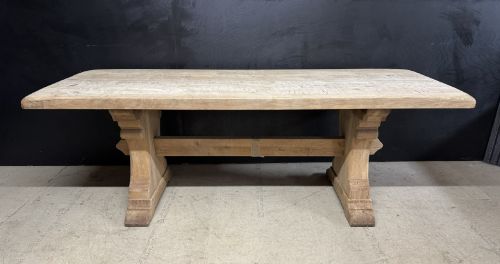
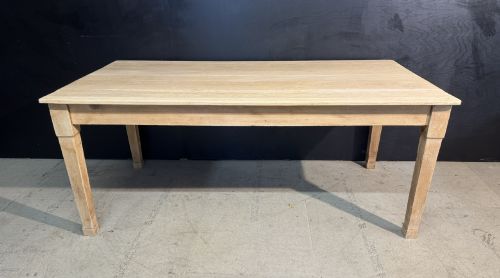
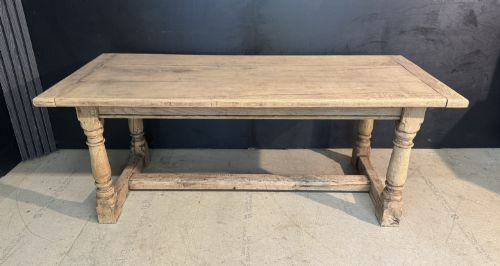
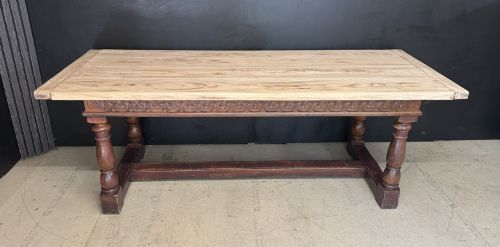
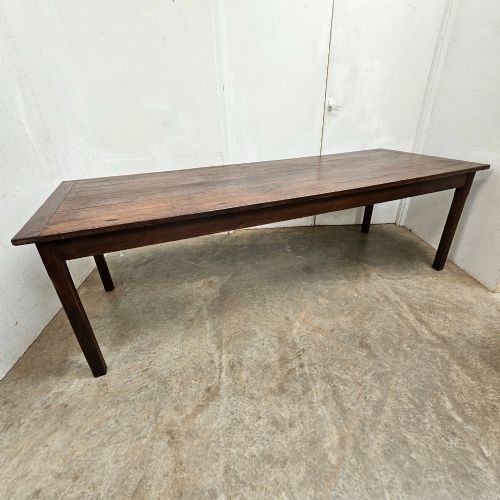
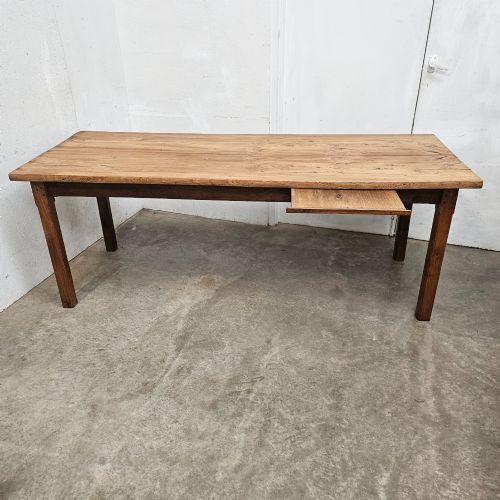
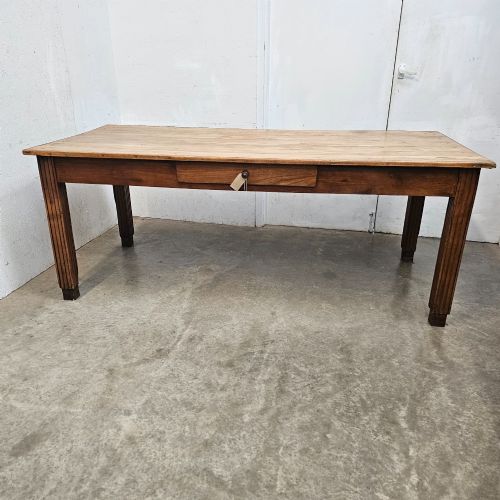
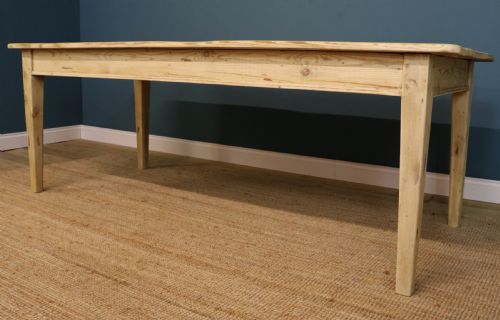
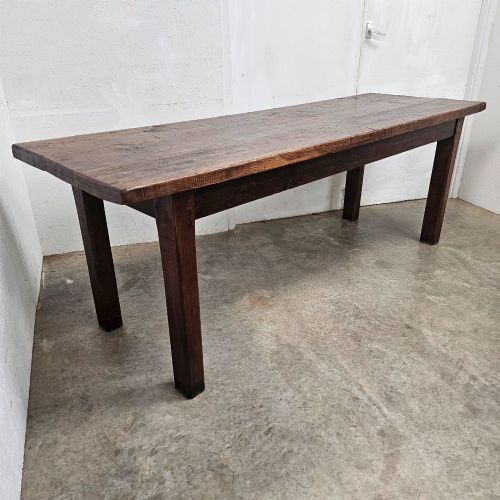
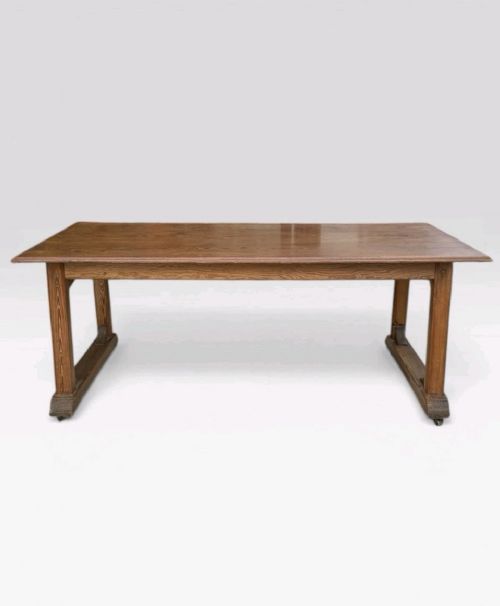
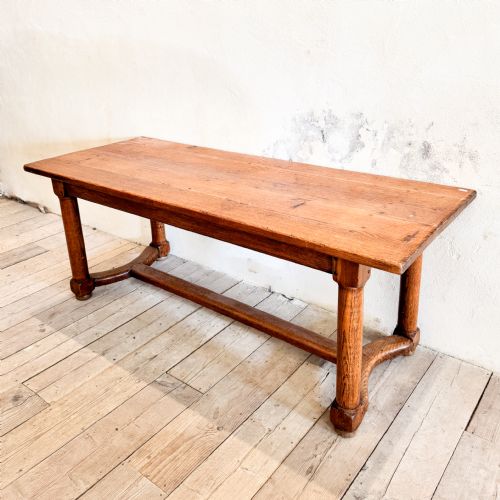

Vintage Wood Refectory Table
A vintage wood refectory table brings sturdy domestic presence to a room, built from solid timbers to serve as the functional heart of a home.
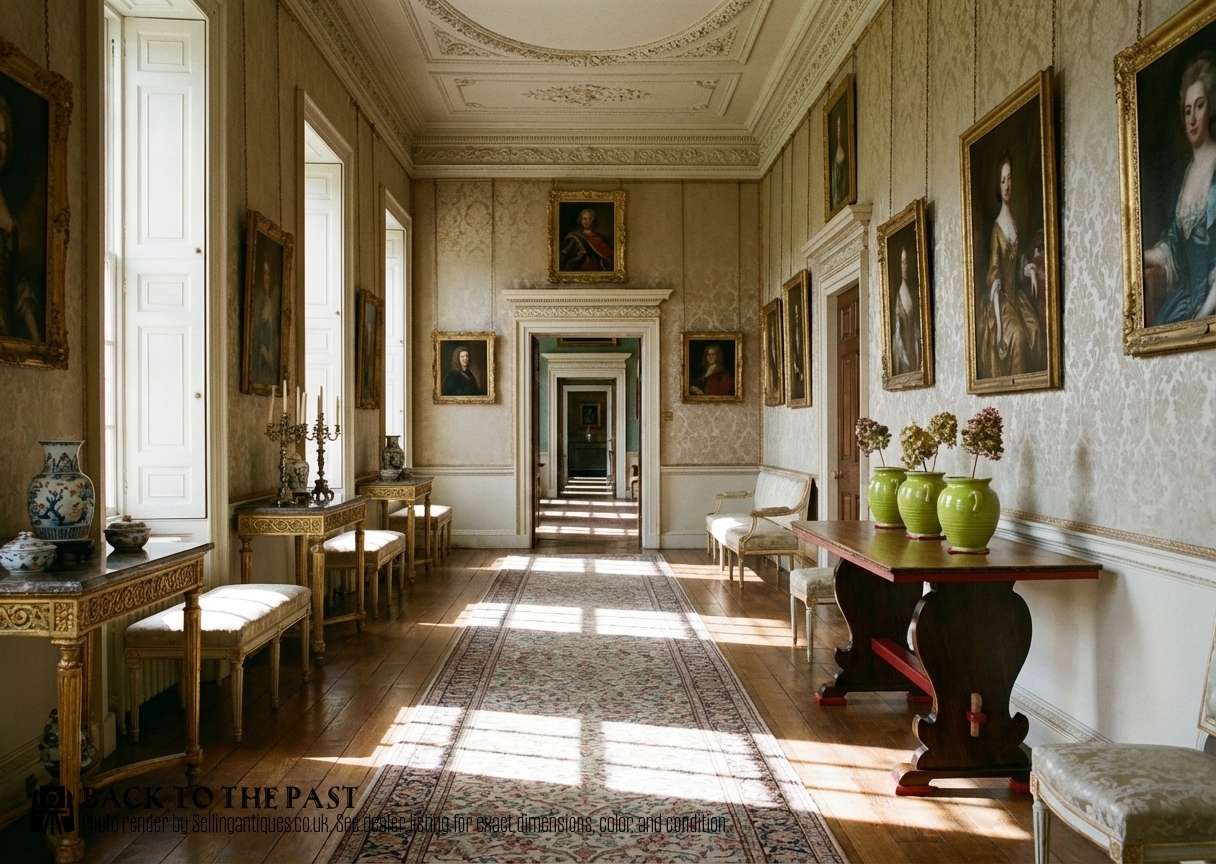
Vintage Wood Refectory Table
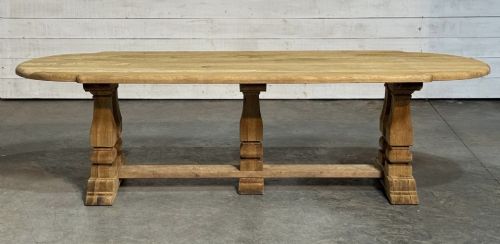
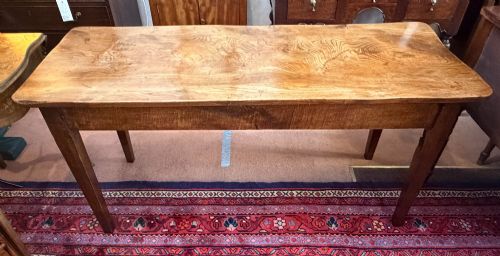
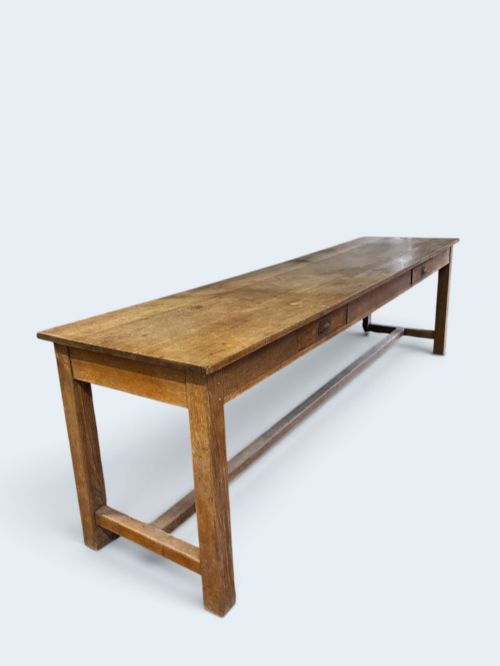
When you search for a vintage wood refectory table, you encounter long, robust boards designed primarily for communal dining and gathering. The examples gathered here span from the eighteenth century through the early twentieth century, taking forms such as standard dining tables, serving tables, and low coffee tables.
The most common iterations on this page are nineteenth-century farmhouse and refectory formats, often displaying substantial timber tops and sturdy underframes. Makers applied these heavy boards to kitchens and dining halls alike, establishing a tradition of long-form hospitality.
Geographic origins recorded in the listings point toward English and French workshops, encompassing regional variations from rustic country styles to formal Jacobean revivals and Arts and Crafts commissions. Buyers select these objects for their generous proportions and honest construction.
How they were made
Construction relies heavily on durable hardwoods and softwoods, predominantly oak, elm, pine, fruitwood, cherry wood, beech, and walnut. Craftsmen selected these timbers for their density and grain pattern, utilising solid planks for surfaces that would endure decades of heavy use.
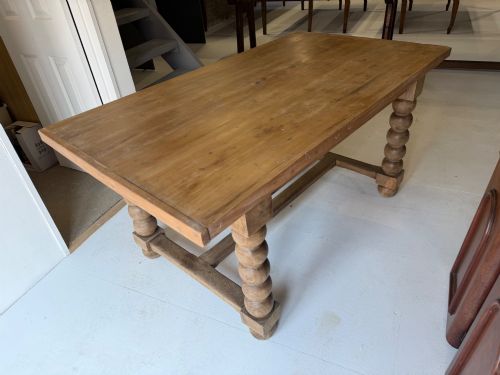
Joinery techniques include thick multi-board tops, pull-out extensions, draw leaves, and sliding breadboards, supported by turned legs, bobbin legs, barrel legs, or X-legs. Workshops shaped these elements by hand, often incorporating integrated drawers or carved aprons to finish the frame.
Listings feature woods spanning oak, elm, pine, fruitwood, cherry wood, beech, and walnut across styles from rustic farmhouse to French art deco.
What varies in quality
The degree of refinement in timber selection separates standard utilitarian boards from exceptional commissions. Superior pieces utilise finely figured quarter-sawn oak or choice cherry and fruitwood, retaining deep natural grain and rich patination across wide top boards.
Structural integrity and the cleverness of mechanical extensions define the upper tier of these tables. Refectories featuring smooth-operating draw leaves, substantial trestle bases, and sophisticated period carving demonstrate superior workshop execution.
The Vintage Wood Refectory Table Glossary
- Refectory table
- A long, narrow dining table traditionally used in monastic refectories and later adopted for domestic halls. These tables are characterised by their elongated proportions and supportive underframes.
- Draw leaf
- An extension mechanism where two leaves slide out from beneath the main top, raising slightly into place to lengthen the surface. This ingenious design allows the table to expand without requiring separate storage leaves.
- Bleached oak
- Timber treated to lighten its natural tone, a finish frequently found on French provincial furniture of the early twentieth century. This process softens the visual weight of dark woods.
- Breadboard ends
- Transverse pieces of wood fastened to the ends of a main tabletop to prevent warping and conceal end-grain. This traditional technique accommodates seasonal wood movement.
- Bobbin legs
- Turned furniture supports shaped to resemble a string of wooden bobbins or spools. This decorative turning style appears frequently on nineteenth-century seating and table bases.
Vintage Wood Refectory Table: Frequently Asked Questions
How do I clean a wood refectory table?
Maintain the surface by wiping it gently with a slightly damp cloth, avoiding harsh chemical sprays that strip the finish. Apply a traditional beeswax periodically to nourish the old timber and maintain its natural lustre.
Keep the table away from direct heat sources and intense sunlight to prevent the timber from drying out or splitting. Promptly mop up spills to protect the historic grain and patination.
Can I use a refectory table daily?
These tables were built for heavy domestic use, making them exceptionally well-suited for everyday family dining and kitchen tasks. Their robust timber construction absorbs the knocks of daily life while developing further character over time.
Protect the surface during particularly messy activities with placemats or table pads to prevent deep scratches. Embrace minor marks as part of the ongoing history of the piece.
How do I tell an 18th-century table from a 19th-century one?
Eighteenth-century examples often display simpler, hand-hewn joinery and deeper patination resulting from decades of use. Tool marks left by adzes and saws remain visible beneath the boards on earlier pieces.
Nineteenth-century and later tables frequently introduce mechanical extensions such as draw leaves or sophisticated turning styles like bobbin legs. Examining the underside and the fastening methods reveals the period of manufacture.
What chairs work best with these tables?
Pair these substantial tables with simple farmhouse chairs, ladder-backs, or contrasting upholstered seating to balance the heavy timber frame. Ensure you measure the clearance beneath the aprons to confirm your chosen chairs slide in comfortably.
Mixing periods works well, such as placing Arts and Crafts or rustic country seats alongside an older refectory base. Focus on coordinating the wood tones or painted finishes for a cohesive dining space.