
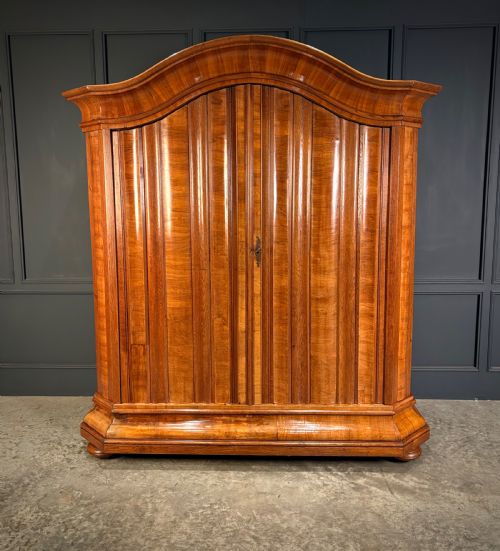
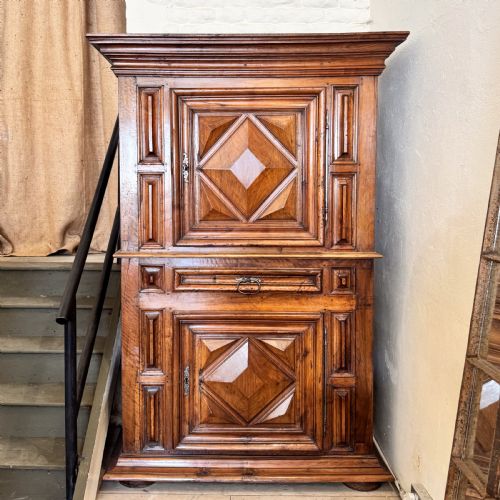


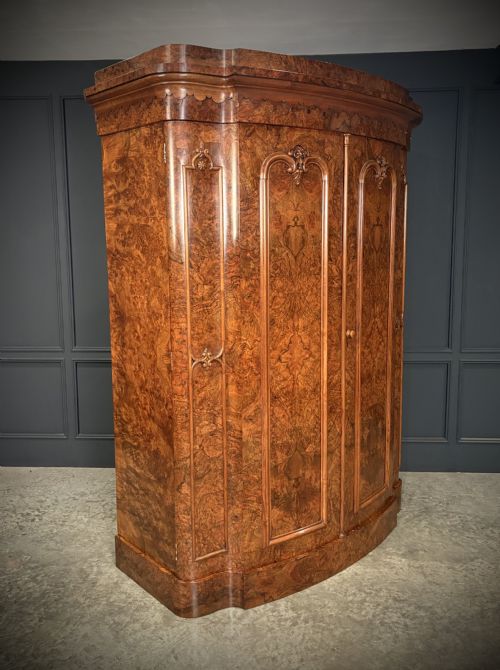


Large Walnut Wardrobe
A large walnut wardrobe offers grand scale and rich timber figuring, making it the definitive storage solution for a period bedroom.
Large Walnut Wardrobe
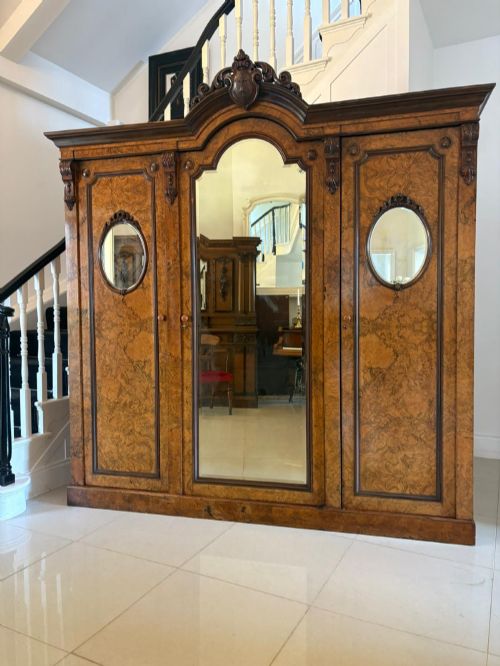
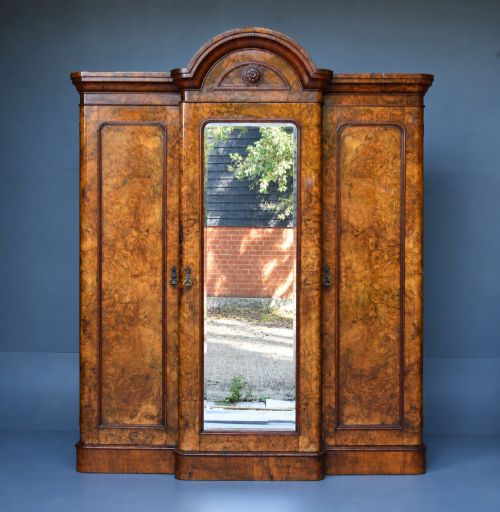
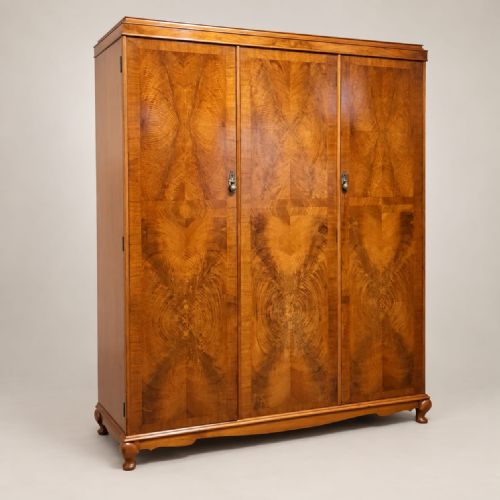
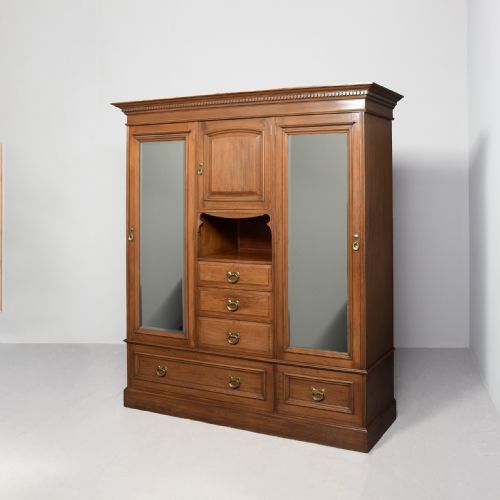
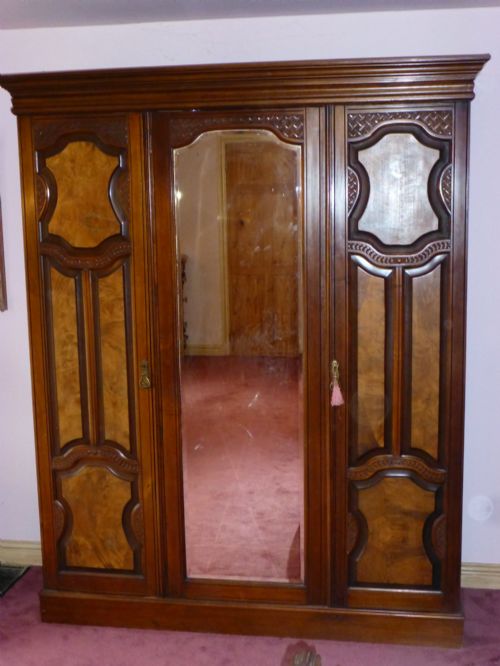
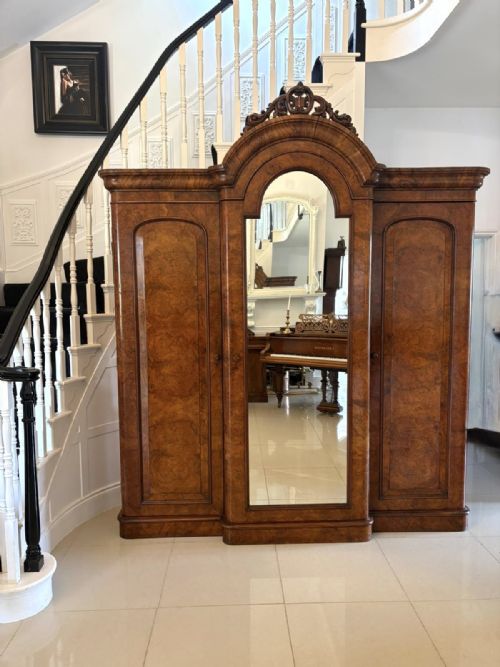
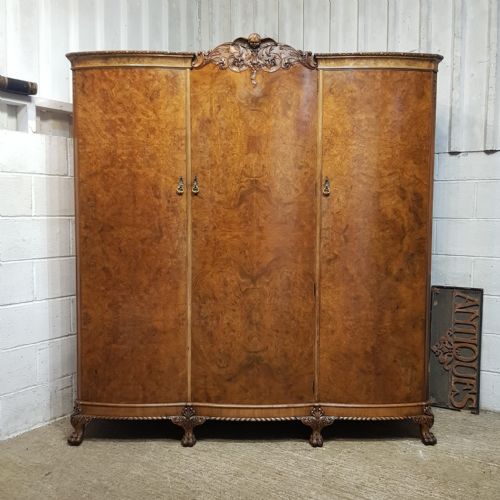
A large walnut wardrobe provides substantial hanging space and internal drawers within a commanding timber carcass. Buyers seeking a large walnut wardrobe will frequently encounter Victorian triple designs, alongside Edwardian examples and 1920s Art Deco interpretations.
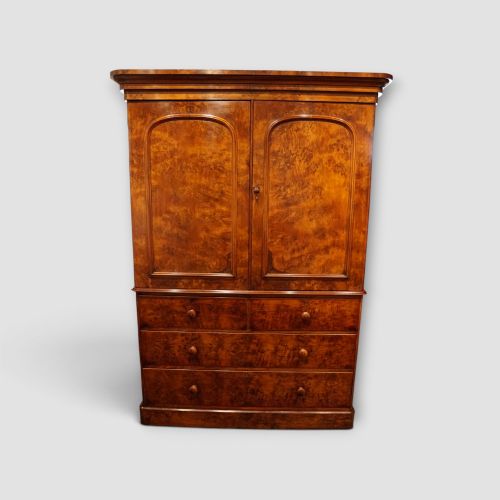
These grand pieces often take the form of compactums, combination wardrobes, or linen presses. Interiors typically combine hanging sections with sliding trays, compartments, and mirrored doors.
Origins stretch across English workshops, French ateliers, and Dutch cabinet makers. The overarching format remains a tall, multi-door structure designed to anchor a principal bedroom.
Construction and materials
Cabinet makers utilised solid walnut frames overlaid with highly figured burr walnut or straight-grained veneers to create striking symmetrical patterns on the doors. Secondary woods such as oak and pine provide structural stability inside the carcass and drawer linings.
Decoration relies upon carved mouldings, floral marquetry inlay, and brass hardware rather than applied ornaments. Mirrored glass panels and bevelled glass doors frequently integrate into the central sections.
The larger triple and breakfront configurations break down into modular sections for transport. Dovetailed drawer construction and solid brass hinges mark the underlying joinery.
Several grand wardrobes boast hidden inner compartments designed for stashing valuables beneath the linen slides.
Distinguishing quality across pieces
The distinction between standard storage and exceptional cabinet work rests upon the selection and matching of the burr walnut veneer. Superior examples display continuous, book-matched grain across wide triple doors rather than pieced segments.
Carved details and proportions dictate the standing of a piece. Finer wardrobes exhibit deeply hand-carved mouldings, panelled sides, and integrated combination drawer units rather than plain veneered carcases.
Maker attribution elevates certain pieces, particularly those bearing documented stamps from established workshops like Gillow and Holland and Sons. The integration of functional internal fittings, such as linen slides and secure brass locks, separates utilitarian cupboards from fine furniture.
Holland and Sons·Gillow and Co
The Large Walnut Wardrobe Glossary
- Burr walnut
- A figured timber harvested from the abnormal growth of a walnut tree, yielding swirling knot patterns prized for cabinet facades. It is sliced into thin veneers for decorative effect.
- Compactum
- A multi-functional wardrobe combining hanging space, linen slides, and drawers within a single carcass. This layout maximises internal storage for garments and household linens.
- Breakfront
- A cabinet design where the central section projects forward from the flanking wings. This architectural arrangement creates depth and shadow across the facade.
- Linen press
- A tall storage piece featuring upper cabinet doors enclosing sliding trays, placed above a chest of base drawers. They predate standard wardrobes and were adapted for hanging garments in later periods.
- Marquetry
- The art of applying small pieces of varied wood veneers to a structure to form decorative patterns or pictorial designs. Floral motifs feature prominently on nineteenth-century wardrobe doors.
Large Walnut Wardrobe: Frequently Asked Questions
How do I dismantle a triple wardrobe?
Most large wardrobes separate into distinct components consisting of a cornice, a base plinth, two outer hanging robes, and a central section. The side panels and backboards usually slot together or secure with concealed internal screws.
Marking the orientation of each part during disassembly ensures the joints align correctly upon reassembly in a new room.
What is a combination wardrobe?
A combination wardrobe integrates multiple storage formats within a single carcass, typically pairing full-length hanging space with linen shelves and internal drawers. These pieces served as complete dressing units for Victorian and Edwardian bedrooms.
They offer greater versatility than standard two-door wardrobes by accommodating folded garments alongside hanging attire.
How do I maintain walnut veneer?
Walnut veneer requires stable ambient humidity and protection from direct sunlight to prevent timber drying and veneer lifting. Regular dusting with a dry, soft cloth maintains the finish without moisture damage.
Occasional application of traditional beeswax nourishes the grain and preserves the historic lustre of the polished surface.
How do I tell Victorian from Edwardian wardrobes?
Victorian wardrobes generally display darker walnut tones, heavier carved mouldings, and symmetrical burr walnut panels. The scale tends to be monumental, with breakfront cornices and mirrored doors.
Edwardian pieces often embrace lighter satin walnut or simpler straight-grained veneers, sometimes reflecting Art Nouveau influences in their understated hardware and flowing lines.