

Large Vintage Gold Mirror
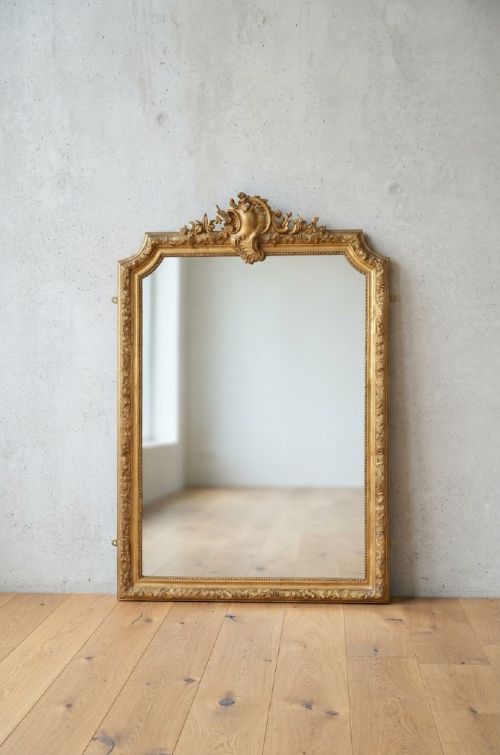
A large vintage gold mirror commands a room, bringing light and scale through the carved gilt frames of the nineteenth and early twentieth centuries.
Large Vintage Gold Mirror
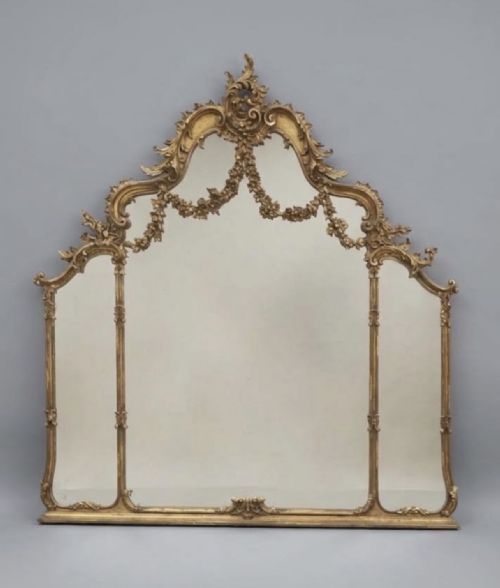
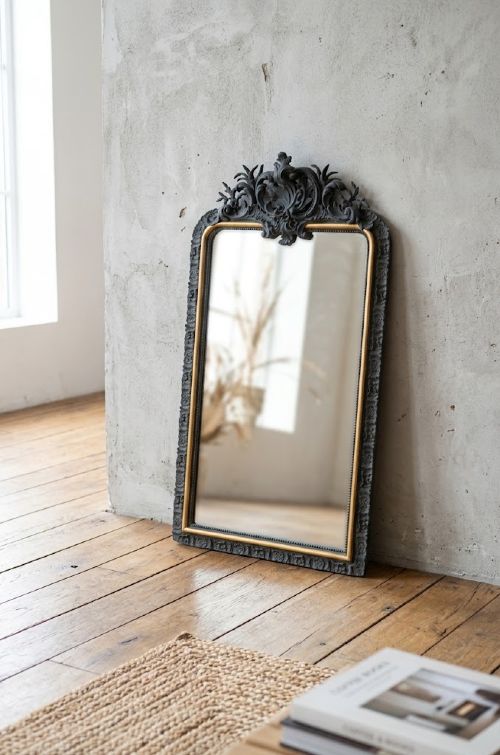
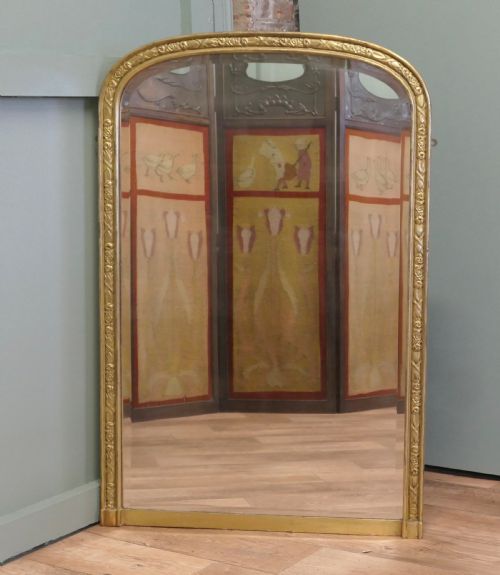
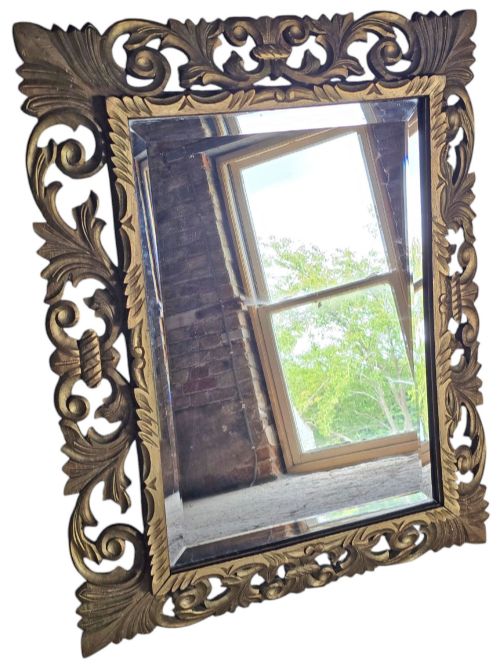
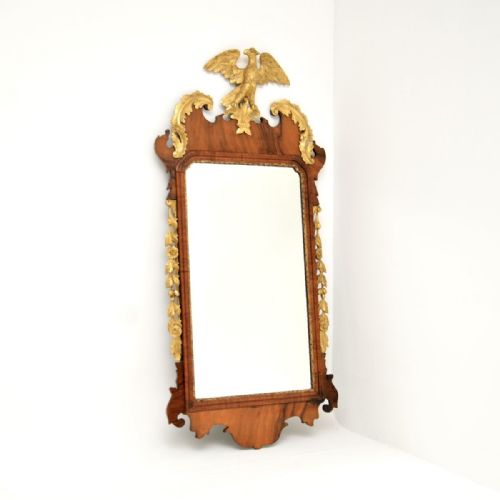
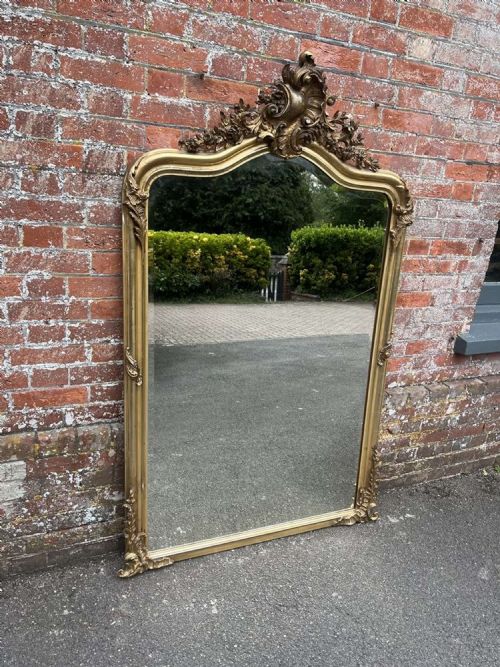
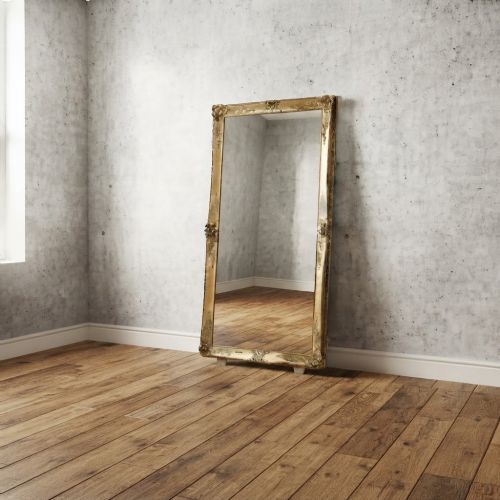
When searching for a large vintage gold mirror, one encounters pieces spanning the nineteenth century through to the Edwardian era, predominantly designed as overmantels, pier mirrors, and full-length leaner frames. These objects originate largely from French and English workshops, reflecting the grandeur of periods such as the Victorian, Louis Philippe, and Rococo revivals.
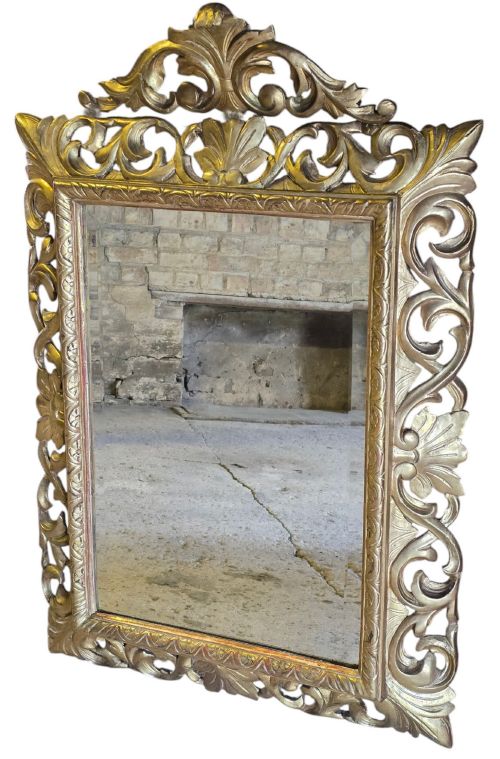
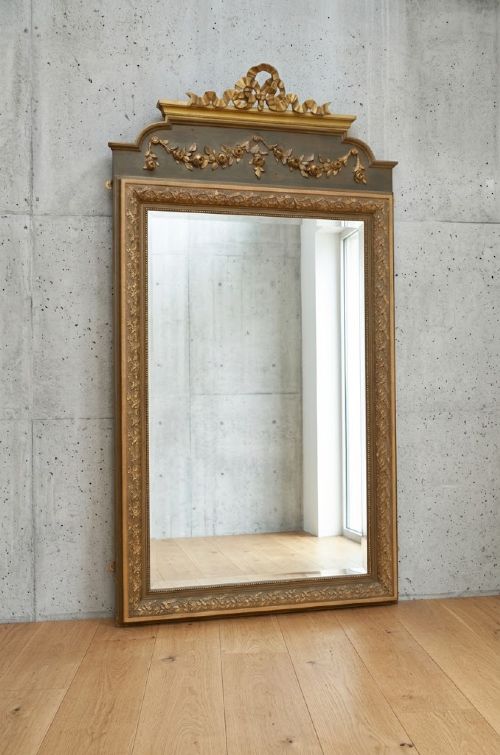
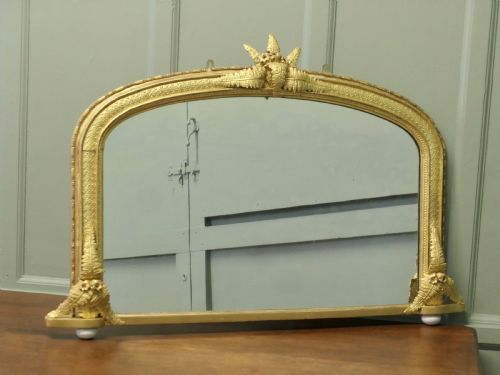
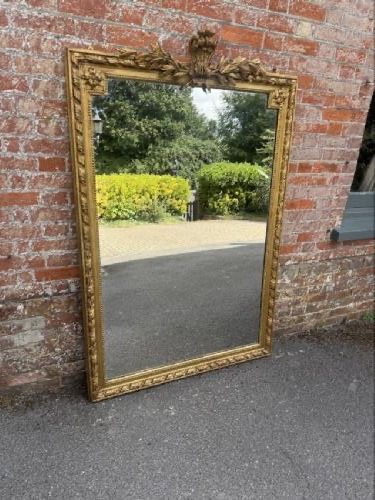
The most common examples on this page are substantial wall and overmantel mirrors featuring ornate crests, shaped tops, and heavily carved wooden structures designed to hang above a fireplace or stand grandly against a wall. Such pieces include architectural overmantels and tall dressing mirrors finished in rich metallic leaf.
The assortment balances French Chateau elegance with English traditional forms, offering substantial proportions that function as principal focal points within interior spaces.
How they were made
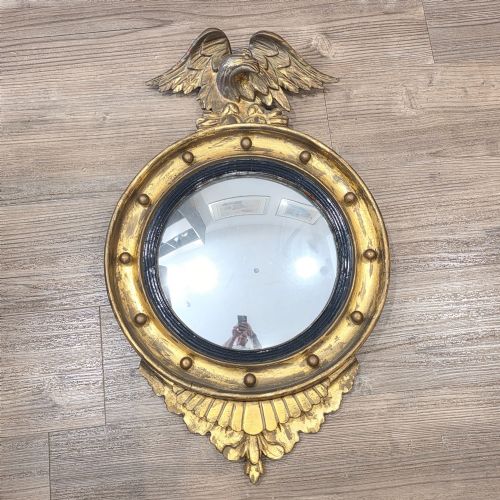
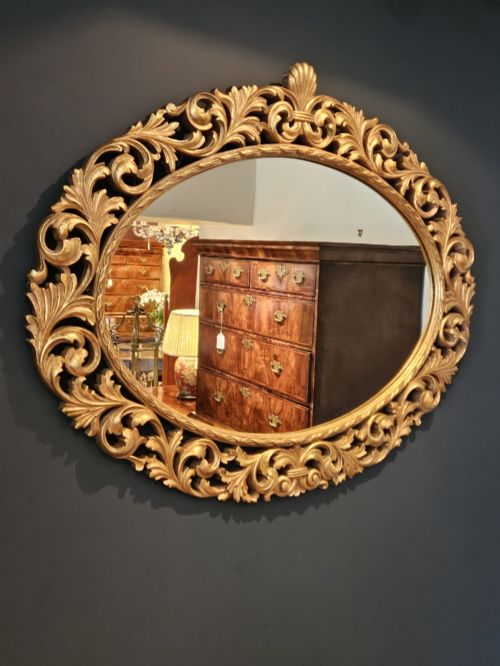
Craftsmen built the foundations of these frames using carved timber, often shaping wood and applying layers of gesso to create high-relief ornamentation, ribbons, and floral motifs before applying gold leaf. Many surfaces combine giltwood with painted elements, ebonised details, or parcel gilt highlights over mahogany and pine.
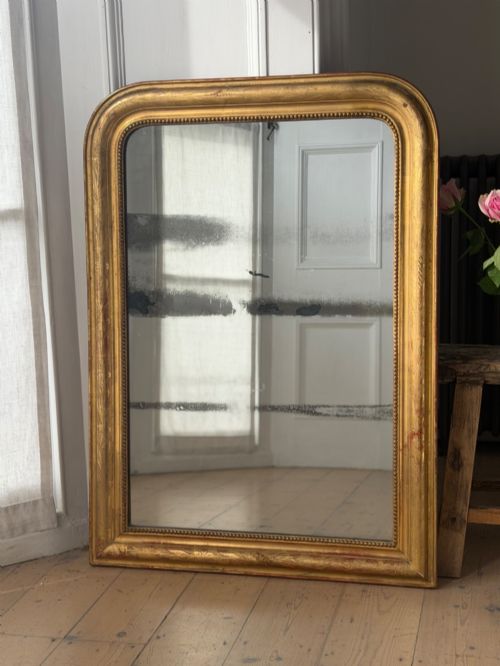
The glazing typically involves heavy sheet glass, occasionally retaining original mercury silvering that exhibits foxing and age spots, held within robust structural rebates behind timber backing boards.
Materials recorded across the inventory include giltwood, gesso, gold leaf, mahogany, painted wood, and original mercury glass plates.
What varies in quality
The distinction between tiers rests upon the depth and crispness of the hand-carved gesso work, where superior examples exhibit sharp, undercut foliage and harmonious proportions rather than shallow, repetitive pressing. The integrity of the original gilding and the preservation of authentic surface patination heavily influence the character of the piece.
Construction methods also separate standard production from finer work, visible in the joinery of the frame corners, the weight of the timber used for structural support, and whether the glass plate remains original to the period.
Charles Nosotti
The Large Vintage Gold Mirror Glossary
- Giltwood
- Wood that has been coated with gold leaf or gold paint. This technique provides the bright metallic finish characteristic of period frames.
- Gesso
- A plaster-like mixture applied to wood frames and carved into intricate details. It forms the raised ornamentation beneath the gold leaf.
- Overmantel mirror
- A large mirror specifically designed to hang above a mantelpiece. These frames often follow the horizontal proportions of a fireplace.
- Pier mirror
- A tall, narrow mirror made to hang on the wall space between windows. They frequently feature architectural lines and matching consoles.
- Foxed glass
- Mirror plate showing dark spots and discoloration caused by the degradation of the backing over time. This ageing process confirms great age.
Large Vintage Gold Mirror: Frequently Asked Questions
Where should a large gold mirror be hung?
These pieces traditionally anchor a main reception room, positioned securely above a fireplace mantel or mounted directly to a primary wall to reflect natural light across the space.
Ensure the wall construction safely supports the considerable weight of timber, gesso, and thick glass plate.
How do I identify a nineteenth-century frame?
Nineteenth-century examples display hand-carved wooden frames coated in gesso and gold leaf, often featuring period stylistic cues like Louis Philippe shaping or Rococo asymmetry.
Close inspection of the construction joints and the backing boards reveals traditional hand-tool marks consistent with older craftsmanship.
What is foxed glass?
Foxed glass refers to mirror plates that have developed characteristic dark spots and speckling as the reflective backing degrades over decades of exposure to the atmosphere.
Many collectors prize this natural ageing because it proves the glass is original to the antique frame rather than a modern replacement.
Are these mirrors heavy?
The combination of dense timber frames, thick layers of gesso, and large glass plates results in substantial weight that requires professional wall fixings.
Overmantels and full-length leaner mirrors demand secure load-bearing brackets to ensure safe installation in a home.