
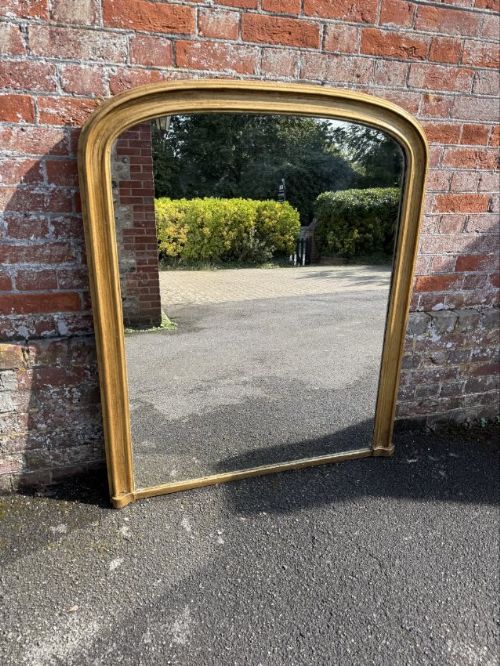
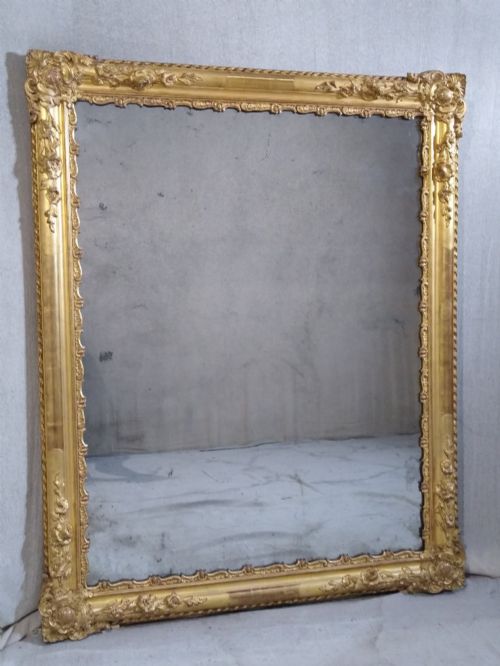
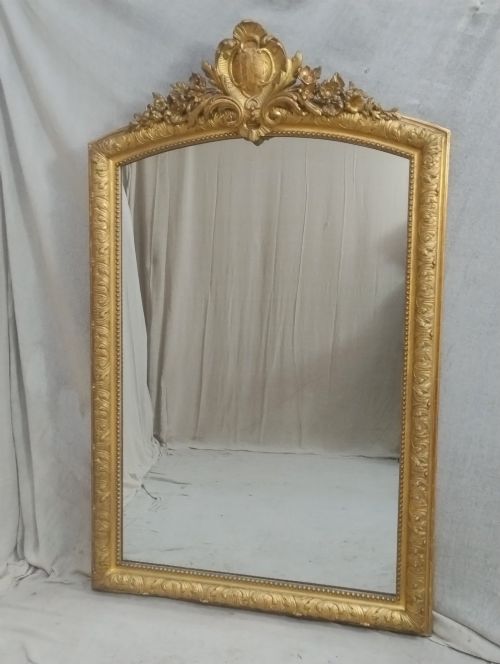


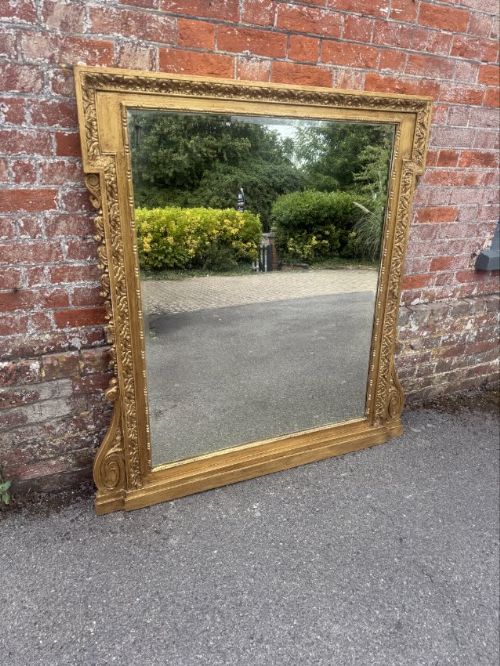
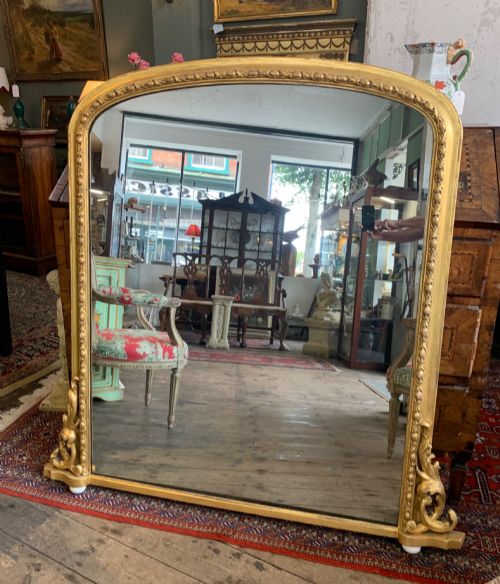
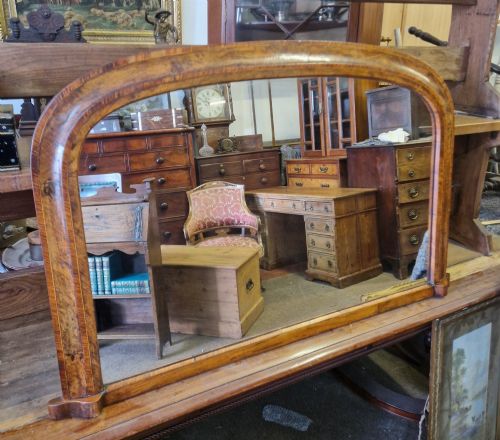
Large Victorian Mantel Mirror
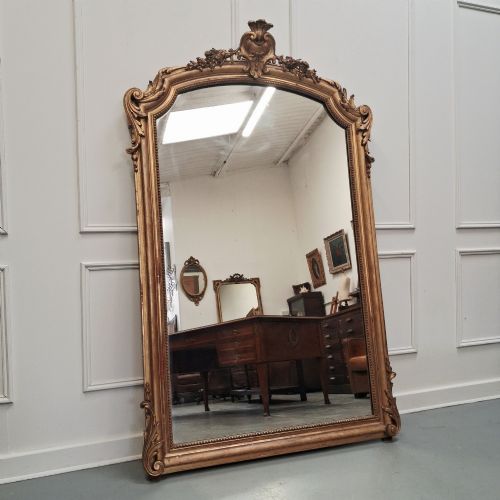
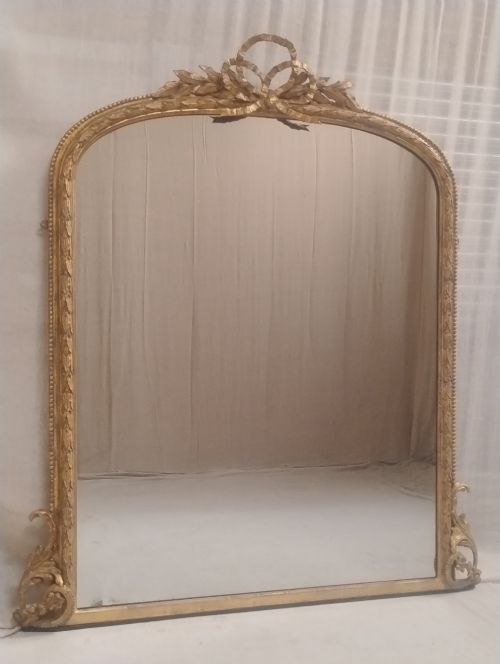
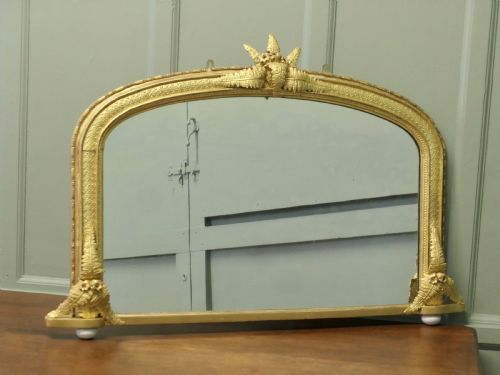
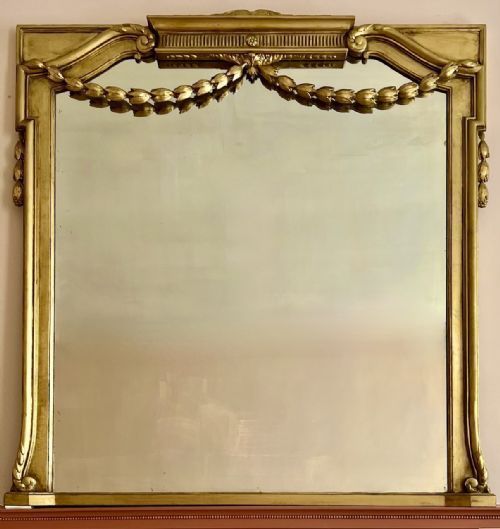
A large victorian mantel mirror commands the room above a fireplace, combining scale, proportion and reflective depth.
Large Victorian Mantel Mirror
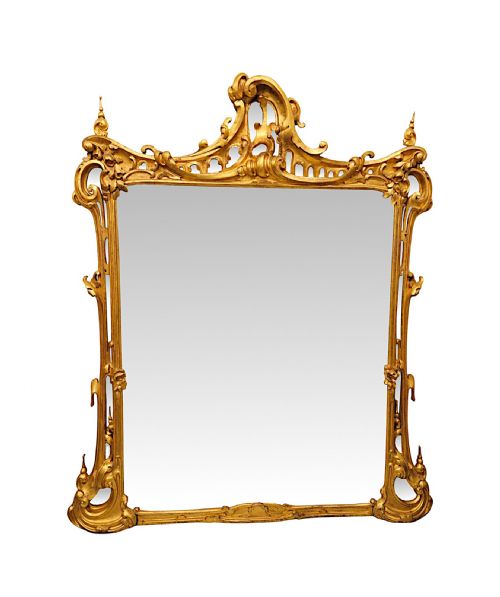
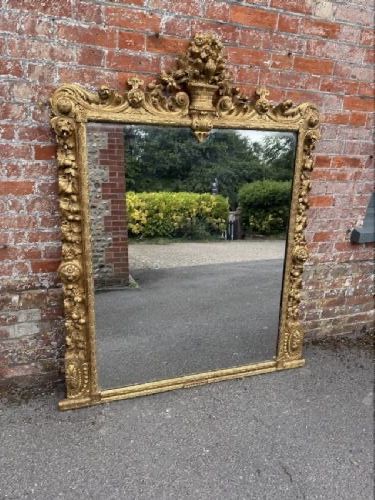
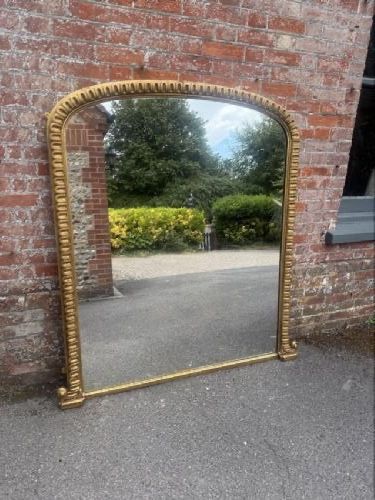
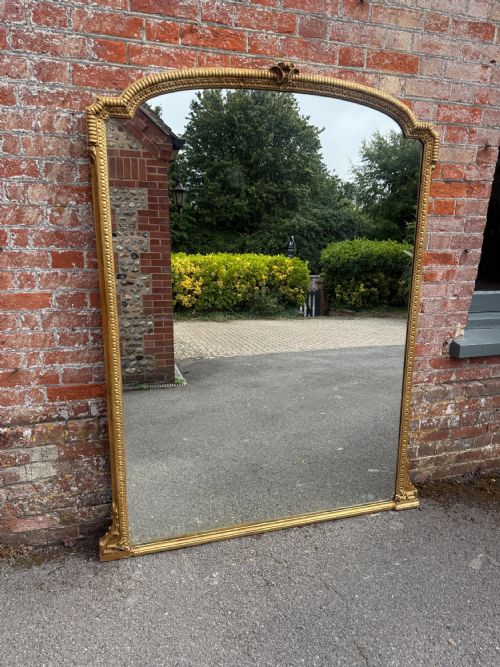
A large victorian mantel mirror serves as the architectural focal point above a fireplace, designed specifically to reflect light and expand the sense of space within a room. These pieces sit low on the mantel shelf, often stretching upwards with arched, rectangular or cartouche-shaped tops.
The versions most frequently met on this page include nineteenth-century English and French examples executed in giltwood, gesso and painted timber. Many show distinct stylistic revivals, ranging from rococo curves and classical columns to ebonised finishes and naturalistic rope twists.
How they were made
Makers constructed the foundational frames using solid timbers such as mahogany, oak, walnut and maple, shaped to form rigid structural supports. Joinery techniques included robust corner joints capable of bearing the considerable weight of heavy glass plates.
Carved wooden elements frequently combined with moulded composition and gesso applied over the base wood to build up intricate relief ornaments like scrolls, leaves and crests. Gilding involved the meticulous application of gold leaf or metallic paint over prepared grounds to achieve a reflective, uniform sheen.
Large Victorian Mantel Mirror Retail Price Guide 2026
Typical asking prices for large victorian mantel mirror among the pieces listed under this phrase on Sellingantiques today, from the lower quarter to the upper quarter. They describe what is for sale here now, not the wider market.
Materials recorded across the inventory include glass, gesso, giltwood, gold leaf, composition, walnut, oak and mahogany.
What varies in quality
The distinction between standard examples and the finest works rests upon the crispness of the hand-carving and the depth of the applied gesso ornaments. Superior pieces display sharply defined botanical motifs, well-balanced proportions and original gilding that has aged with a soft, uniform warmth.
Structural integrity also separates the grades, with better mirrors retaining their original heavy backboards and securely seated glass plates. The complexity of the frame design, such as elaborate cresting, carved cartouches or specialised triptych configurations, further elevates the standing of individual specimens.
The Large Victorian Mantel Mirror Glossary
- Overmantel
- A mirror specifically designed to hang or stand upon the mantelpiece above a fireplace. These horizontal or tall arched pieces were proportioned to match nineteenth-century interior scales.
- Gesso
- A plaster-like mixture applied to wooden frame bases to create a smooth surface for relief moulding and gilding. Artisans carved intricate decorative details directly into this hardened material.
- Giltwood
- Timber that has been coated with thin sheets of gold leaf or metallic powder. This technique gave frames a brilliant, enduring metallic lustre.
- Cartouche
- An ornamental tablet or panel frame, often with a curved or scroll-like border, frequently placed at the crest of nineteenth-century mirror frames.
- Composition
- A moulded material made from whiting, linseed oil, resin and glue, pressed into decorative shapes. It allowed makers to produce ornate repeating motifs quickly for frame embellishment.
Large Victorian Mantel Mirror: Frequently Asked Questions
How do I secure a heavy overmantel mirror to the wall?
These substantial frames require robust wall fixings anchored directly into masonry or secure wall studs rather than relying solely on the mantel shelf. Steel brackets and heavy-duty D-rings distribute the significant weight safely.
Professional installation ensures the mirror remains stable while resting part of its load on the fireplace shelf below.
Were these mirrors originally fixed to the wall or mantel?
Many nineteenth-century examples were constructed to rest directly on the slate or marble mantelpiece, secured with discreet strap brackets to prevent tipping. Others were hung independently from wall fixings at appropriate eye levels.
Both methods were common practice, depending on the height of the chimney breast and the weight of the frame.
How can I distinguish a nineteenth century frame from a later copy?
Original pieces display authentic signs of age in the timber shrinkage, hand-applied gesso layers and the dull oxidation of old mercury or early silvered glass plates. Backboards typically consist of heavy, hand-sawn planks held by old iron or brass screws.
Examining the construction behind the frame reveals the tool marks and material density characteristic of nineteenth-century workshops.