

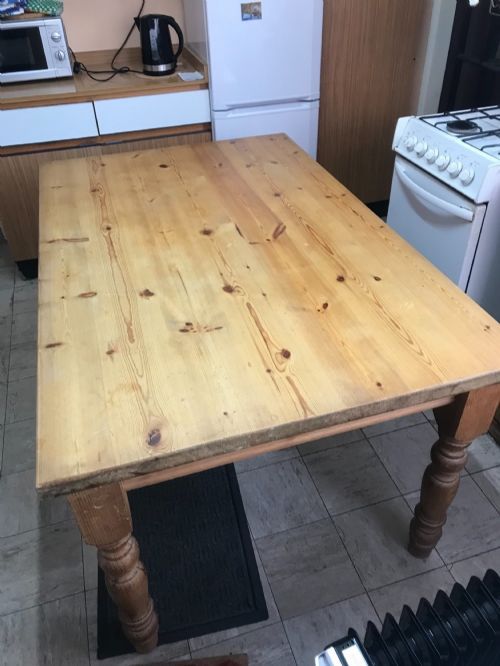

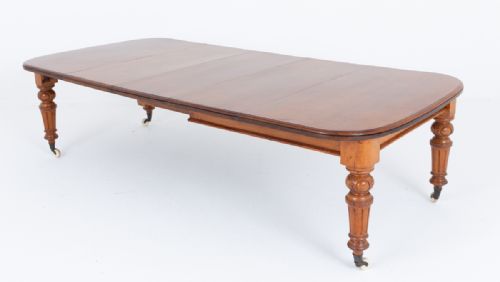
Large Victorian Kitchen Table
When you search for a large victorian kitchen table, you are looking for a heavy, honest working surface that has survived a century or more of daily family life.
Large Victorian Kitchen Table
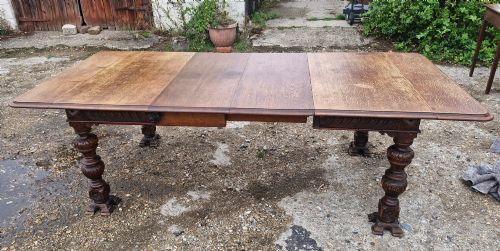
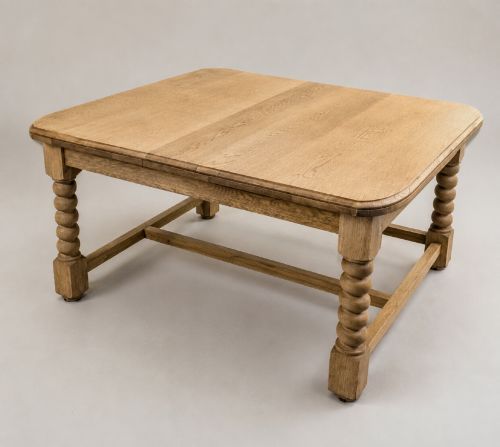
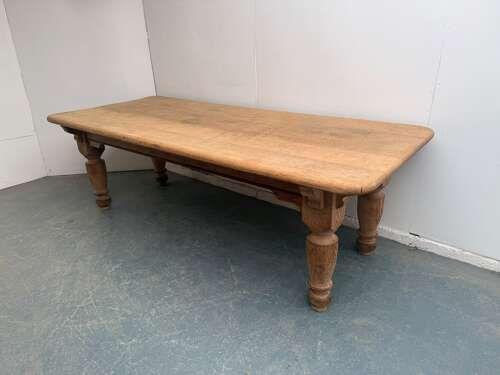
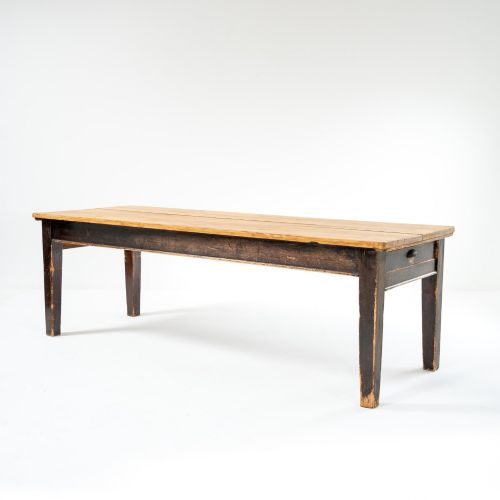
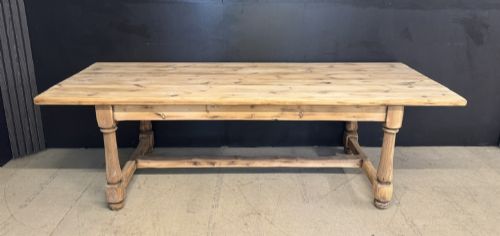
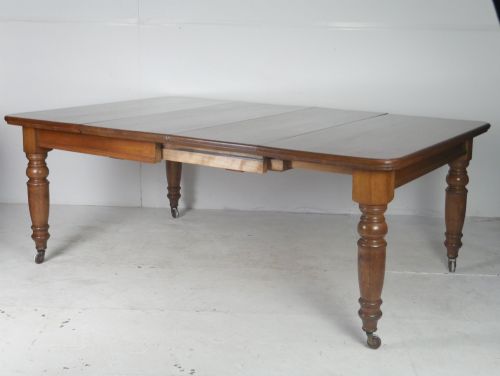
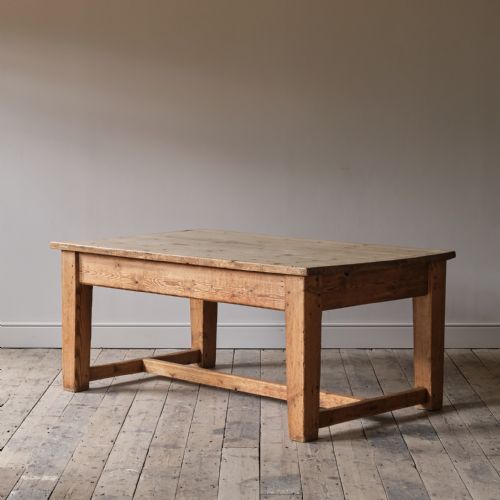
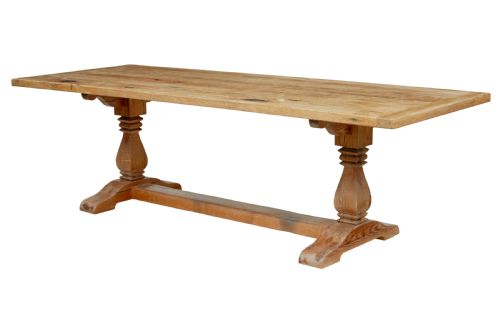
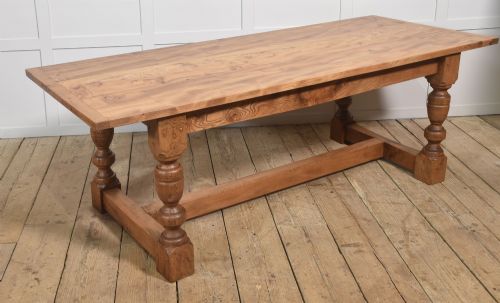
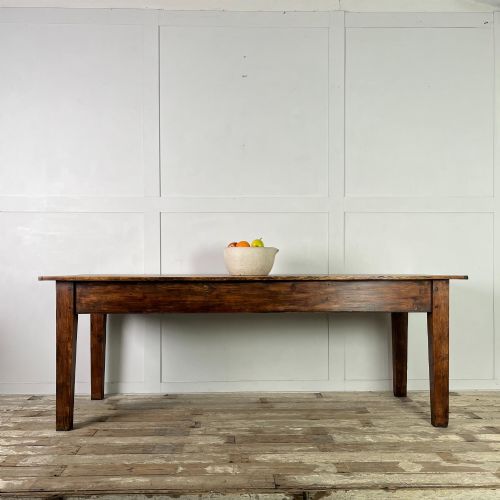
A large victorian kitchen table is a heavy, durable piece designed for the practical demands of nineteenth-century domestic life, including food preparation, dining, and communal gatherings. These tables range from utilitarian pine scullery and prep benches to substantial oak and elm refectory formats.
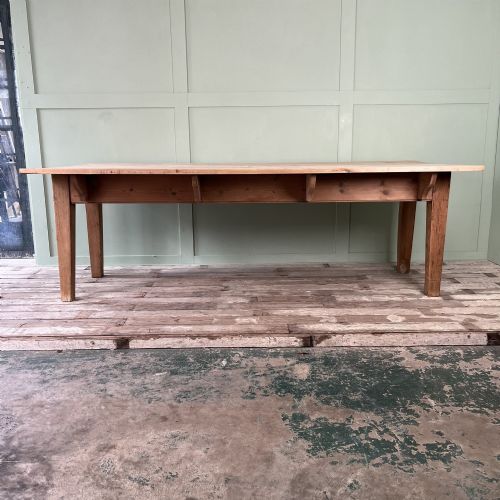
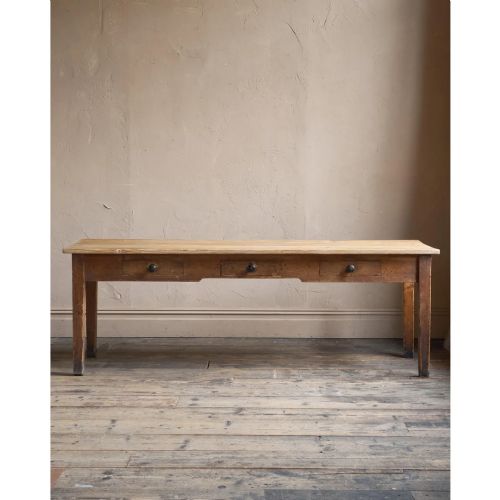
On this page, you will primarily encounter generous pine farmhouse examples alongside robust oak and elm dining variants. Many feature practical additions such as single or multiple drawers for cutlery and bread slides for daily kitchen tasks.
The origins span across English and Welsh country houses, rural farmhouses, and industrial workshops, reflecting the diverse utility of domestic spaces in the nineteenth century. Dimensions frequently accommodate six to eighteen seats, pointing to their original role as the focal point of a busy household.
How they were made
Construction relies heavily on solid timber, with pine, oak, and elm selected for their structural resilience and ability to withstand heavy daily use. Makers utilised thick plank tops, often scrubbed clean over decades, supported by sturdy square section or turned legs.
Joinery techniques prioritize strength and stability, employing robust refectory frames, breadboard ends to prevent warping on large planks, and pegged joints. Some pieces incorporate painted finishes, brass fittings, and iron hardware, showing straightforward craftsmanship suited to heavy domestic tasks.
Periods represented span the early nineteenth century through the Edwardian era, highlighting styles from rustic farmhouse to gothic revival.
What varies in quality
Quality in these tables rests in the integrity of the original timber and the proportion of the structure. Untouched, scrubbed pine surfaces with honest patination and minimal structural alteration command greater appreciation than heavily restored or overly sanded examples.
The choice of harder timbers, such as figured oak or dense elm, alongside substantial two-plank or single-plank tops, elevates the standing of a piece. Original functional details like smoothly operating side drawers and intact bread slides also distinguish superior examples from standard utility tables.
The Large Victorian Kitchen Table Glossary
- Scrub top
- A bare wooden tabletop designed to be repeatedly scrubbed with soap and water to maintain hygiene in a busy kitchen. This process creates a pale, weathered surface texture over generations.
- Refectory table
- A long, narrow dining table originally built for communal eating in monasteries or large country houses. They are characterised by stretchers running close to the floor between sturdy legs for added rigidity.
- Bread slide
- A pull-out wooden shelf positioned beneath the main tabletop used historically for cooling loaves or expanding workspace during food preparation. They slide flush into the apron when not in use.
- Dresser base
- A lower storage unit featuring cupboards and drawers, frequently grouped with these tables in country house kitchens. They share similar timber patination and utilitarian construction methods.
- Pitch pine
- A dense, resinous softwood sourced primarily from North America and utilised for its exceptional durability. It was frequently selected for heavy-duty kitchen and refectory furniture.
Large Victorian Kitchen Table: Frequently Asked Questions
How do I seat six people comfortably?
Selecting a table for six diners generally requires a length of at least six feet to allow adequate elbow room between table legs. Consider the placement of structural stretchers beneath the top to ensure chairs slide underneath without obstruction.
Refectory and farmhouse styles often provide generous clearance along the sides, making it simpler to arrange seating.
Are these tables suitable for modern kitchens?
These tables adapt easily to contemporary spaces by serving as central preparation islands or large family dining hubs. Their substantial proportions make them ideal for open-plan living areas where durability is paramount.
Daily use simply adds to the existing history and character held within the timber.
What is the difference between pine and oak?
Pine provides a lighter colour palette and a softer surface texture that records the marks of daily preparation over time. Oak offers a denser, darker grain structure associated with formal dining rooms and heavier refectory frames.
Both timbers deliver exceptional longevity when maintained with appropriate waxes and oils.