


Large Ushak Area Rug
A large ushak area rug brings grand Ottoman warmth to a floor through faded botanical geometry and generous scale.
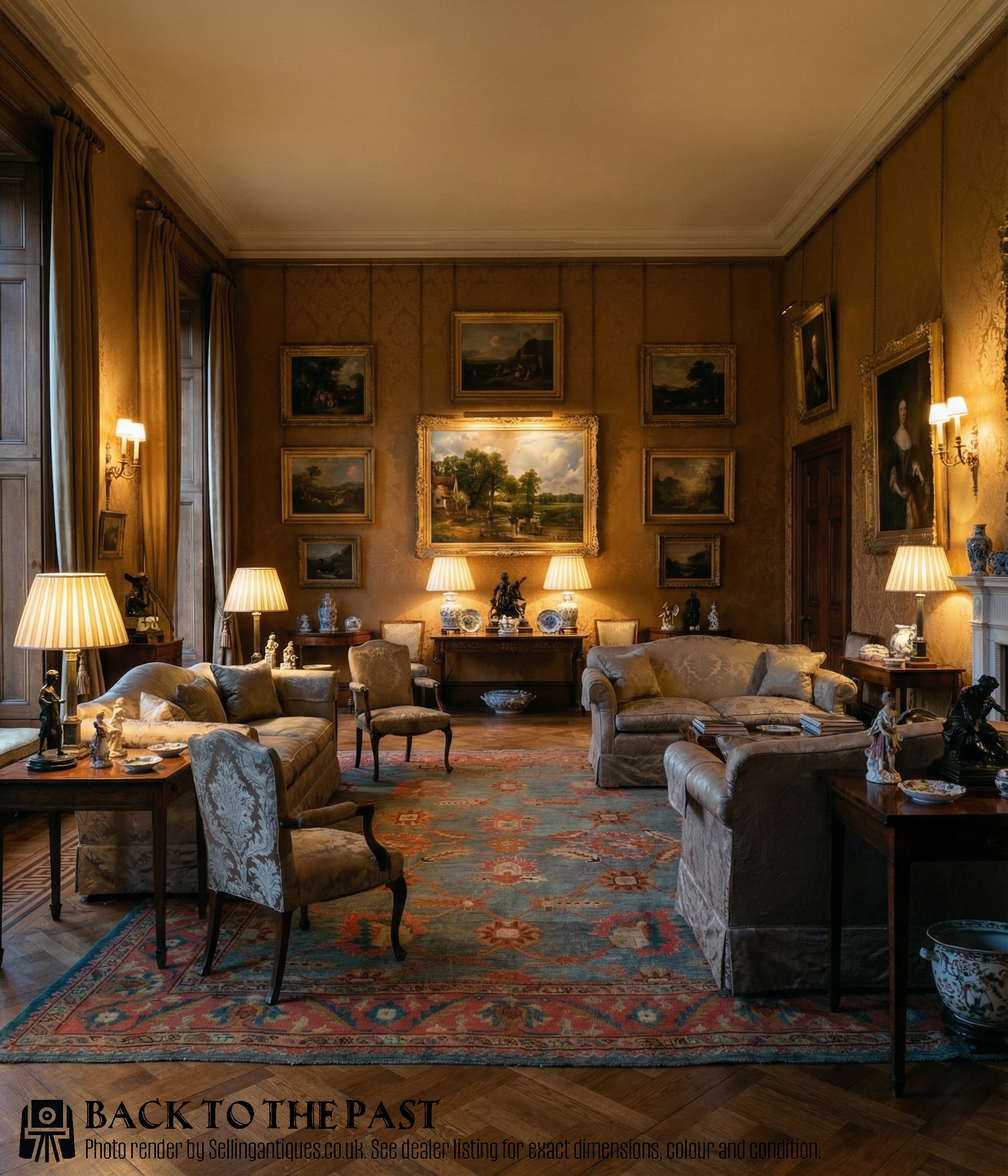
Large Ushak Area Rug
A large ushak area rug brings generous proportions and muted floral motifs into a room, originating from the historic weaving centre of Ushak in Anatolia. These pieces anchor broad spaces with open fields and softly scaled medallions rather than rigid geometric borders.
The selections here span the late nineteenth century into the early twentieth century, showing Ottoman Turkish and Anatolian designs. Buyers encounter room-sized carpets carrying ivory grounds or subtle abrasash that soften the overall palette over generations of wear.
Materials and construction
Weavers constructed these carpets using wool and cotton foundations, occasionally incorporating angora wool for a softer handle and distinct sheen. Natural dyestuffs produced the characteristic terracotta, madder, and ivory tones that mellow gracefully over decades.
Hand-knotted techniques created durable pile surfaces designed for heavy use in domestic and civic interiors. The weave density allows for expansive fields and large-scale floral patterns without losing structural integrity.
Listings span periods from 1870 to 1920, utilising wool, cotton, and angora wool within Ottoman and Anatolian traditions.
Judging quality in antique rugs
Quality rests in the subtlety of the dye work and the grace of the drawn medallion. Master weavers achieved harmonious transitions between the field and the border, ensuring the large scale does not feel heavy or unbalanced.
The handling of the wool also dictates the tactile experience underfoot. Softer angora wool variations and finely balanced natural dyes distinguish superior examples from standard commercial production.
The Large Ushak Area Rug Glossary
- Ushak
- A traditional carpet-weaving style originating from the town of Ushak in western Anatolia, known for large floral motifs and soft wools. These rugs often feature expansive fields with restrained medallion layouts.
- Angora wool
- A fine, soft fleece utilised in specific nineteenth-century pieces to impart a lustrous finish and pliable handle. It takes dye with particular warmth, yielding varied tonal depths.
- Abrasash
- A natural variation in tone caused by changes in dye batches or hand-spun wool lots during the weaving process. This subtle shifting gives antique carpets their characteristic visual depth.
- Medallion
- A central ornamental design motif placed in the field of a carpet, drawing the eye across the composition. In these pieces, medallions often adopt soft, curving floral outlines rather than sharp geometric edges.
Large Ushak Area Rug: Frequently Asked Questions
How do I place a large ushak area rug?
Position the rug centrally in a drawing room or dining space, allowing enough surrounding floor to frame the expansive field and borders.
Keep heavy furniture legs clear of the main medallion so the woven geometry remains visible and balanced within the room.
What maintenance do these rugs need?
Vacuum the pile gently on a low setting without using a rotating beater bar to protect the wool foundation.
Rotate the rug every year to ensure even exposure to foot traffic and natural light across the expanse.
How do I date an antique ushak?
Examine the palette, wool texture, and knot structure to determine whether the piece belongs to the late nineteenth or early twentieth century.
Faded vegetable dyes and softer wool handling typically point to earlier nineteenth-century origins compared to later productions.
Why do colours vary across the field?
Natural dyeing processes using plant materials produce slight tonal shifts as dye baths change from one batch to the next.
Age and sunlight exposure further soften these hues, creating the characteristic faded aesthetic prized by collectors.