


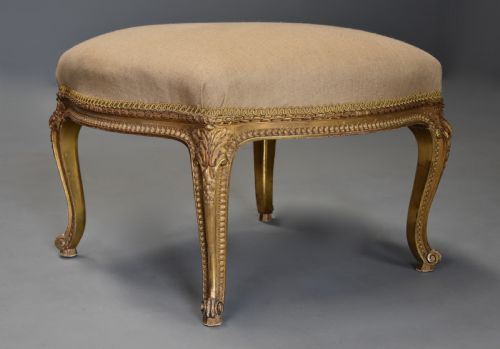
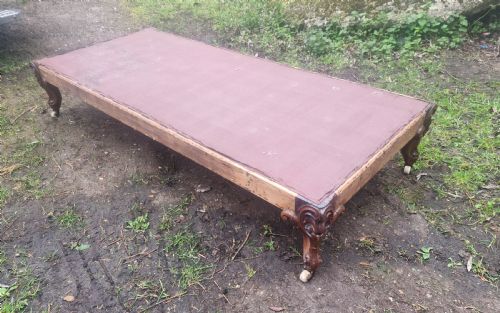
Large Upholstered Footstool
A large upholstered footstool provides substantial domestic comfort, pairing generous proportions with enduring period timber frames.
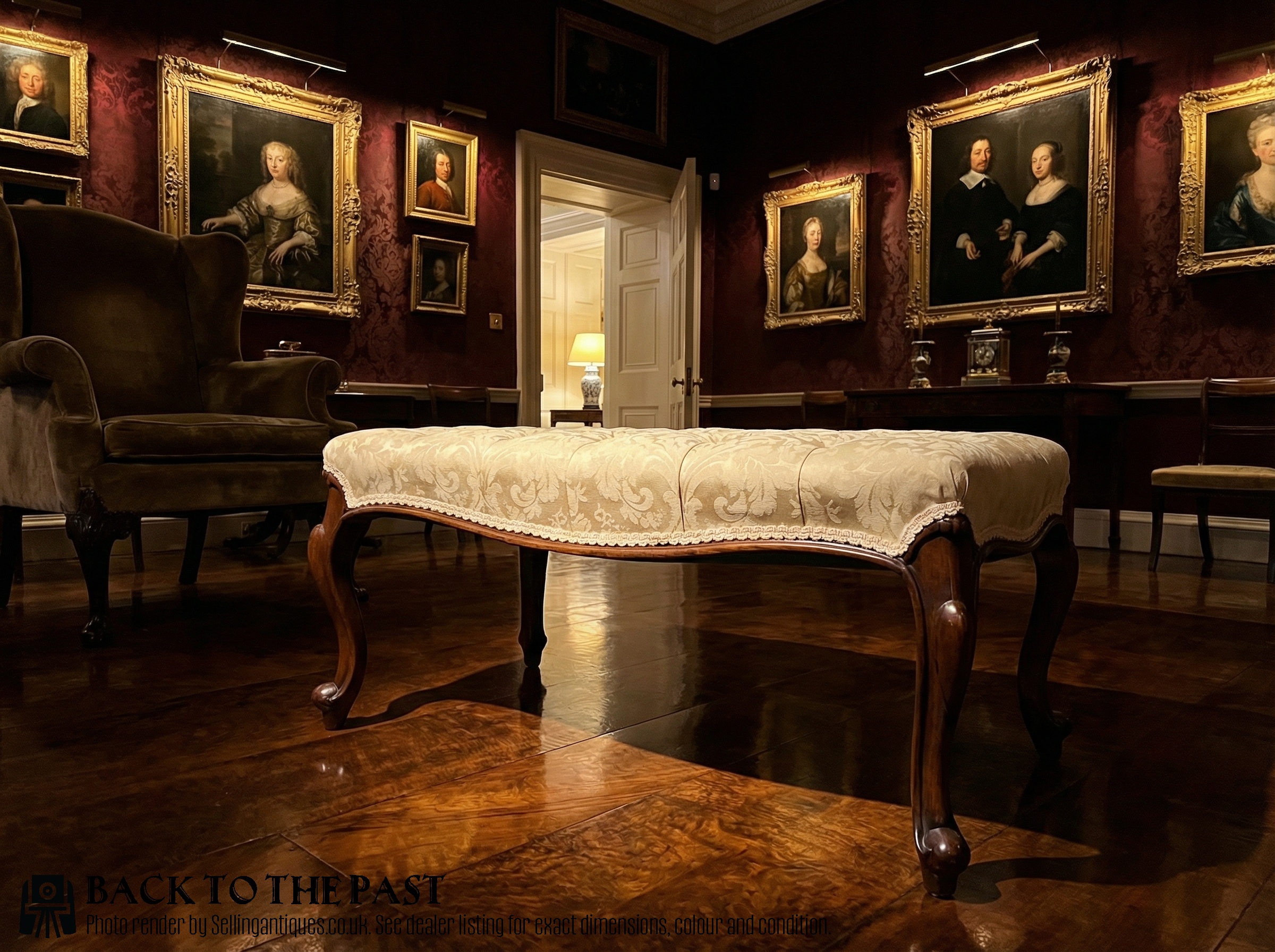
Large Upholstered Footstool
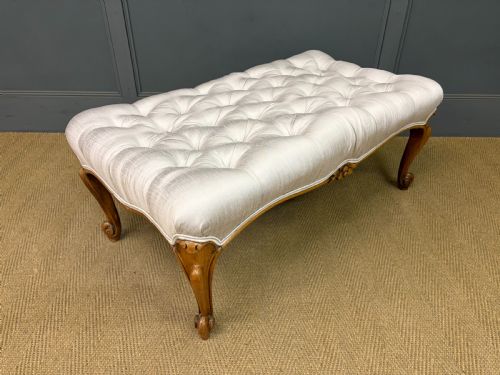
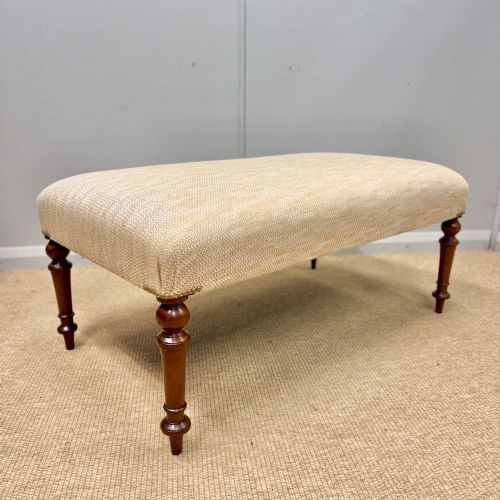
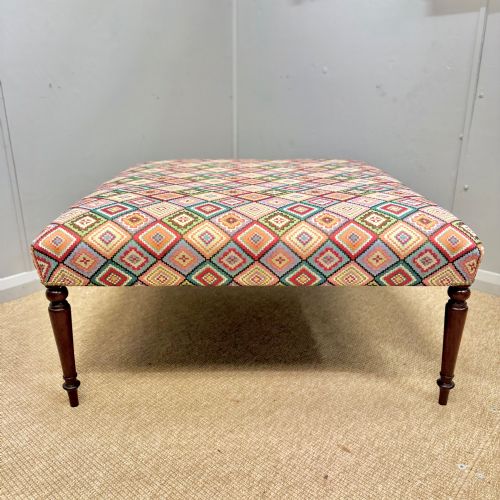
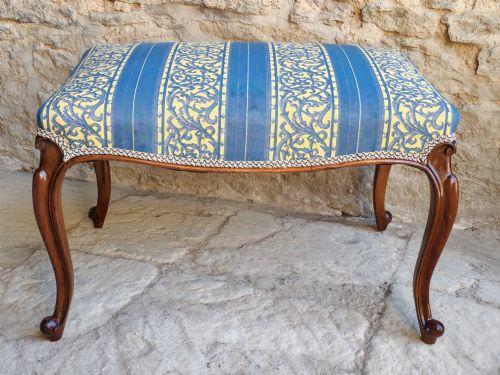
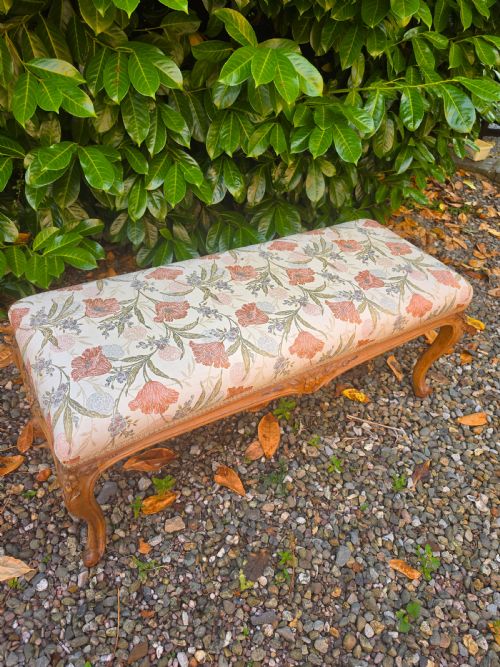
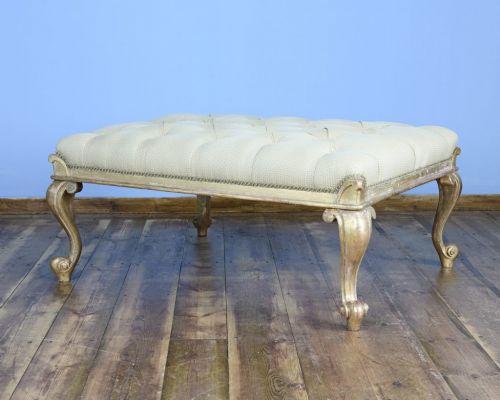
A large upholstered footstool combines a substantial timber base with a padded seating surface, serving as an ottoman, a fireside seat or a low coffee table substitute. You will encounter these pieces chiefly from the nineteenth century, including Victorian, Regency and William IV periods, alongside later twentieth-century revivals.
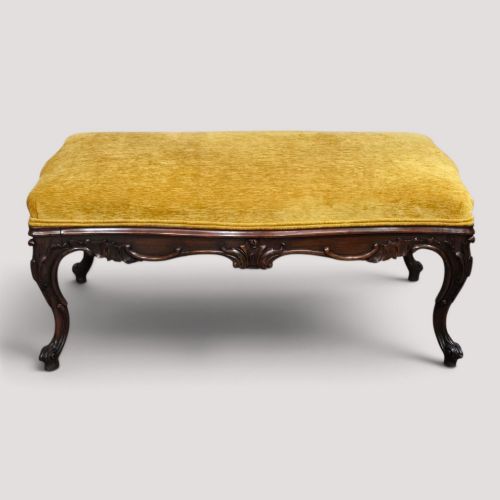
The wooden frames take various structural forms, from plain low benches on brass castors to elaborately carved rosewood, mahogany and walnut centre stools. English Country House examples appear alongside French, Scottish Baronial and Anglo-Indian variants.
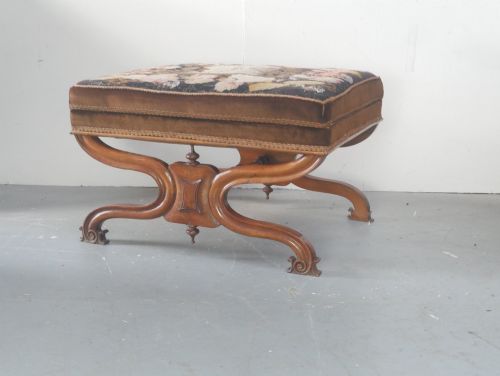
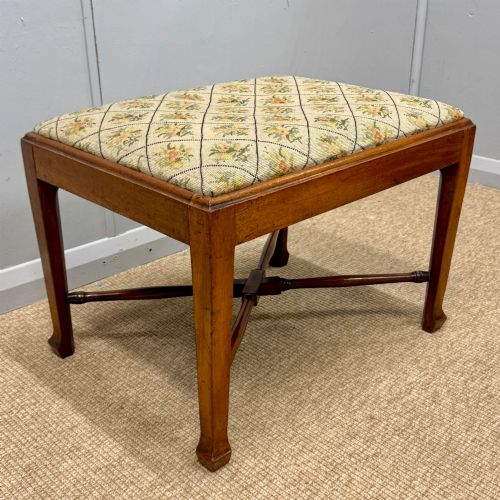
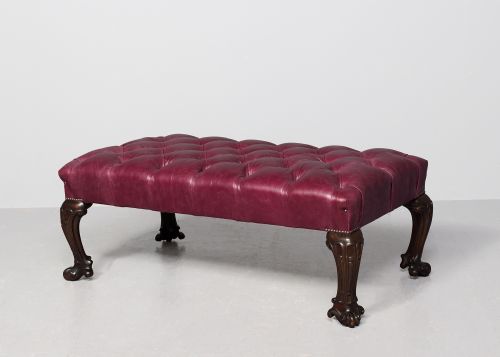
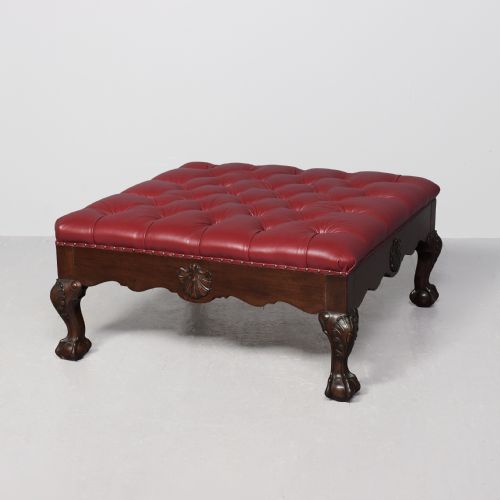
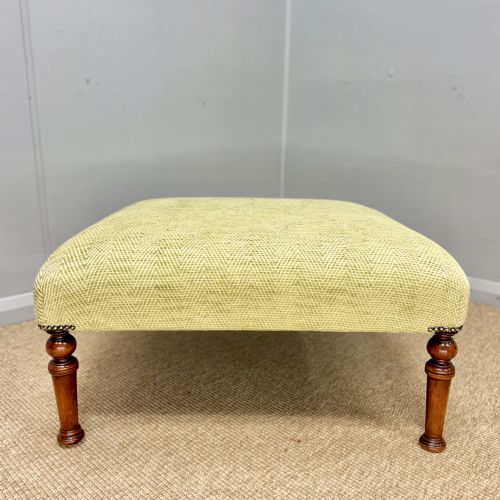
Many items arrive newly upholstered in contemporary fabric, herringbone, velvet or traditional hide, while others retain older needlework such as gros-point or await fresh recovering.
Assessing quality in large footstools
The standard of timber framing largely determines the calibre of a piece, separating robustly carved mahogany or rosewood structures from simpler oak or pine carcasses. Finer examples display crisp hand-carving, original brass hardware, and well-proportioned stretchers.
The integrity of the internal construction and the choice of covering material dictate the overall finish. Pieces featuring original needlework or high-grade buttoned hide sit at the superior end of the scale compared to standard utilitarian frames.
Large Upholstered Footstool Retail Price Guide 2026
Typical asking prices for large upholstered footstool among the pieces listed under this phrase on Sellingantiques today, from the lower quarter to the upper quarter. They describe what is for sale here now, not the wider market.
Listings feature timber frames in mahogany, walnut, rosewood, and oak alongside upholstery in velvet, leather, and herringbone.
Hallett & Sons·Loidrault Freres Paris
The Large Upholstered Footstool Glossary
- Castor
- A small wheel fitted to the base of a furniture leg to allow smooth rolling movement. These metal or brass fittings frequently appear on nineteenth-century examples for ease of placement.
- Gros-point
- A heavy, counted-thread needlework technique utilising wool yarn on canvas. This textured stitch often survives on nineteenth-century upholstery tops.
- Stretcher
- A horizontal wooden brace connecting the legs of a stool to provide structural stability. They occasionally feature decorative cross shapes.
- Cabriole leg
- A furniture leg that curves outward in a convex arc and tapers inward in a concave arc, mimicking animal limbs. This form appears frequently on walnut and mahogany frames.
- Ottoman
- A low, upholstered seat or footstool typically lacking arms or a back. Larger versions often double as coffee tables.
Large Upholstered Footstool: Frequently Asked Questions
What rooms suit a large footstool?
These generous pieces fit comfortably in drawing rooms, studies, and spacious bedrooms as central seating or auxiliary resting places.
Their substantial scale allows them to anchor a room layout when paired with large armchairs or placed before a fireplace.
How do I care for antique upholstery?
Maintenance depends on the surface material, requiring gentle vacuuming for woven textiles and occasional specialist conditioning for leather or hide.
Protecting the wood frame from direct sunlight preserves the original polish and prevents timber drying.
Can these stools double as coffee tables?
Many sturdy low examples function effectively as coffee tables by placing a flat tray on top of the upholstered surface.
This provides a practical dual purpose without altering the underlying antique fabric or structure.
How do I identify a Victorian piece?
Victorian examples frequently showcase dense hardwoods like rosewood or walnut, often featuring deep buttoning, carved cabriole legs, or brass castors.
Construction methods from this era emphasise heavy timber frames built to withstand robust daily use.