


Large Silver Salver
When you handle a large silver salver, you hold a heavy piece of social history designed to anchor grand hospitality.
Large Silver Salver
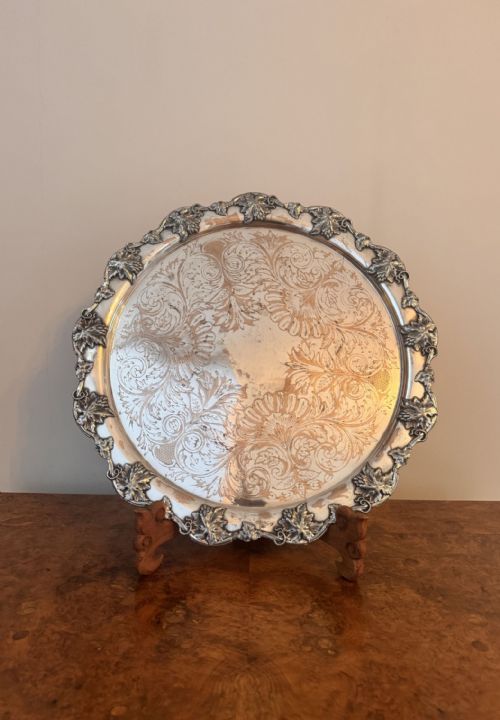
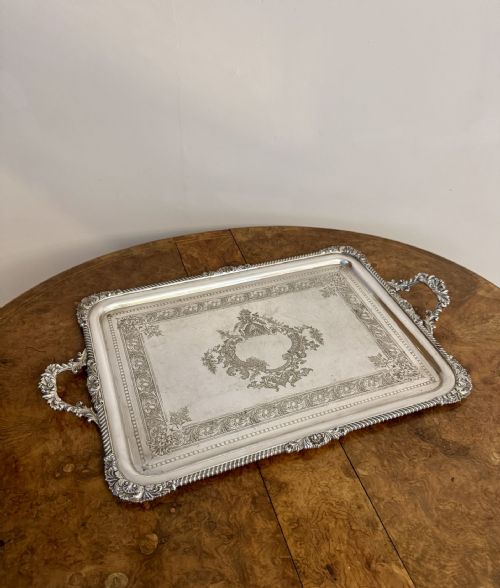
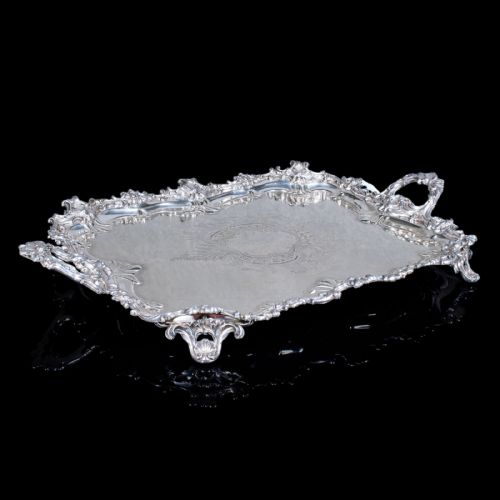
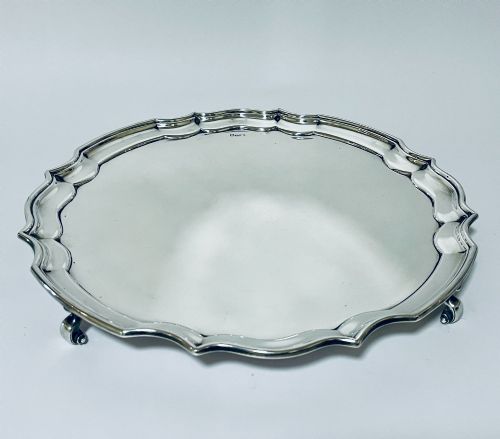
A large silver salver is a substantial serving platter or flat tray, most often encountered on this page in circular or oval forms originating from the Victorian and Edwardian periods. These pieces frequently span significant dimensions, serving historically to present drinks, letters, or calling cards in domestic interiors.
Buyers looking through this selection will find sterling silver and silver plated iterations spanning the eighteenth century through to the art deco era. The heavier examples often feature cast borders, feet, or family crests that mark their elevated social status.
How they were made
Silversmiths constructed solid sterling silver salvers by hammering or rolling ingots into thick sheets before raising the rims and soldering on cast decorative borders. Many examples on this page utilise silver plate or old Sheffield plate, where a thin layer of silver is fused to a base metal like copper or nickel silver.
Makers applied surface decoration using chasing and engraving techniques, cutting intricate foliage, geometric engine turning, or armorial crests directly into the metal. Cast feet, ranging from plain pad feet to high lion or scroll supports, were attached independently to bear the heavy weight of the tray.
What varies in quality
Quality rests primarily in the weight of the metal and the crispness of the chased or cast ornamentation. Superior examples display deep, hand-punched relief work on the borders rather than shallow machine stamping, alongside robust gauges of silver that resist flexing under a heavy load.
The reputation of the maker also dictates distinction, with pieces bearing the marks of renowned workshops commanding greater attention from collectors. Furthermore, the retention of the original silver plating on older copper or nickel substrates indicates how carefully a tray has been preserved over generations.
Harrison Bros Sheffield·Elkington & Co·Fenton Russel·Paul Storr·Lee & Wigfull·William Hutton & Sons·Robert Abercromby·John Terrey·Robert W Smith·Mappin & Webb·William Marshall·William Peaston·Walker & Hall·Hunt & Roskell·Atkin Bros
The Large Silver Salver Glossary
- Salver
- A flat tray used for serving food, beverages, or presenting items. They typically stand on small feet rather than resting flat on a surface.
- Old Sheffield plate
- An early form of plating created by fusing a sheet of silver to a copper ingot before rolling them together into plates. This technique often reveals faint traces of copper showing through the worn highlights of old pieces.
- Chasing
- A metalworking technique where the artisan pushes the metal from the front using punches and hammers to create raised surface patterns. It differs from engraving because no metal is removed during the process.
- EPNS
- Electroplated nickel silver, a common base material introduced in the nineteenth century that allowed makers to deposit a thin coat of pure silver via an electrical current.
- Engine turning
- A precise mechanical method of engraving repetitive geometric patterns onto metal surfaces using a specialised lathe. It provides a durable, textured finish often seen on cocktail trays.
Large Silver Salver: Frequently Asked Questions
What was a large silver salver used for?
These trays served primarily for the formal presentation of calling cards, letters, or afternoon tea services in wealthy households. Servants also used them to circulate drinks and glasses among guests during gatherings.
The substantial weight of these objects meant they remained stationary on sideboards or tables until needed for hosting duties.
How do I clean a silver plated salver?
Cleaning requires a soft cloth and a reputable silver polish formulated to protect thin plated layers from abrasive wear. Regular, gentle wiping removes tarnish without stripping the underlying metal.
Harsh chemical dips should be avoided, particularly on older pieces where deep cleaning can damage historic patination or expose the base metal beneath.
Are solid silver and silver plated trays marked differently?
Solid sterling silver pieces carry official assay office hallmarks indicating the city, standard of purity, and date letter. These marks are usually stamped clearly on the top surface or the underside of the rim.
Silver plated items display manufacturer marks, trade names, or abbreviations like EPNS that denote the use of a base metal core rather than solid precious metal.
How can I tell the period of a salver?
Stylistic clues such as floral Victorian chasing, geometric Edwardian borders, or streamlined art deco forms provide initial chronological markers. Hallmarks and maker stamps offer precise date letters that pinpoint the exact year of assay.
Construction methods also help, as older copper core Sheffield plates differ noticeably from later nineteenth century electroplated nickel silver pieces.