






Large Satsuma Pottery Vase
A large satsuma pottery vase brings dense enamel and gilt narrative scenes into a room, offering the substantial scale and intricate detail collectors seek.
Large Satsuma Pottery Vase
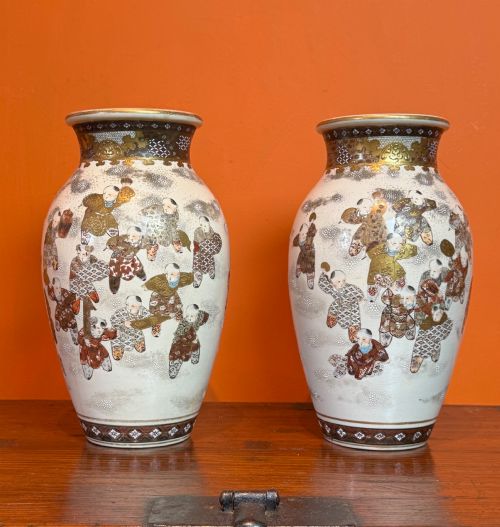
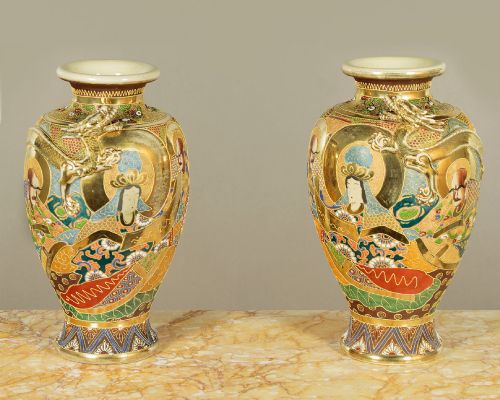
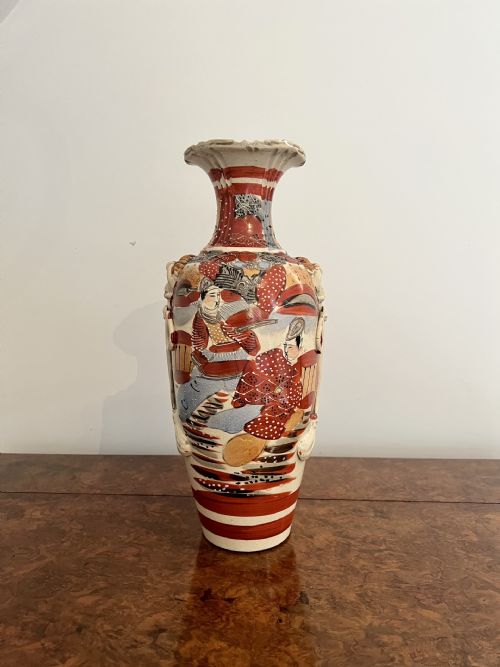
A large satsuma pottery vase presents a substantial earthenware body decorated with elaborate painted scenes, often depicting figures or dragons across distinct panels. These works emerge primarily from the Meiji period and the decades immediately following, including pieces from around eighteen eighty up to nineteen thirty.
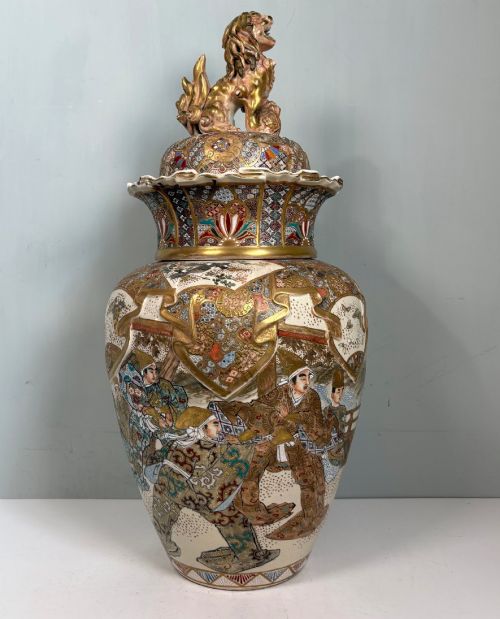
Buyers will encounter single statement pieces, lidded vessels reaching eighty-four centimetres, and pairs configured either as decorative vases or adapted as table lamps. Forms range from standard baluster profiles to garlic head shapes and hexagonal vessels.
The aesthetic bridges traditional Japanese artistry with export production for Western markets, displaying prominent gold leaf and polychrome enamels. These grand vessels serve as focal points, drawing the eye through sheer physical presence and meticulous narrative surface work.
How they were made
Potters shaped these large vessels from earthenware, applying a characteristic crackle-glazed ceramic body that accepts detailed painting. Artisans then built up the surface using rich enamel pigments alongside gold leaf and gilt work to delineate intricate robes, landscapes, and borders.
Specialised workshops employed distinct masters who signed their work or produced pieces attributed to known houses. Brass and wood components sometimes appear in mounting or conversion to lamps, while fabric elements occasionally accompany associated display fittings.
Large Satsuma Pottery Vase Retail Price Guide 2026
Typical asking prices for large satsuma pottery vase among the pieces listed under this phrase on Sellingantiques today, from the lower quarter to the upper quarter. They describe what is for sale here now, not the wider market.
What varies in quality
The density and precision of the enamel work dictate the visual success of a large satsuma pottery vase, separating simpler export items from master-signed workshop creations. Finer examples display meticulous control over gold leaf application and microscopic detail in figures such as the thousand arhats.
Structural scale also distinguishes the range, moving from standard decorative vases to monumental floor vases reaching thirty-eight inches or lidded vessels standing over eighty centimetres high. Attribution to named makers such as Hotoda, Seiko-en Chokei, Kinkozan, or Hattori elevates the standing of an individual piece.
Hotoda·Seiko-en Chokei·Kinkozan·Hattori
The Large Satsuma Pottery Vase Glossary
- Satsuma
- A type of Japanese earthenware featuring an ivory-coloured crackle glaze that provides the ground for polychrome enamel and gilt decoration.
- Meiji Period
- The era of Japanese history lasting from eighteen sixty-eight to nineteen twelve, associated with the finest export pottery and complex narrative design.
- Enamel
- Opaque or translucent glass paste applied to the ceramic body and fired to create vibrant, permanent surface colours.
- Gilt
- A thin layer of gold or gold leaf applied to highlights, borders, and backgrounds to catch the light across the vessel.
- Garlic Head
- A vase form featuring a globular lower body narrowing sharply at the neck before expanding again into a bulbous upper rim.
Large Satsuma Pottery Vase: Frequently Asked Questions
How do I date a large satsuma vase?
Dating relies on stylistic markers and period context, with nineteenth-century Meiji examples displaying denser enamel work and finer crackle glazes compared to later twentieth-century production.
Signatures from known Kyoto workshops or specific artists also help anchor the manufacturing window between eighteen eighty and nineteen thirty.
Were these vases made for export?
Many large satsuma vessels were created specifically for Western export markets during the Meiji period, satisfying European and American demand for elaborate Japanese artistry.
This export trade influenced the grand scale and decorative intensity seen in floor vases, lidded urns, and matched pairs.
Can I use a heavy vase as a lamp?
Several large satsuma pieces arrive converted into table lamps, utilising the substantial ceramic body as a stable and decorative base.
When living with these items, ensure adequate clearance around the shade so the detailed enamel panels remain fully visible in the room.
What do the painted scenes represent?
The surface painting frequently depicts samurai scenes, mythical figures, dragons, and gatherings of scholars or arhats arranged in intricate panels.
These narratives draw on traditional Japanese folklore and Buddhist iconography, rendered with meticulous attention to costume and expression.