
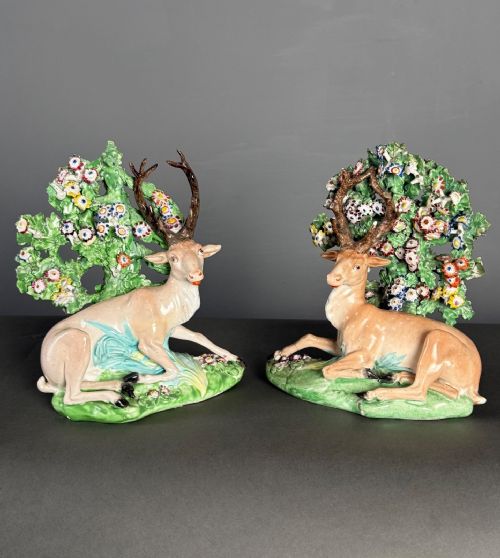
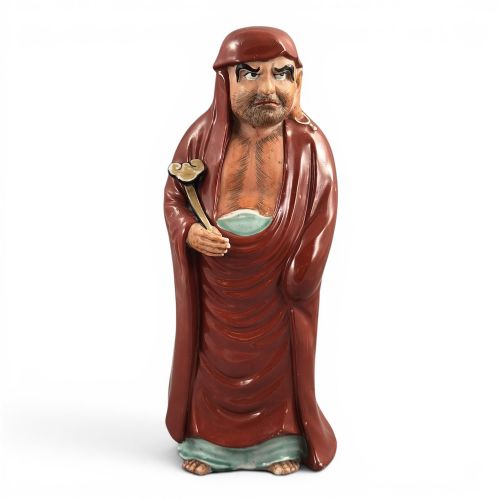


Large Porcelain Ornament
A large porcelain ornament brings substance to a room, spanning figures, centrepieces, and ewers from the eighteenth century onwards.
Large Porcelain Ornament
A large porcelain ornament is a substantial display piece, most commonly encountered here as figural groups, birds, animals, or centrepieces from the nineteenth century.
The selection ranges from Victorian Staffordshire figures and Royal Dux water nymphs to Meissen parrots and Japanese Satsuma okimono.
Buyers look for these pieces to anchor a mantelpiece, sideboard, or table with historic presence and detailed modelling.
How they were made
These pieces utilise porcelain, soft-paste porcelain, earthenware, and bisque, often enhanced with enamel, gold leaf, gilt highlights, and coloured glaze.
Specialised techniques such as patent metallic finishes and sancai glazes appear across European and Asian workshops alike.
Listings feature porcelain, soft-paste porcelain, and earthenware across the eighteenth, nineteenth, and early twentieth centuries.
What varies in quality
Quality rests in the crispness of the modelling and the precision of the hand-painting, particularly in facial expressions and fine drapery.
The richness of the gilding and the depth of the enamel or glaze separate standard production pieces from masterworks.
Scale and ambition define the top of the range, where complex figure groups and large animal studies demand exceptional technical control during firing.
Derby·Meissen·Royal Worcester·Volkstedt Richard Eckert·Chantilly·Royal Dux·Carl Thieme Dresden
The Large Porcelain Ornament Glossary
- Bisque
- Unglazed porcelain with a matte, marble-like texture. It highlights fine sculptural detail without the distraction of a glossy finish.
- Ewer
- A large jug with a wide spout and handle. These decorative vessels often serve as striking standalone ornaments.
- Okimono
- A Japanese decorative carving or figurine intended for display in an interior setting. They frequently depict figures or animals with high naturalism.
- Centrepiece
- A large decorative object placed in the middle of a table. These porcelain pieces often incorporate figural or architectural elements.
- Soft-Paste Porcelain
- An artificial porcelain composition fired at lower temperatures than hard-paste. It possesses a warm, slightly translucent body common in eighteenth-century French pieces.
Large Porcelain Ornament: Frequently Asked Questions
How do I clean a large porcelain ornament?
Dust the surface gently with a soft, dry brush to prevent dirt accumulation in crevices and delicate painted areas.
Avoid using harsh chemical cleaners or submerging pieces with gilt or enamel highlights in water.
Where should I display a centrepiece?
Place your centrepiece on a sturdy dining table, sideboard, or console where it can be viewed from multiple angles.
Ensure the location protects the piece from direct foot traffic and accidental knocks.
How can I tell Victorian pieces apart from earlier ones?
Victorian pieces often display brighter polychrome enamels and bolder decorative styles such as Rococo Revival or Victorian Orientalism.
Earlier eighteenth-century figures typically feature softer glazes and distinct modelling associated with factories like Derby or Chantilly.