


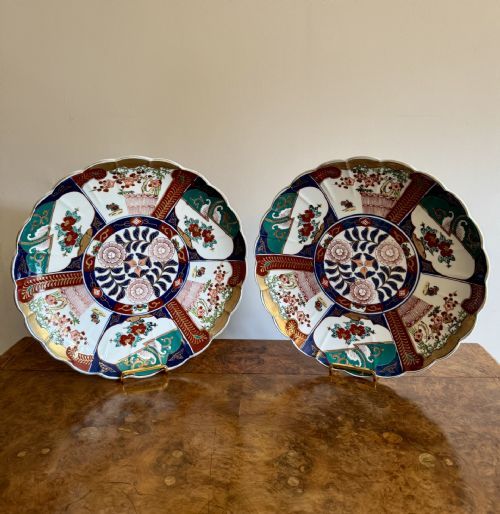
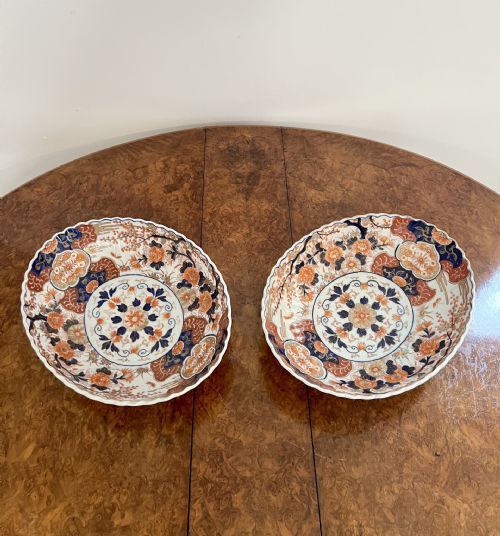


Large Porcelain Display Charger
A large porcelain display charger brings significant presence to a room, offering broad surfaces painted in rich palettes designed for cabinet or wall presentation.

Large Porcelain Display Charger
When searching for a large porcelain display charger, you encounter wide decorative plates and platters designed primarily for visual impact rather than dining use. These pieces span centuries of production, originating from Japanese kilns, Chinese dynasties, and European manufactories.
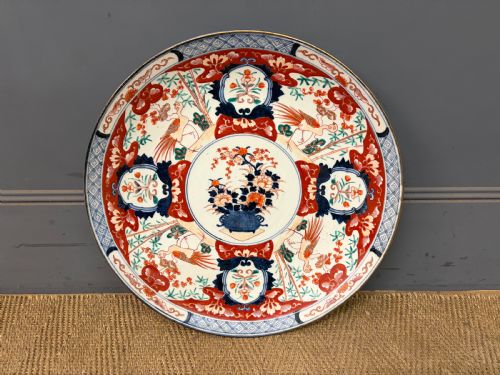
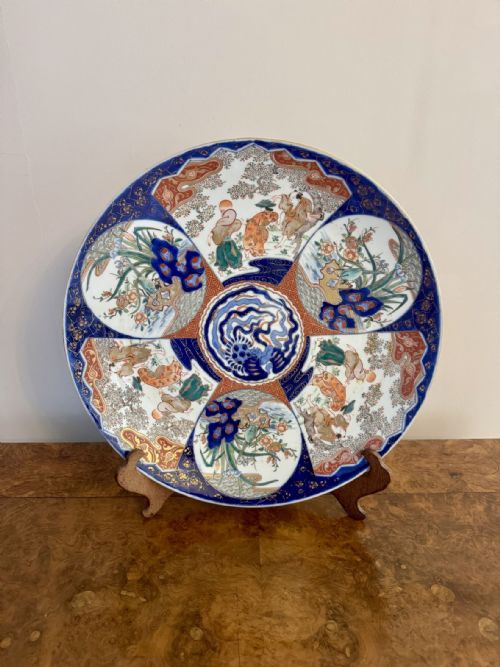
The version you meet most frequently on this page is the Japanese Imari charger dating from the late nineteenth century. These items typically exhibit cobalt blue and iron red pigments heightened with gilt details, often taking circular or scalloped forms.
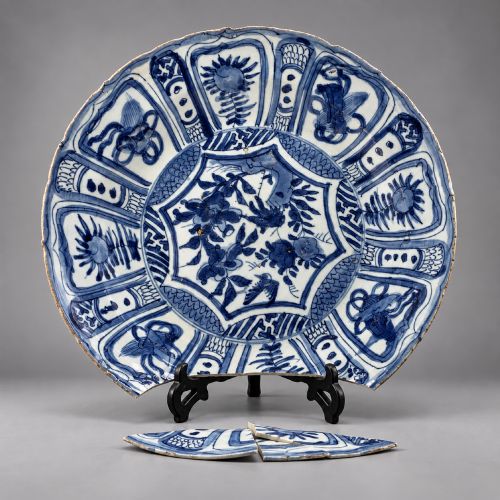
Other variations appearing in the inventory include Chinese Famille Verte court scenes, Dutch delft earthenware, and European porcelain works depicting narrative subjects. Forms range from standard round dishes to square plates and deep display bowls.
How They Were Made
Maker operations combined ceramic paste shaping with mineral pigments and glaze application before kiln firing at high temperatures. Cobalt pigment was applied directly beneath the glaze to achieve deep blue tones, while iron red, enamel colours, and gold leaf were added over the glaze during a secondary lower-temperature firing.
Specialised techniques also encompassed moulded floral scrolls in celadon wares and cloisonné wirework on ceramic bases, known as Totai Shippo. Edges were frequently shaped by hand into scalloped profiles or square forms before the application of scrolling foliate borders.
Object forms represented in the inventory include traditional round chargers, square plates, deep bowls, and platters.
What Varies in Quality
The distinction between standard commercial output and superior examples lies in the precision and density of the hand painting. Finer works display complex pictorial narratives, such as court life scenes or the Seven Lucky Gods, executed with controlled brushwork and rich application of gold gilt.
Depth of colour and stability during the firing process also differentiate grades of production. High-grade chargers maintain sharp definition in their cobalt blue and enamel pigments without blurring, alongside uniform glaze surfaces across wide diameters.
The Large Porcelain Display Charger Glossary
- Charger
- A large decorative plate or dish intended for display on a wall, cabinet, or table centre rather than for serving food. These pieces measure significantly wider than standard dining plates.
- Imari
- A style of Japanese porcelain named after the port from which goods were shipped to Europe. It is characterised by a distinct palette of cobalt blue, iron red, and gold gilt.
- Famille Verte
- A Chinese porcelain palette dominated by green enamel colours, introduced during the Qing Dynasty. Pieces in this style frequently depict figures, landscapes, and court scenes.
- Kraak plate
- A type of Chinese export porcelain produced in the late sixteenth and seventeenth centuries, featuring panelled borders and central motifs of birds, flowers, or aquatic scenes.
- Totai Shippo
- A Japanese technique involving cloisonne enamel applied directly to a ceramic or porcelain body rather than a metal base, creating textured surfaces like tree bark.
- Celadon
- A type of green-glazed pottery originating in China, known for thick translucent glazes and often featuring moulded or carved floral scrolls beneath the surface.
Large Porcelain Display Charger: Frequently Asked Questions
How were large porcelain display chargers used?
These large plates were traditionally stood upright on sideboards, hung on walls, or placed on tables for decorative display. Their generous surfaces allowed makers to paint intricate scenes and patterns for visual appreciation.
Over time, they served as status symbols in wealthy households, showcasing fine international trade goods and artistic craftsmanship from Asian and European kilns.
How do I hang a heavy charger safely?
Displaying a large charger securely requires a specialised spring-loaded plate hanger sized specifically for the diameter and weight of the dish. The wall fixing must anchor directly into solid masonry or a stud.
Alternatively, many collectors use robust brass or wooden display stands designed to support the base and lean the heavy porcelain securely against a vertical surface.
What is the difference between Imari and blue and white porcelain?
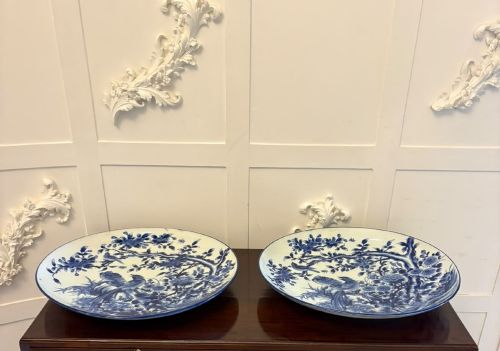
Blue and white porcelain relies exclusively on cobalt oxide under the glaze to create monochromatic designs against a white ceramic ground. This style focuses purely on tonal variation and brushwork.
Imari ware incorporates that same cobalt blue foundation but adds contrasting iron red enamel and gold leaf applied over the glaze during an additional firing stage.
How do I identify a Meiji period charger?
Meiji period pieces date from the late nineteenth to early twentieth century and frequently exhibit dense, highly detailed ornamentation. They often combine traditional Imari motifs with Western perspective influences.
Makers during this era produced large numbers of decorative chargers for export, resulting in sturdy porcelain bodies and vibrant gilt highlights.