
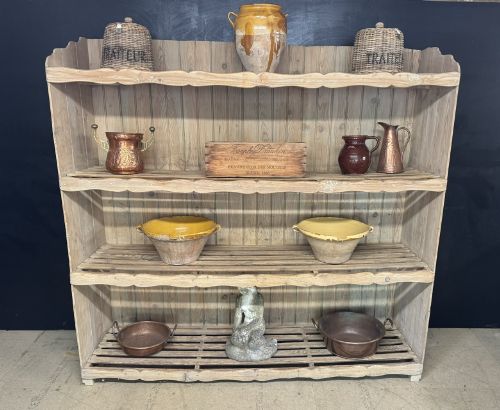

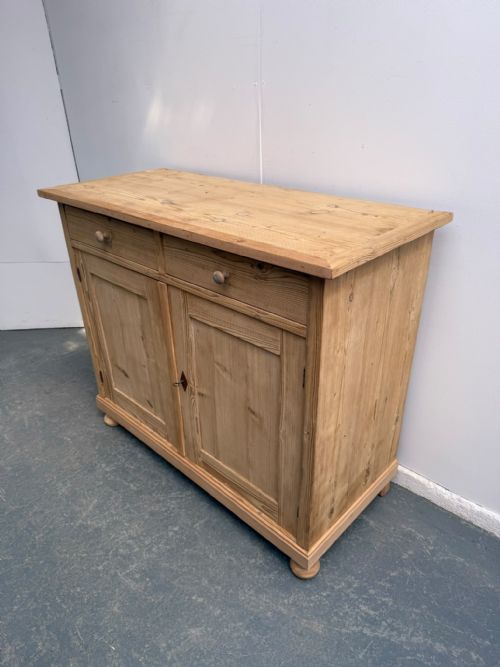


Large Pine Kitchen Dresser
A large pine kitchen dresser anchors a room with storage and display, offering deep cupboards, drawers, and plate racks.
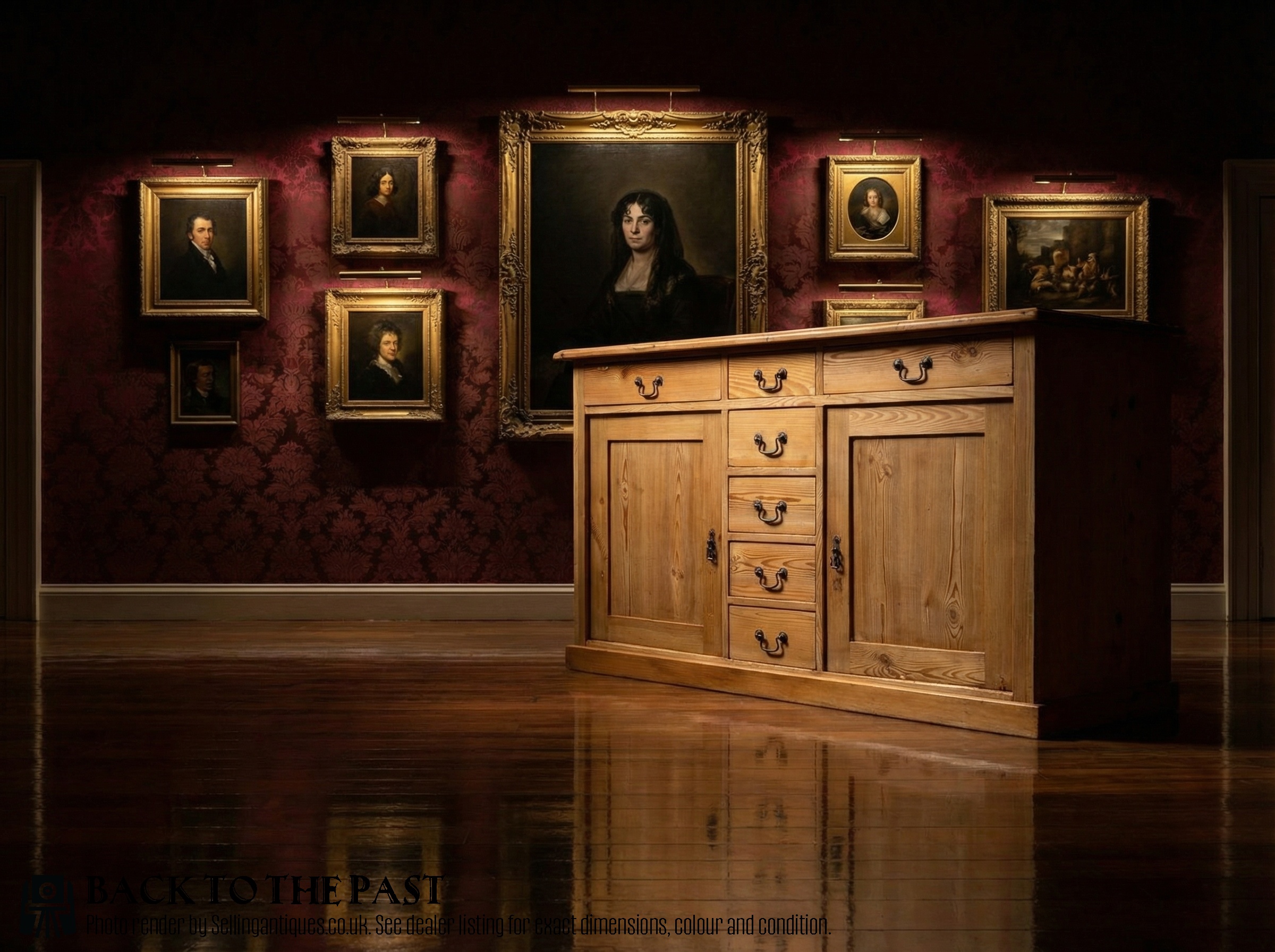
Large Pine Kitchen Dresser
A large pine kitchen dresser provides substantial storage for domestic spaces, combining open shelving or plate racks with enclosed cupboards and drawers below. The pieces appearing here span the eighteenth, nineteenth, and early twentieth centuries, originating from English country houses, Welsh farms, and continental workshops.
Buyers most frequently encounter Victorian examples and nineteenth century country pieces, often designated as dresser bases, housekeeper cupboards, or full dressers with upper shelving. These functional items served demanding utility roles in sculleries, kitchens, and pantries before entering domestic living spaces.
Styles range from rustic English country and Victorian farmhouse variations to French and Scandinavian country interpretations. The construction emphasises practical storage solutions, from broad timber boards to utilitarian potboards positioned beneath the base cabinets.
How they were made
Makers utilised solid pine for structural carcases and drawer linings, often pairing the timber with brass handles, iron hinges, and glass door panels where display cabinets were required. Surfaces frequently bear layers of historic painted finishes, original wax, or stripped timber surfaces achieved through traditional joinery methods.
Construction techniques rely on pegged mortise and tenon joints, hand-cut dovetails on drawer boxes, and tongue and groove boarding for backs and panels. Carpenters built these pieces for heavy daily use, employing robust mouldings and sturdy plinths to support large display racks.
Materials recorded across the inventory include solid pine, painted wood, brass, iron, glass, ceramic, and occasional oak elements.
What varies in quality
The degree of original survival distinguishes pieces, particularly those retaining untouched historic paint or early waxed patination against examples that have undergone modern intervention. Proportions, the balance between base cabinets and upper display racks, and the subtlety of timber grain influence visual presence.
Joinery execution and hardware integrity separate workshop standards, visible in the snugness of drawer fits and the retention of original brass or iron fixtures. The depth of the timber's grain and the honesty of wear accumulated over generations determine the character of each cabinet.
The Large Pine Kitchen Dresser Glossary
- Dresser base
- The lower portion of a kitchen dresser featuring cupboards and drawers without the upper plate rack. These versatile sideboards functioned as main work surfaces in country houses.
- Housekeeper cupboard
- A tall, enclosed storage cabinet designed for linens, dry goods, and domestic provisions. They typically feature multiple panelled doors and deep internal shelving.
- Potboard
- An open lower shelf built near the floor beneath a dresser base. Historically, this platform held heavy pots, pans, and utilitarian kitchen earthenware.
- Bread slide
- A pull-out wooden tray integrated into the drawer section of a dresser. Bakers used these surfaces to cool loaves or prepare dough.
- Breakfront
- A cabinet configuration where the central section projects forward from the flanking cupboards. This architectural arrangement adds depth and visual rhythm to large case pieces.
Large Pine Kitchen Dresser: Frequently Asked Questions
How do I style a large dresser?
Balance open plate racks with ceramics, glassware, and books while keeping everyday items within easy reach on the lower shelves.
Anchor the piece against a solid wall in a kitchen, dining room, or hallway to let its substantial proportions define the space.
What is the difference between a base and a full dresser?
A full dresser includes an upper display rack or shelving unit attached to the top for storing plates and display items.
A dresser base consists solely of the lower cabinet section with drawers and cupboards, functioning as a sideboard.
Were these painted originally?
Many utility cupboards and kitchen pieces received coats of protective paint to guard the soft wood against moisture and grease in working sculleries.
Other examples were left as bare timber or finished with simple wax to highlight the natural grain of the pine.
How do I date an antique pine cabinet?
Examine the construction methods, such as hand-cut dovetails on drawers and the presence of handmade iron or brass fixings.
Timber characteristics, tool marks, and historic surface patination provide further clues to the manufacturing period.