



Large Oval Wall Mirror
A large oval wall mirror brings depth and proportion to a room, reflecting light from a commanding vertical axis.
Large Oval Wall Mirror
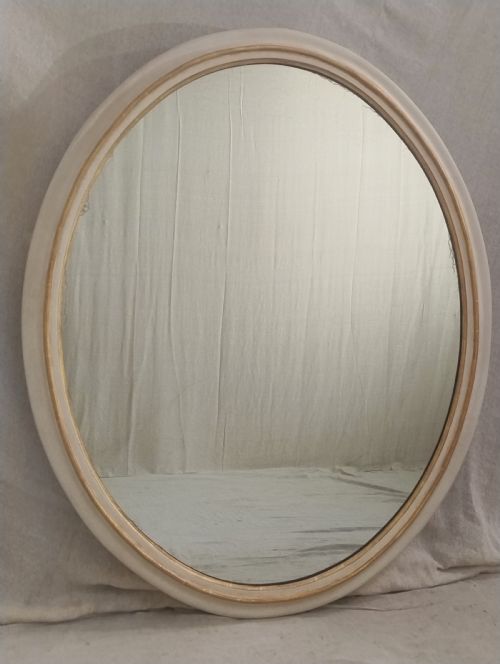
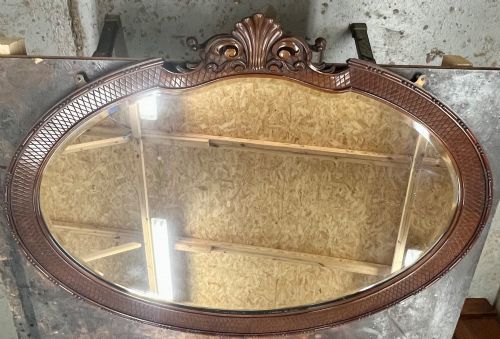
A large oval wall mirror serves as a prominent decorative fixture in domestic interiors, bridging functional reflection with classical ornamentation. These pieces manifest across various historical periods, including the Georgian, Victorian, and Edwardian eras, each bringing distinct architectural traits to the form.
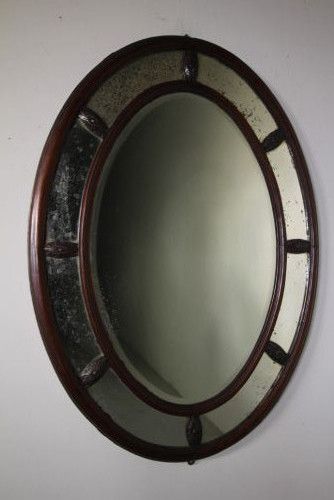
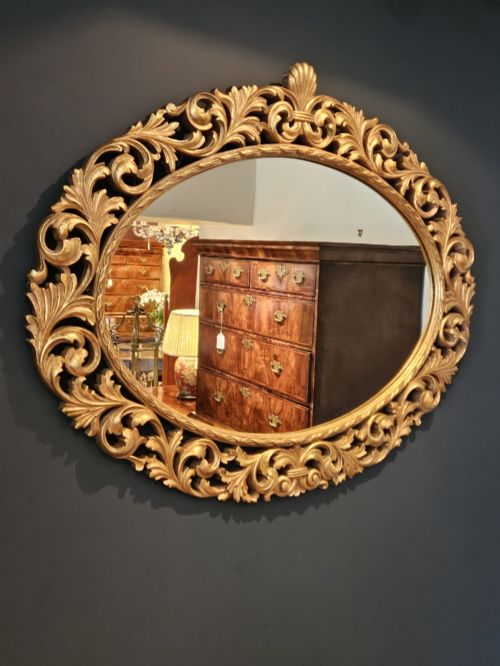
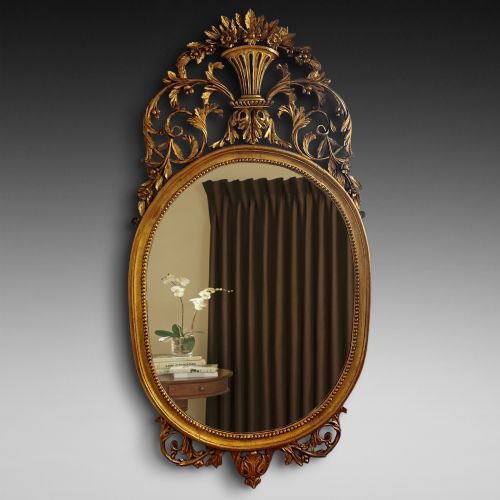
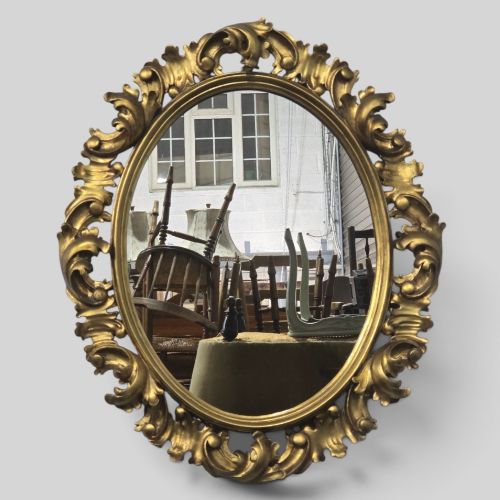
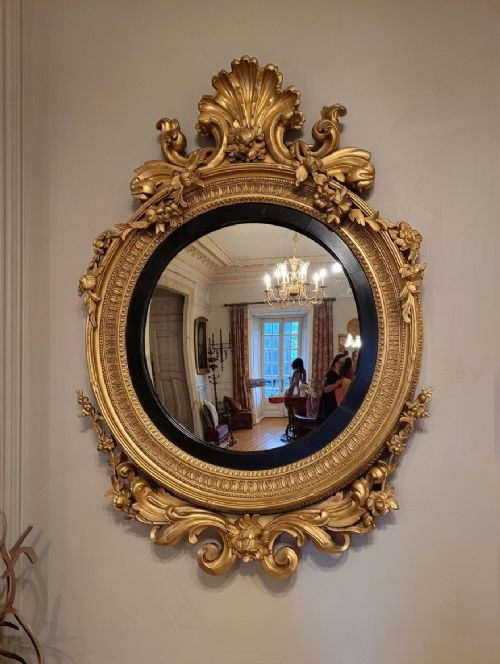
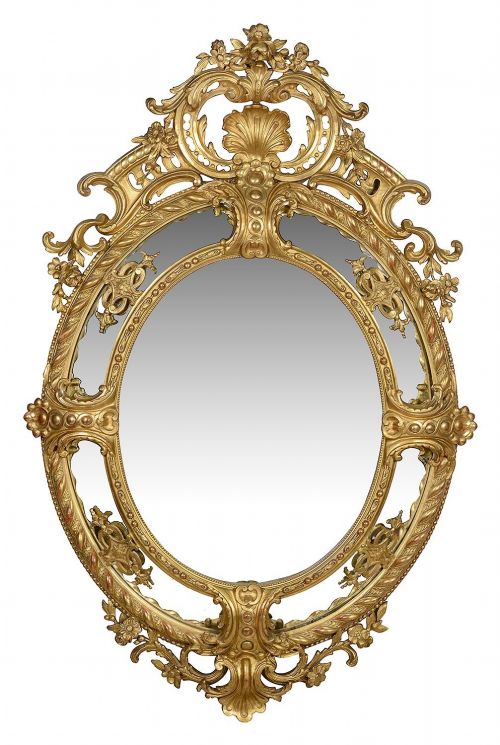
The version most commonly encountered on this page is the gilt-framed Victorian or late nineteenth-century example, often finished with gesso and gold leaf. These substantial mirrors frequently function as overmantel or pier mirrors, designed to hang above mantelpieces or between windows in principal reception rooms.
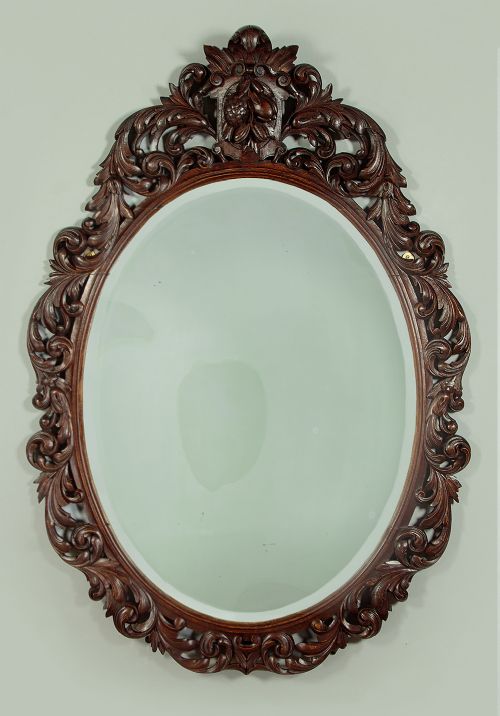
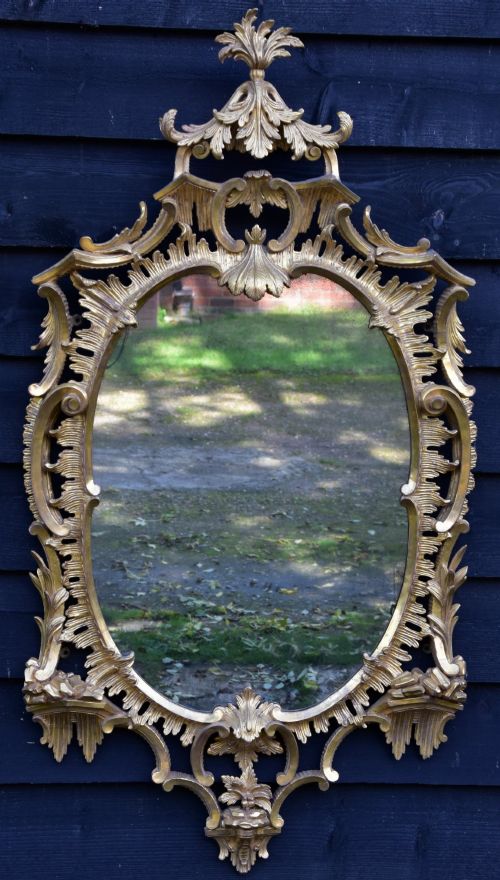
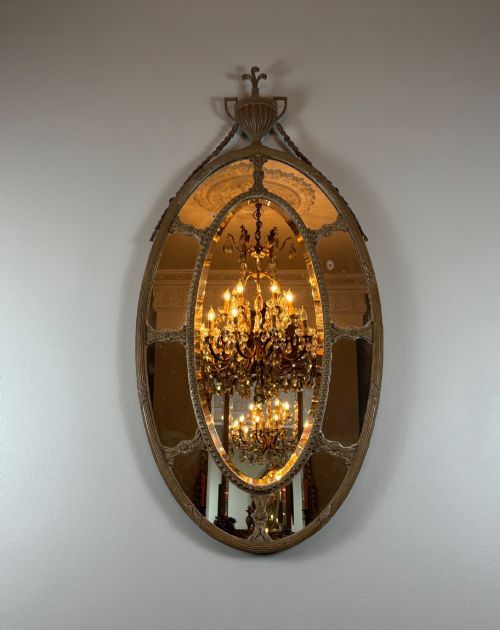
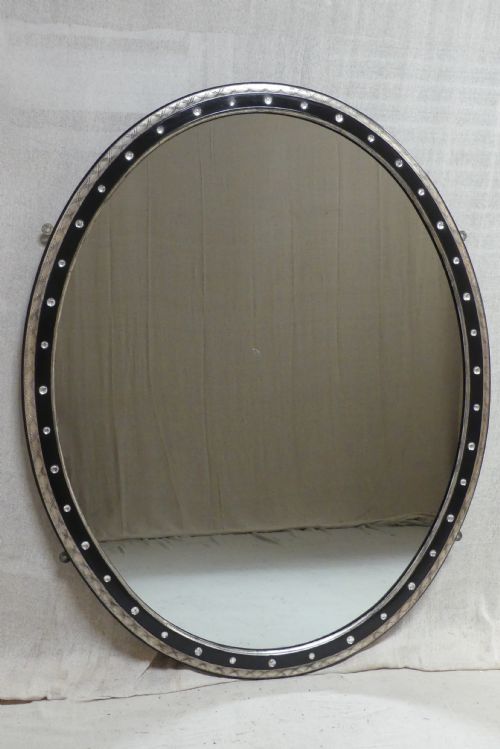
Beyond gilded timber, buyers encounter wooden frames in mahogany, oak, and ebonised finishes, alongside regional variations such as Irish or French interpretations. Styles range from restrained neoclassical designs with urn and swag motifs to exuberant rococo revival curves and cushion frames.
Materials and Construction
Makers constructed the structural frames of these mirrors using native and imported timbers such as mahogany, oak, and pine, often carving the wood directly or building up relief ornament in gesso. Gesso, a mixture of plaster of Paris and glue, allowed craftsmen to mould intricate scrollwork, leaves, and bead reels directly onto the wooden substrate before gilding.
Gilding was executed by applying thin sheets of gold leaf over a prepared bole layer, which provided the warm red or yellow undertone visible where the surface metal has worn. Alternatively, parcel gilt and painted finishes utilised black lacquer, cream decoration, or silver gilt to achieve contrasting tonal effects.
Mirror plates themselves were traditionally hand-silvered or cast, held within the rebate by wooden backing boards secured with old brads or screws, while robust hanging loops accommodated the substantial weight of the assembled glass and frame.
Large Oval Wall Mirror Retail Price Guide 2026
Typical asking prices for large oval wall mirror among the pieces listed under this phrase on Sellingantiques today, from the lower quarter to the upper quarter. They describe what is for sale here now, not the wider market.
Listings feature frames made from giltwood, gesso, mahogany, oak, and brass across periods spanning from the seventeenth to the early twentieth century.
Assessing Quality
The hierarchy of quality in these mirrors rests primarily on the crispness and depth of the hand-carved or moulded ornament. Superior examples display sharply defined acanthus leaves, scrolls, and swags where the artisan worked the gesso and wood with precision, whereas lower-tier pieces often show soft, indistinct moulding details filled with thick, obscuring layers of later paint.
Originality of components dictates the standing of a piece within its category. Mirrors retaining their original mercury or early silvered glass plates, backboards, and mercury gilding command greater architectural integrity than those fitted with modern replacement glass and re-gilt surfaces.
Proportion and structural joinery further separate ordinary items from exceptional ones. Well-balanced frames maintain structural rigidity at the mitred corners without excessive filler, offering a harmonious relationship between the width of the moulding and the expansive scale of the central glass.
The Large Oval Wall Mirror Glossary
- Gesso
- A dense plaster mixture applied to wooden frame substrates to form a smooth base for relief ornamentation and gilding. Artisans carved and stamped this material to create intricate floral and geometric mouldings.
- Giltwood
- Timber carved and subsequently covered with gold leaf. This material defines the majority of formal decorative mirrors produced across the eighteenth and nineteenth centuries.
- Overmantel
- A large mirror specifically proportioned to hang above a fireplace mantelpiece. These pieces often feature wide horizontal or vertical frames designed to reflect light across the main living space.
- Pier glass
- A tall mirror designed to hang on the narrow pier of wall space situated between two windows. They frequently incorporate candle sconces or small brackets at the base.
- Cushion frame
- A mirror frame constructed with a rounded, convex profile that slopes inward toward the glass plate. This style creates a pronounced pillowed effect popular during the Victorian period.
- Bole
- A fine prepared clay layer applied beneath gold leaf in traditional gilding. Its warm reddish hue shows through when the upper gold layer wears thin over time.
Large Oval Wall Mirror: Frequently Asked Questions
Where should I hang a large oval mirror?
These mirrors suit locations where they can anchor a room's proportions, such as above a drawing room fireplace or along a hallway wall. Their curved profile softens rigid architectural lines and helps distribute natural daylight throughout the space.
Ensure the wall construction and hanging fixings match the substantial weight of the timber and glass frame before installation.
How do I identify a Victorian mirror?
Victorian examples often feature heavier gesso ornamentation, deeper cushion frames, or classical revival motifs influenced by Adam and Rococo styles. Examining the construction of the wooden backboards and the type of fixings provides additional clues to the manufacturing date.
Many pieces from this period incorporate composition ornament pressed into moulds and applied directly to the pine or hardwood frame.
Are original mirror plates common?
Many antique mirrors retain their original glass, which often exhibits subtle distortions, tiny foxing marks, or slight clouding around the edges. These optical characteristics confirm the age of the plate and distinguish antique glass from modern replacements.
When the silvering has deteriorated beyond functional use, some pieces have received period-appropriate replacement glass while retaining their historic frames.
What is parcel gilding?
Parcel gilding is a decorative technique where only specific raised portions of a frame are highlighted with gold leaf while the rest remains painted, stained, or ebonised. This method creates a striking visual contrast between the gilded ornament and the dark wood background.
Makers frequently employed this treatment during the mid-nineteenth century to accentuate neoclassical swags and carved mouldings.