
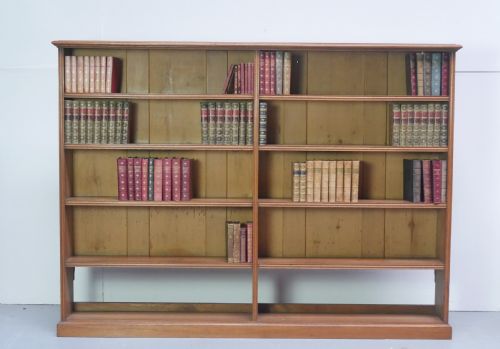


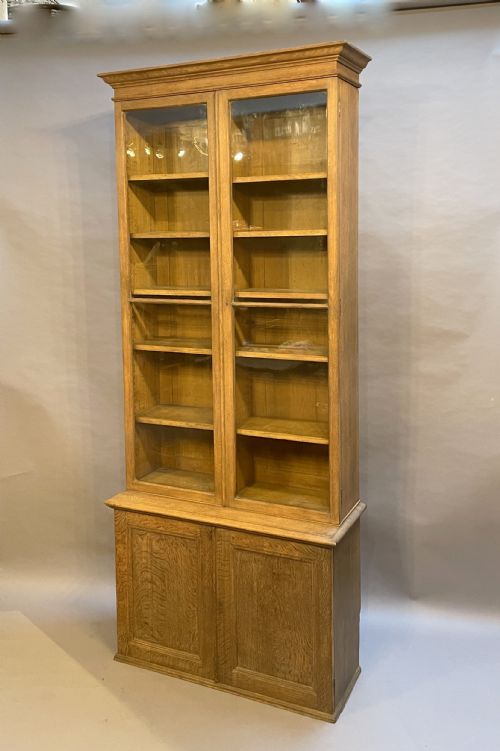
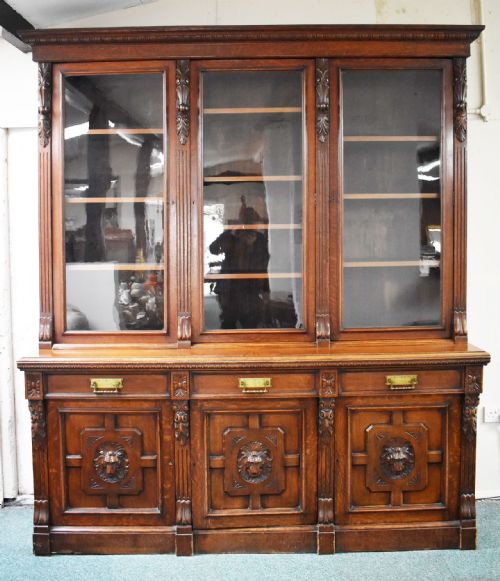


Large Oak Library Cabinet
A large oak library cabinet provides substantial storage and architectural presence, anchoring a serious room with timber weight and glass display.
Large Oak Library Cabinet
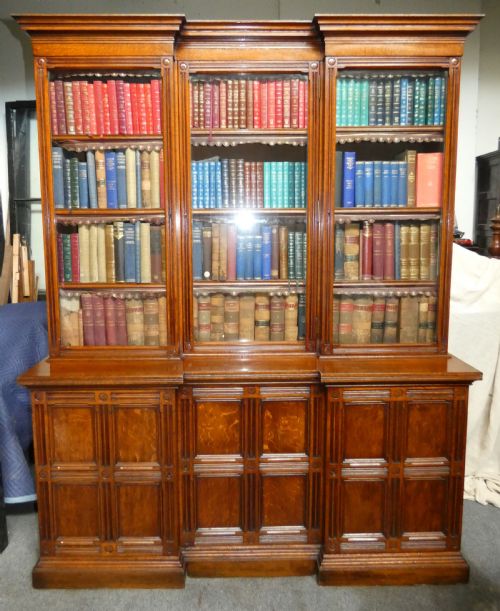
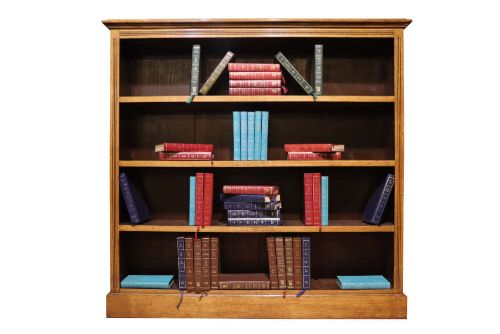
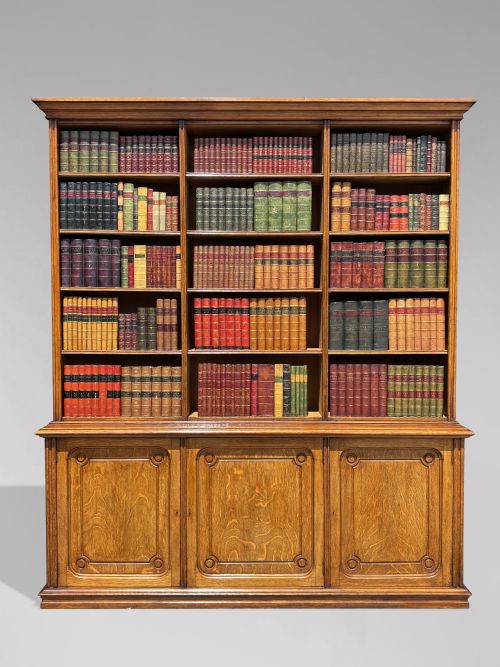
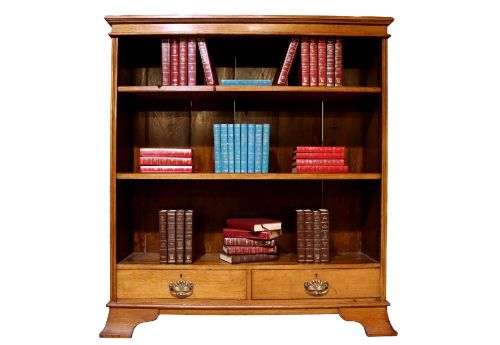
A large oak library cabinet is a commanding piece of furniture designed to house extensive book collections and display bound volumes behind glazed or open fronts. These pieces emerge predominantly from the nineteenth century, spanning Victorian, Edwardian, and earlier revival epochs, shaped by the needs of country houses and institutional studies.
The version most commonly met on this page is the Victorian breakfront or multi-door bookcase, often built with substantial proportions and fitted internal shelving. These pieces combine practical storage with architectural carving, utilising the heft and grain of oak to dominate a wall.
Materials and construction methods
Makers relied on solid oak and specialised veneers such as pollard oak and burr pollard oak to build these carcasses, applying brass hardware and iron fittings for structural support. Glass panels protect the interior shelving, while open fronts utilise adjustable wooden ledges to accommodate varying book heights.
Carpenters joined heavy timber using traditional mortise and tenon techniques, integrating carved architectural details such as barley twists, Gothic arches, and breakfront cornices directly into the solid wood.
Listings feature oak, pollard oak, and burr pollard oak combined with brass and wire mesh across Victorian, Edwardian, and Gothic Revival styles.
Distinctions in craftsmanship and design
Quality rests in the selection of timber and the ambition of the carving, moving from plain utilitarian shelving to monumental breakfronts with intricate figural work. The best examples display deliberate figure matching in burr or pollard oak veneers and precise execution of period styles like Gothic Revival.
Internal engineering also separates standard cabinetmaking from exceptional workshops, visible in the smoothness of drop-front secretaire drawers, the precision of glazed door frames, and the robustness of adjustable shelf mechanisms.
Howard and Sons·Gillows
The Large Oak Library Cabinet Glossary
- Breakfront
- A cabinet design where the central section projects forward from the flanking wings. This configuration breaks the flat line of a long wall and adds architectural depth.
- Secretaire
- A cabinet incorporating a drop-front drawer that opens to reveal a writing surface and small pigeonholes. This feature combines storage with a compact writing desk.
- Pollard Oak
- Timber harvested from trees that have been pollarded, producing a dense cluster of branches that create a highly figured, knotted grain. Cabinetmakers used these veneers for decorative emphasis.
- Gothic Revival
- An architectural and decorative style drawing on medieval ecclesiastical forms such as pointed arches and trefoils. This aesthetic appears frequently in nineteenth-century library furniture.
- Barley Twist
- A turning technique that creates a helical, rope-like column on furniture legs or supports. It adds texture and visual movement to heavy oak uprights.
Large Oak Library Cabinet: Frequently Asked Questions
How do I adjust the shelves?
Most period library cabinets utilise wooden support battens, brass shelf studs, or fixed vertical ratchets inside the carcass. You simply lift the shelf to clear the supports and reposition it at the desired height.
Older mechanisms may require careful handling if the timber has settled over decades. Take your time to avoid damaging the interior veneered surfaces when sliding shelves in and out.
Are the glass doors original?
Original glazing often shows slight surface ripples, minor bubbles, and subtle thickness variations typical of nineteenth-century glass production. Examine the putty or wooden glazing bars to check if they match the cabinet construction.
Replacement glass is common due to the age of these pieces, but period replacement glass still maintains historical character. Look for consistency across all door panels.
How do I care for pollard oak?
Pollard oak surfaces benefit from occasional application of quality beeswax to nourish the timber and protect the figured grain. Avoid placing these cabinets near direct heat sources or strong sunlight, which can dry out the wood.
Dust regularly with a soft cloth and maintain stable room humidity to prevent the heavy oak panels and veneers from splitting or warping over time.
Can these cabinets be dismantled?
Many large library cabinets separate into distinct sections, such as a lower base cabinet and an upper bookcase, often with a separate cornice. Some breakfront designs also allow the flanking wings to unbolt from the centre.
Professional removal and installation are recommended due to the sheer weight of solid oak and glass. Check the joints and fixings carefully before attempting any movement.