
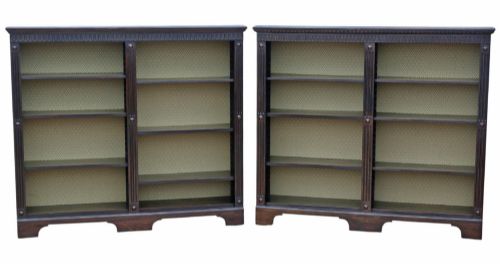
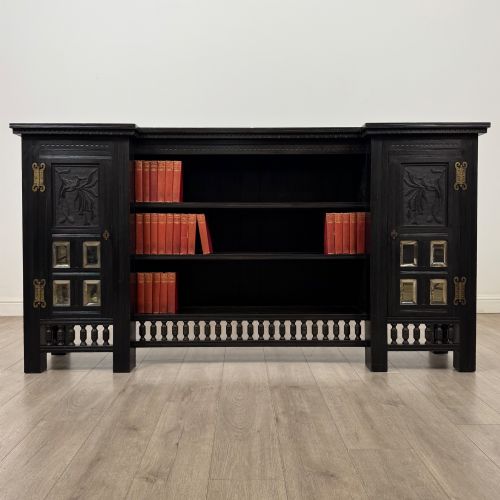
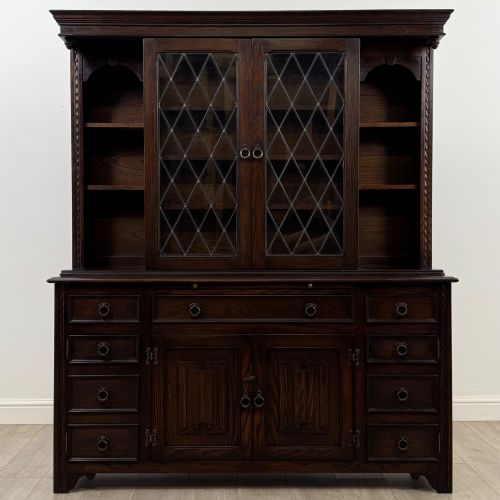
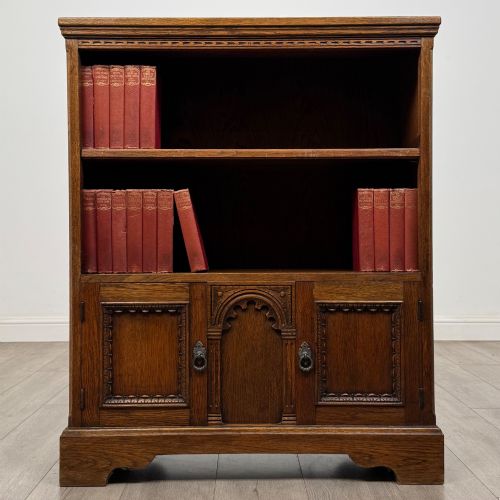
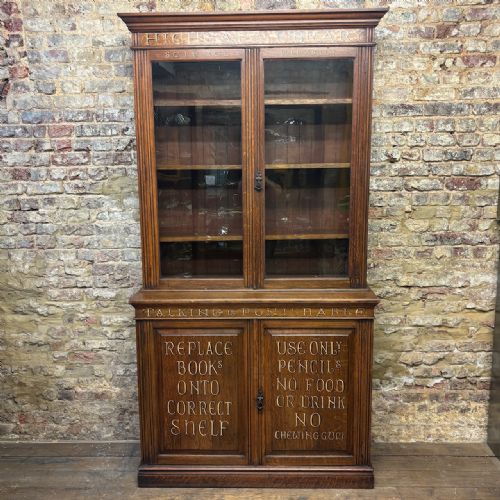
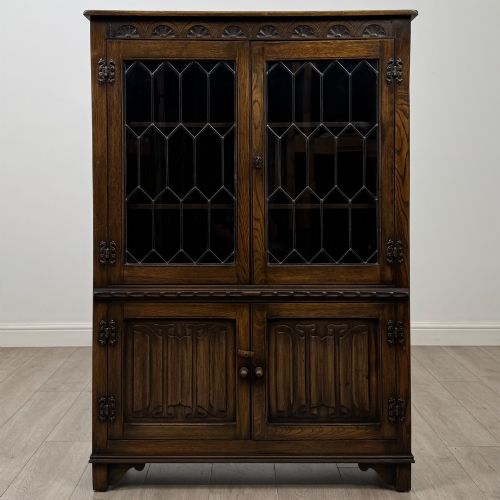
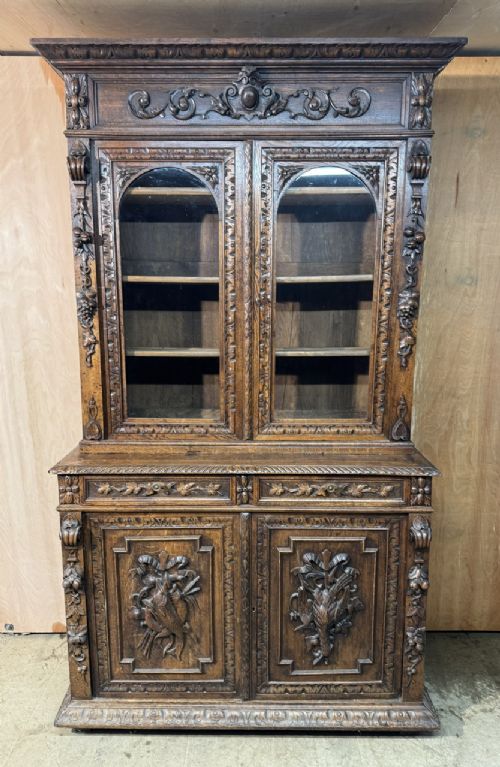
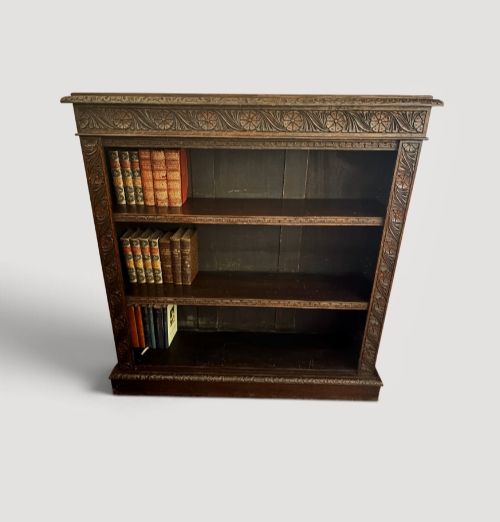
Carved Oak Bookcase Cabinet
A carved oak bookcase cabinet brings robust timber and fitted shelving together to hold a library.
Carved Oak Bookcase Cabinet
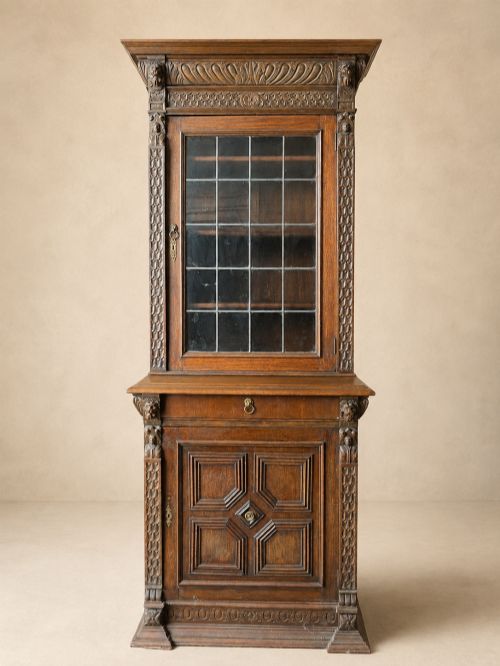
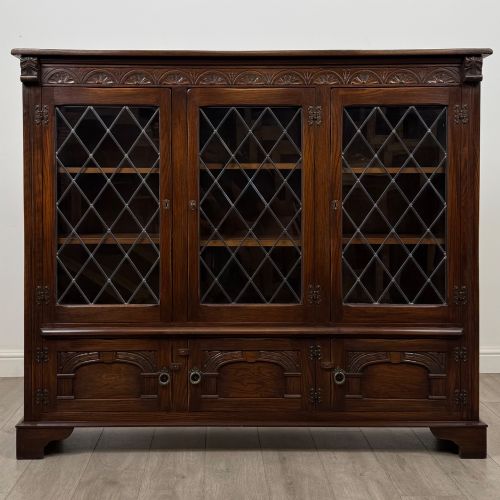
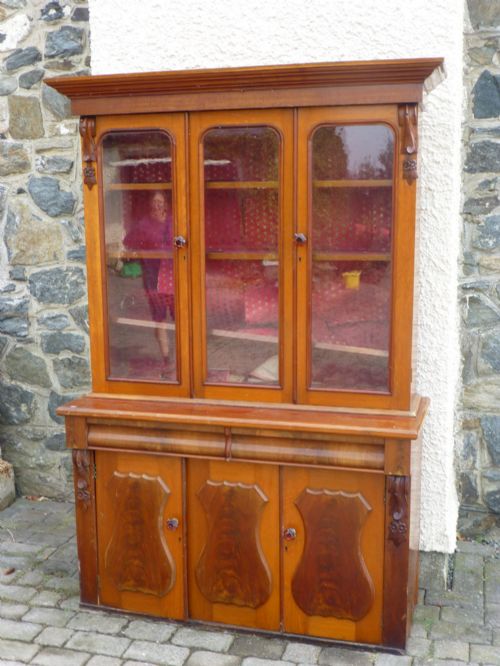
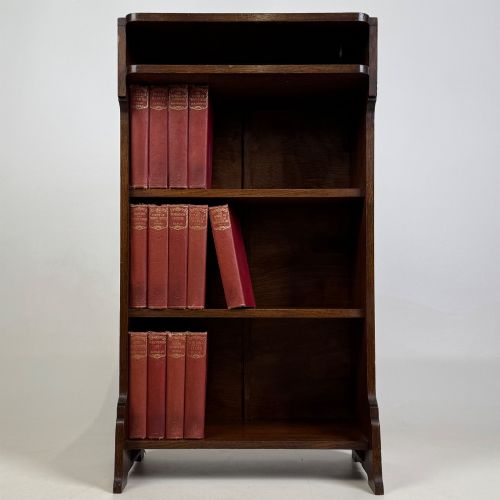
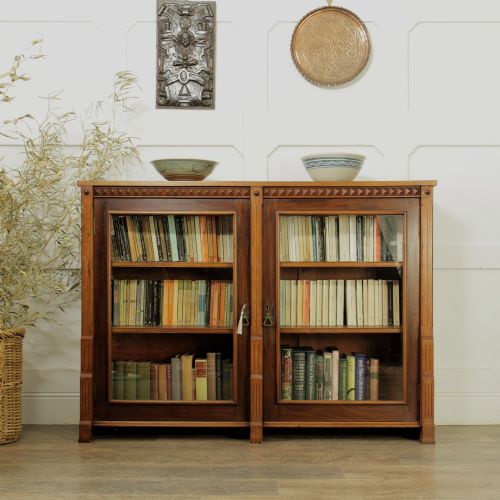
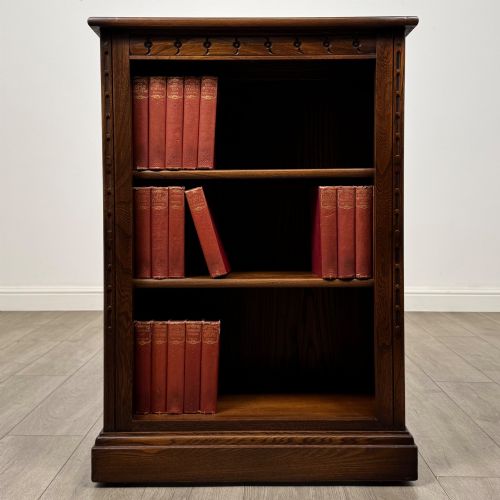
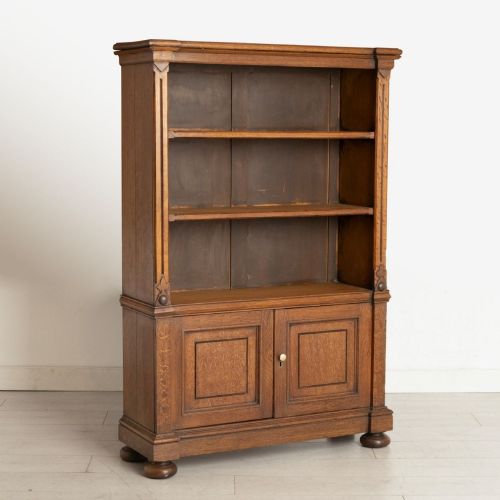
A carved oak bookcase cabinet combines generous book storage with display space, often featuring glazed upper doors and enclosed lower cupboards. These large library pieces span periods from the eighteenth century through the Victorian era and into Edwardian times.
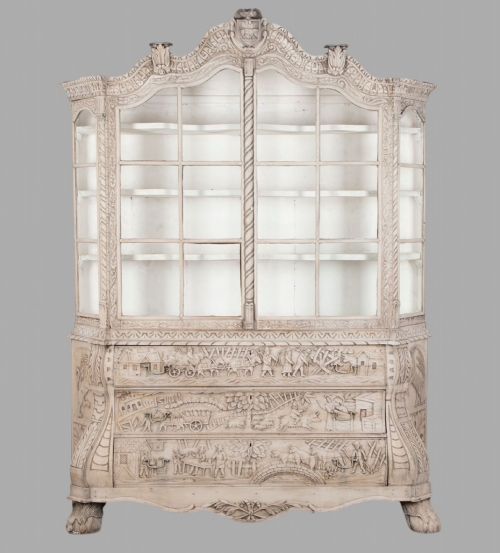
Buyers meet varied iterations on this page, including Bureau bookcases with fitted writing slopes, open shelves, and breakfront library cupboards. Heavy relief carving defines many examples, drawing on Gothic, Jacobean, and Renaissance revivals.
What varies in quality
The depth and crispness of the carved ornamentation separate standard production pieces from masterwork library furniture. Superior examples display balanced proportions, substantial timber thickness, and refined integration between upper display compartments and lower cupboard bases.
Original hardware, intact glass, and carefully fitted interior drawers or secretary compartments indicate higher workshop standards during manufacture.
A watchful Green Man peers from the carved foliage of several Victorian library cabinets.
Arthur Simpson of Kendal·John Moyr Smith
The Carved Oak Bookcase Cabinet Glossary
- Breakfront
- A cabinet design where the central section projects forward from the flanking wings. This architectural arrangement adds visual depth to large library furniture.
- Bureau bookcase
- A combination unit featuring a sloping writing flap that drops down above shelving or cupboards. It provides both a desk surface and book storage.
- Linenfold
- A style of wood carving that mimics folded fabric or linen cloth. This motif appears frequently on panels from revivalist periods.
- Vitrine
- A glass-fronted display cabinet used for showing porcelain or collectables. These pieces often sit upon matching cupboard bases.
Carved Oak Bookcase Cabinet: Frequently Asked Questions
How do I date a carved oak bookcase cabinet?
Dating relies on stylistic clues, construction methods, and hardware. Victorian and Edwardian examples often feature heavy revival carving, while eighteenth-century pieces display simpler joinery and different proportions.
Examining the interior timber and backboards also helps establish age. Later twentieth-century items utilise machine-cut elements rather than hand-chiselled details.
Are these cabinets suitable for small rooms?
Many options exist in compact proportions, including small Edwardian open bookcases and corner cabinets. These variations provide storage without overwhelming limited floor space.
Measuring the depth and height remains essential before purchase. Slim open shelves or table cabinets offer alternative solutions for restricted layouts.
What is the difference between a bureau bookcase and a standard bookcase?
A bureau bookcase includes a fitted fold-down writing surface with small interior compartments for stationery. Standard variants focus exclusively on shelving or glazed display space.
Both types usually incorporate lower cupboard storage. Bureau versions serve a dual purpose as both desk and library.
How should I care for solid oak furniture?
Solid oak requires stable room humidity and protection from direct sunlight to prevent timber movement. Regular dusting with a dry cloth maintains the finish without chemical buildup.
Conditioning the wood occasionally preserves the natural lustre of the grain. Brass fittings benefit from gentle cleaning if polishing becomes necessary.